Foreign portfolio outflows from Indian markets could moderate in the coming months as asset valuations become more attractive, Reserve Bank of India (RBI) Governor Sanjay Malhotra indicated in a speech delivered at an international fixed income forum in Amsterdam.
He suggested that India’s net capital account position is likely to improve compared to last year, signalling a possible stabilisation in external financial flows despite recent volatility.
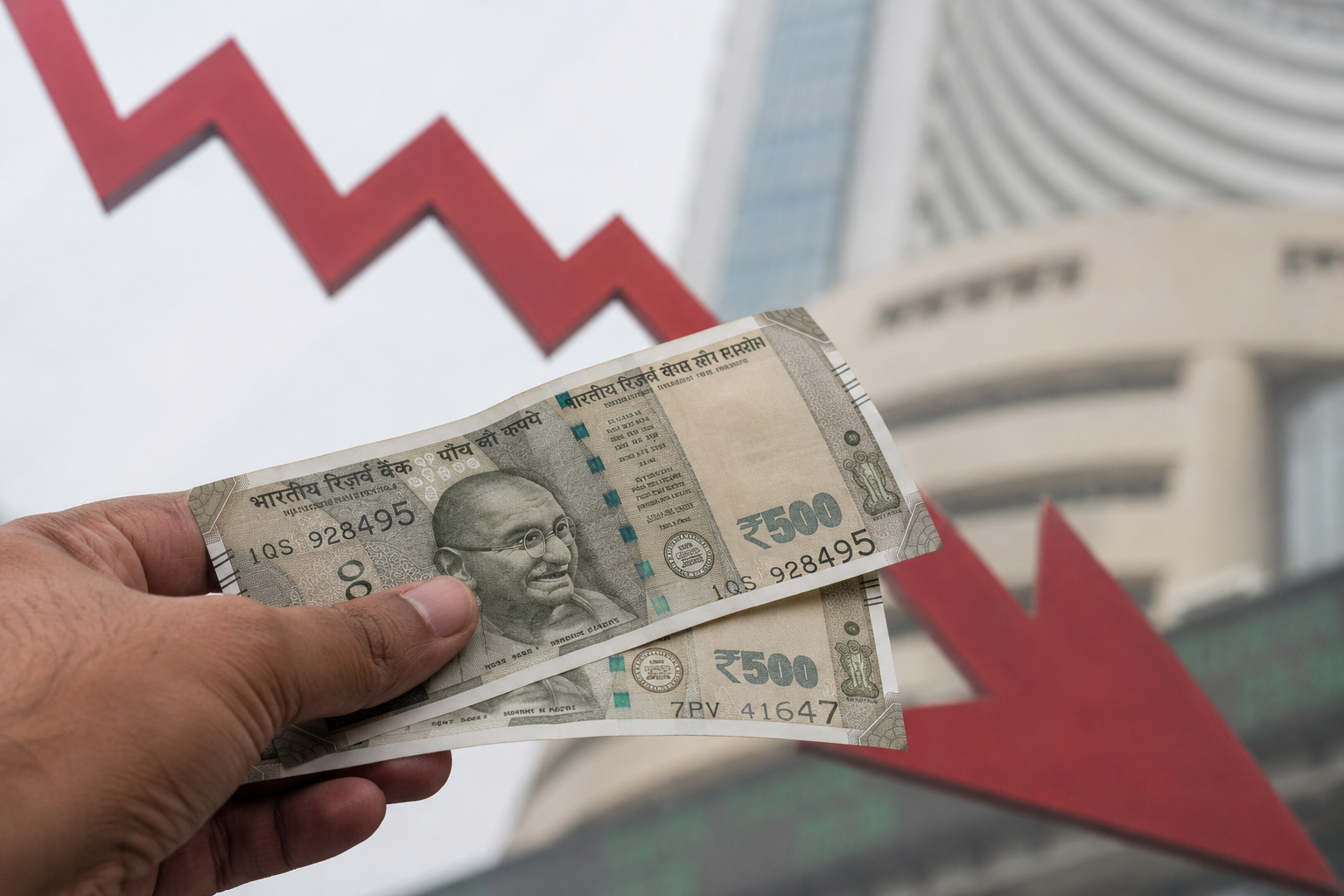
The remarks come amid sustained pressure on the Indian rupee, which has weakened sharply this year due to persistent foreign withdrawals. The currency has fallen over 5 per cent so far in 2026, making it one of Asia’s weakest performers.
Equity markets have also seen a correction, with the Nifty 50 declining around 8 per cent year-to-date. The benchmark index is now trading at lower valuation multiples compared to its recent average, reflecting the broader market adjustment.
Foreign investors have pulled out more than USD 20 billion from Indian equities this year, driven partly by a global shift in capital towards artificial intelligence-led opportunities and concerns over rising energy prices. The ongoing tensions linked to the US-Iran conflict have added to uncertainty, particularly for oil-importing economies like India.
Malhotra acknowledged that elevated crude prices pose risks to inflation and macroeconomic stability but pointed out that some pressures could be offset by capital inflows tied to India’s expanding trade partnerships. Recent free trade agreements with regions such as the United Kingdom, the European Union, and New Zealand are expected to support cross-border investments over time.
On currency markets, the RBI Governor stressed the need for Indian banks to strengthen their role in global rupee trading. He noted that domestic lenders must evolve into active market makers internationally if the rupee is to gain wider acceptance.
The central bank had earlier introduced temporary restrictions on offshore rupee trading in April to contain volatility when the currency hit record lows. While those measures provided short-term relief, the rupee has resumed its downward trend, touching fresh lows again this week.
The RBI’s latest assessment signals cautious optimism, even as global uncertainties and commodity price shocks continue to test India’s external sector resilience.