Key Takeaways
- Gresham’s Law states “bad money drives out good,” often linked to currency markets and historical coins.
- The law highlights how overvalued currency circulates while undervalued currency is hoarded.
- In modern economies, legal tender laws allow Gresham’s Law to function with paper and metallic currencies.
- During hyperinflation, like in Zimbabwe, stable foreign currencies can replace local currency due to Gresham’s Law.
- Changes in U.S. penny composition in 1982 demonstrate how debasement can lead to hoarding of more valuable currency.
Get personalized, AI-powered answers built on 27+ years of trusted expertise.
What Is Gresham’s Law?
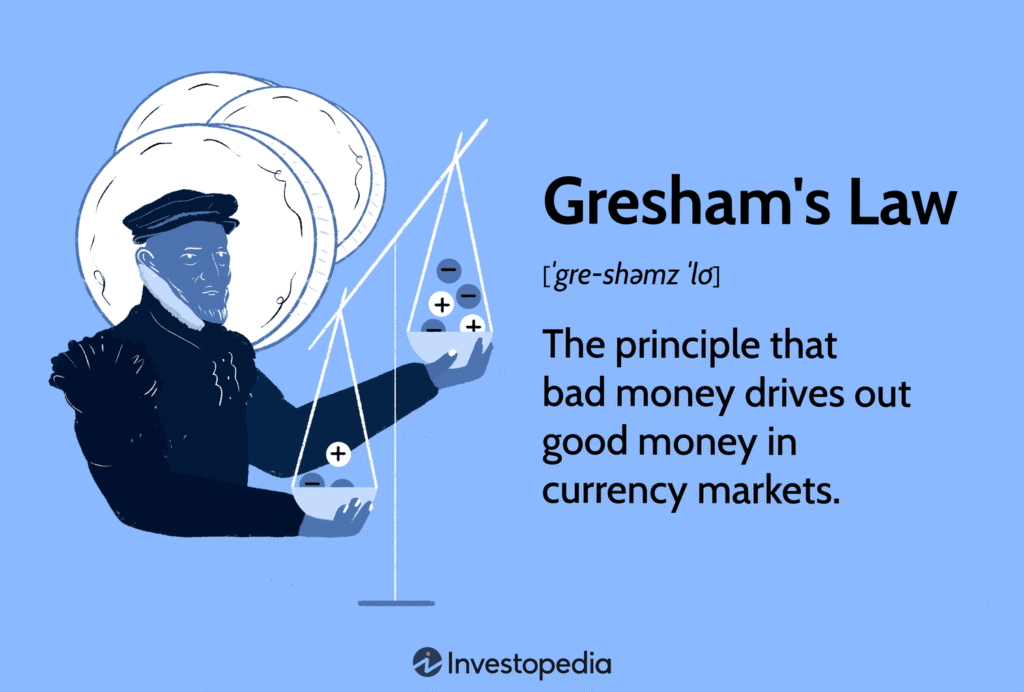
Gresham’s law is a principle that states that “bad money drives out good” and can be applied to the currency markets. The law originated from using precious metals for coins, which affected their value. Since moving away from metal currency, it explains currency stability and movement in global markets.
Coins used to be made with precious metals. Over the years, coin composition has evolved to include base metals. This led to people hoarding the old coins, leading to the debasing of the currency. Key aspects of Gresham’s law include currency debasement and legal tender laws; a modern example would be the 2008 Zimbabwe hyperinflation.
How Gresham’s Law Affects Currency Circulation
Sir Thomas Gresham lived from 1519 to 1579 and wrote about the value and minting of coins while working as a financier and later founded the Royal Exchange of the City of London. When Henry VIII altered the English shilling, reducing silver and adding base metals, people hoarded higher silver coins as they had more value than the new coins.
Both currency types circulated together, but bad money was more common, as it held less value than its face value. Good money, which could appreciate, disappeared from use. People will choose to use bad money first and hold onto good money. The Scottish economist Henry Dunning Macleod attributed this law to Gresham in the 19th century.
Comparing the Value of Good and Bad Money
Historically, mints manufactured coins from gold, silver, and other precious metals, which gave the coins their value. Issuers of coins sometimes lowered the level of the precious metals used and passed the coins as full-value coins. New coins with less metal content had less market value and traded at a discount. The old coins retained a higher value.
However, legal tender laws mandated that new coins with less metal content have the same face value as older coins. The new coins were legally overvalued, and the old coins were legally undervalued. Governments, rulers, and other coin issuers often implemented this policy to obtain revenue and repay debts borrowed in old coins using new coins at par value.
Legally forced to treat both types of coins as the same monetary unit, buyers passed along their less valued coins as quickly as possible and held onto the old coins, thus debasing the currency, creating a fall in the purchasing power of the currency units. To fight Gresham’s law, governments often blamed speculators, implemented currency controls, prohibited removing coins from circulation, or confiscated privately owned precious metal supplies.
The Role of Legal Tender in Gresham’s Law
Gresham’s law is evident in a modern economy with legal tender laws. When all currency units are legally mandated to be recognized at the same face value, the traditional version of Gresham’s law operates. In the absence of effectively enforced legal tender laws, Gresham’s law operates in reverse as good money drives bad money out of circulation, where people can decline to accept less valuable money.
With the adoption of paper money as legal tender, the issuers of money can print money into existence, and this ongoing debasement has led to a persistent trend of inflation as the norm in most economies. If a currency loses value rapidly, people tend to stop using it in favor of more stable foreign currencies, sometimes even in the face of repressive legal penalties.
During a period of hyperinflation in Zimbabwe in 2008, the Zimbabwe dollar was the legal currency, and many people abandoned its use in transactions, eventually forcing the government to recognize de facto and subsequent de jure dollarization of the economy. In the chaos of an economic crisis with a near-worthless currency, the government was unable to enforce its legal tender laws. Good, stable money drove bad, hyperinflated money out of circulation.
Important
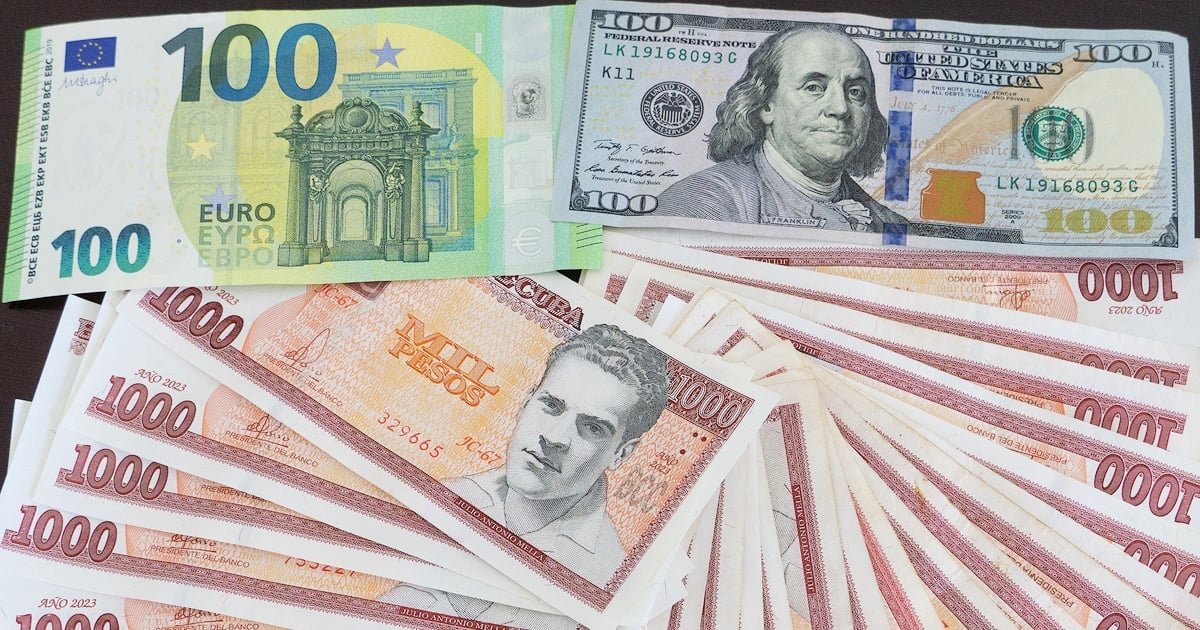
Stable currencies like the U.S. dollar and euro are good money due to their global use. Weaker currencies from developing nations seldom circulate outside their countries and are viewed as bad money.
Real-World Illustrations of Gresham’s Law
In 1982, the U.S. government changed the composition of the penny to contain 97.5% zinc. This change made pre-1982 pennies worth more than their post-1982 counterparts, while the face value remained the same. Due to the debasement of the currency and resulting inflation, copper prices rose from an average of $0.6662/lb. in 1982 to $3.0597/lb. in 2006 with the purchasing power of a penny fell by nearly 80%.
When people started collecting copper from old pennies, the U.S. enforced strict penalties, including a $10,000 fine or up to five years in prison for offenders.
What Are Legal Tender Laws?
Countries implement legal tender laws to define what currency is recognized by law as a means to settle a public or private debt or meet a financial obligation, including tax payments, contracts, and legal fines or damages. The national currency is legal tender in every country.
How Does Gresham’s Law Apply When Both Paper and Precious Metal Coins are in Circulation?
Gresham’s law is evident when paper notes are accepted by the population and circulate along with gold and or silver coins. During the Revolutionary War in the United States, bad paper money, accepted as a form of payment at the time, drove all valuable gold and silver coins, good money, from circulation.
How Does the Use of a Gold Standard Affect Gresham’s Law?
When the U.S. dollar first gained prominence as the world’s reserve currency through the Bretton Woods Agreement in 1944, it was fully backed by gold. Since the global financial system has transitioned to fiat currencies, examples of Gresham’s law are rare. The Bretton Woods system required countries to guarantee the convertibility of their currencies into U.S. dollars, with the dollar convertible to gold bullion for foreign governments.
The Bottom Line
Gresham’s Law is a concept where “bad money drives out good money,” originating from the evolution of precious metal coins to modern coinage. Examples of Gresham’s Law include Henry VIII’s coin debasement and Zimbabwe’s hyperinflation. There is educational value in understanding Gresham’s Law by analyzing currency-related issues and economic policy decisions.
While it is less common in modernity, Gresham’s Law can still occur under certain circumstances like currency debasement and legal tender laws. Since the global financial system has transitioned to fiat currencies, instances of Gresham’s Law are rare but can still occur. In 1982, the alteration of the U.S. penny’s composition led to debasement.