


AUD/USD Forecast: Inflation Test Keeps November RBA Hike in Play
Westpac sees further Australian Dollar gains despite weaker employment, while BofA says the inflation figures could decide whether the RBA raises rates.
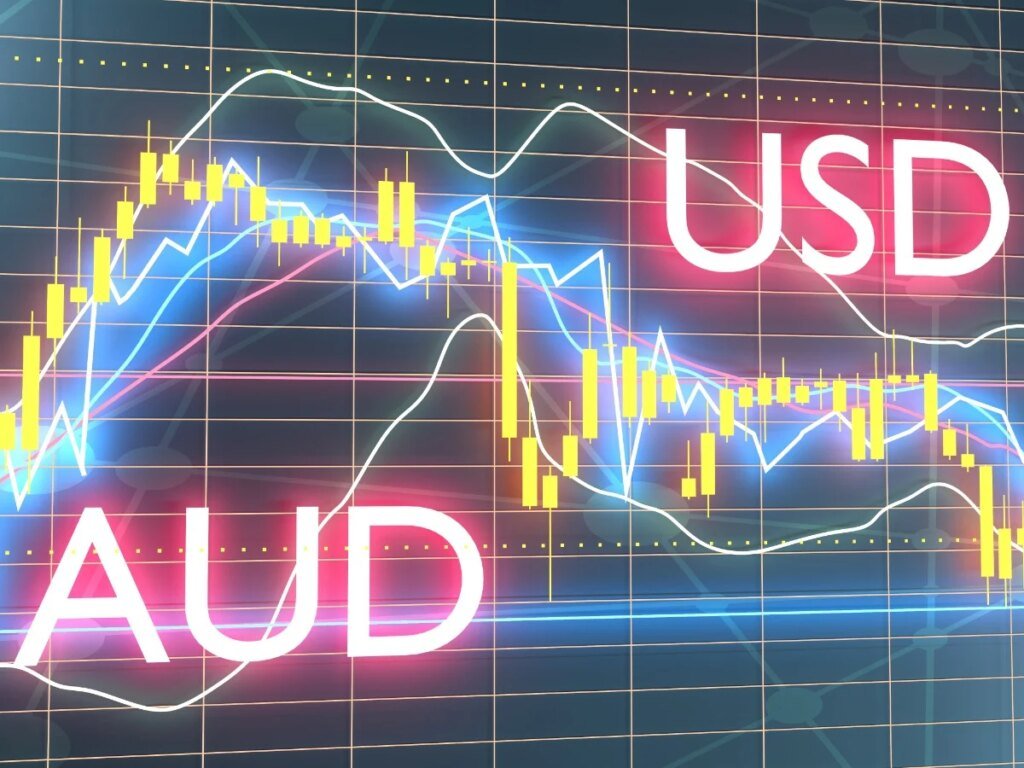
The Australian Dollar-to-US Dollar exchange rate rose to around US$0.7000 on Tuesday afternoon as the currency recovered from last week’s employment disappointment.
Euro to Australian Dollar (EUR/AUD): 1.604198 (-0.11%)
AUD/USD was 0.24% higher on the day at 15:08 BST, although it remained about 1.8% below its level a month earlier.
Westpac expects the recovery to continue to US$0.72 by December 2026, roughly 3% above the latest rate, and retains a November RBA hike forecast despite evidence that the labour market is cooling.
Its case faces a specific challenge from Bank of America, which expects no further increase this year unless the inflation figures prove sufficiently strong.
The next CPI release on 28 October will arrive less than a week before the RBA’s 3 November decision.
Why fewer jobs have not changed Westpac’s call
Australia lost 39,300 jobs in September, according to the Australian Bureau of Statistics, while unemployment held at an upwardly revised 4.7%.
Westpac acknowledges possible seasonal distortions but does not dismiss the weakness:
“Regardless, the take home point from the update is that the labour market is continuing to ease as employment growth runs below working-age population growth.”
Its economists add: “We expect the unemployment rate to grind higher into 2027 as tighter financial conditions and cost-of-living pressures restrict activity growth to a below-trend pace. Although, our forecast peak is near at 4.8%, due by Q2 2027.”
The result helped drive the retreat in Australian rate-hike expectations after the jobs release, weakening one source of support for the currency.
But Westpac sees inflation as the deciding factor and expects a quarter-point increase to take the cash rate to 4.85% in November.
Chief economist Luci Ellis puts more weight on what is happening to business margins:
“Passing these costs on, leaving margins intact, demonstrates that demand is not weak enough to prevent this, and signals that firms’ inflationary expectations might be higher than the RBA desires. The RBA will take this as a sign that demand is still outstripping supply.”
The inflation threshold separating the banks
BofA gives the employment figures greater weight in its immediate policy forecast, but its hold call is conditional.
“Softer-than-expected labour data supports our base case that the RBA will remain on hold in 2026. That said, the RBA’s focus is inflation, and a 3Q trimmed mean >0.9% q/q could still prompt a hike.”
The trimmed mean reduces the influence of unusually large price movements, helping policymakers judge whether inflation extends beyond volatile items such as fuel.
Goldman Sachs’s estimate lies just above BofA’s threshold.
Its economists write: “Over the 3Q2026 quarter, we expect trimmed mean CPI to increase 0.95%qoq. We view the balance of risks to our forecast as tilted to the upside (Exhibit 2).”
A result at that level would meet the condition BofA identifies as a potential trigger, without making a November increase automatic.
RBA assistant governor Christopher Kent said on Monday that the weaker employment data and next week’s inflation figures needed to be considered together.
He also pointed to businesses passing on cost increases and weak productivity adding to labour costs, keeping the inflation question open despite slower hiring.
Investment offers support beyond the next meeting
Westpac’s recovery forecast extends to US$0.73 by December 2027, even though it expects Australian rates to decline later that year.
The longer currency outlook therefore involves more than one additional hike.
BofA’s Australian Dollar analysis identifies data-centre investment as a potential source of more durable support, even alongside its cautious near-term rate call.
Strategist Isabel Hartstein writes: “Australia’s A$180bn data centre investment pipeline, including around A$100bn over the next three years, is set to drive the largest investment cycle since the mining boom.”
She writes: “We expect this to support AUD through a higher-for-longer RBA cash rate and higher commodity prices, particularly copper.”
However, in the same discussion of Australia’s financial conditions, Kent warned that the Australian Dollar remained exposed to global moves away from risk, reflecting Australia’s reliance on trade and financial flows.
Hartstein writes: “That said, upside against USD looks capped with the US undergoing an even larger investment cycle and risks skewed towards further Fed tightening.”
AUS/USD Exchange Rate FAQ
What is Westpac’s Australian Dollar forecast?
Westpac expects AUD/USD to reach US$0.72 by December 2026 and US$0.73 by December 2027.
Will the RBA raise interest rates in November?
Westpac expects a quarter-point increase, while BofA expects a hold unless inflation proves sufficiently strong.
When is the next Australian inflation release?
The next CPI figures are due on 28 October, before the RBA’s 3 November decision.