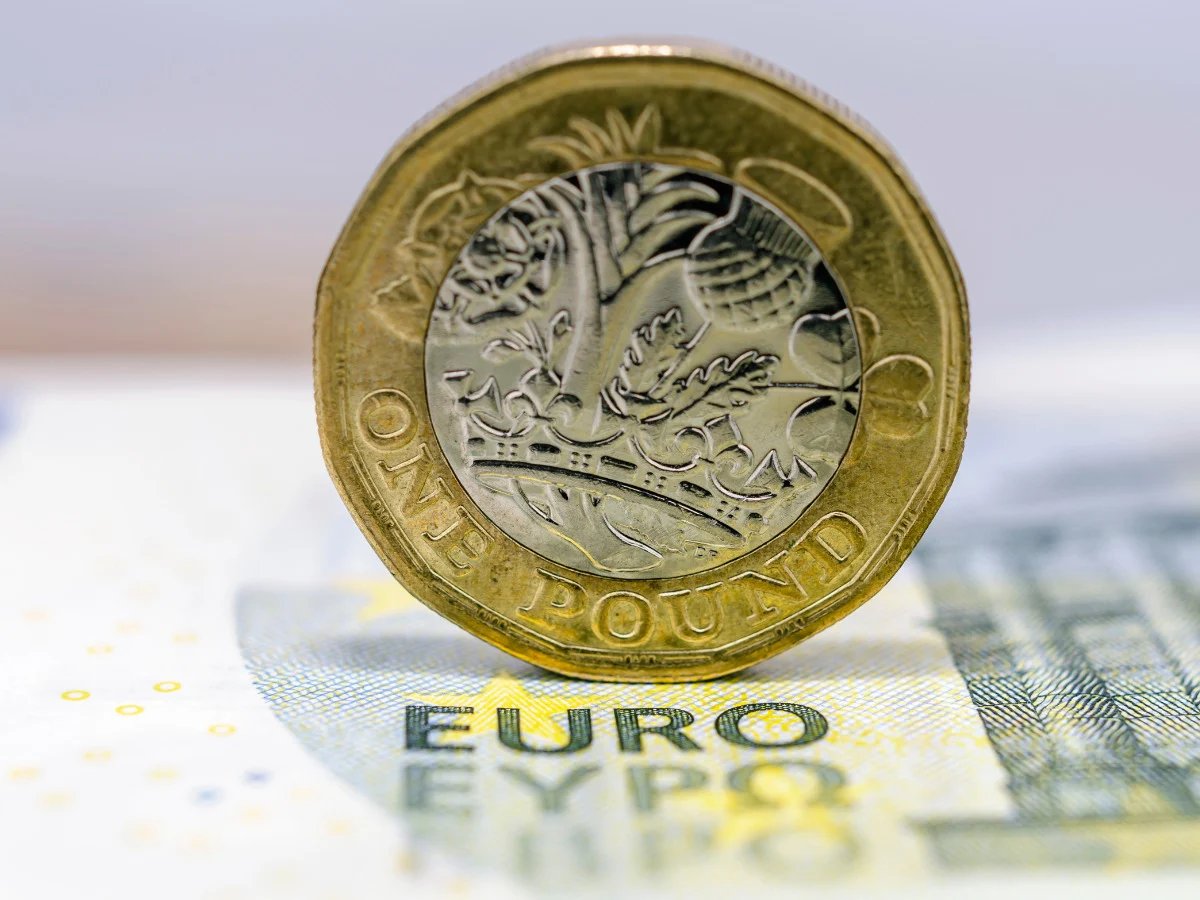



EUR/GBP Forecast: ING Sees a Recovery to 84 Pence in Coming Weeks
ING expects the Euro to recover to 84 pence in the coming weeks as doubts about further UK rate rises limit the Pound’s advantage over the single currency.
The Euro-to-Pound exchange rate closed at 83.45 pence in New York on Friday. ING expects a recovery to 84 pence in the coming weeks, a rise of around 0.7% from the closing rate recorded by Crédit Agricole CIB. ING sees room for that move even if uncertainty over French public finances continues to weigh on the Euro.
Francesco Pesole, an FX strategist at ING, writes, “EUR/GBP continues to trade sharply below its short-term fair value, by around 2.6-2.8% according to our models. That continues to reflect the euro’s idiosyncratic premium related to French risk (EUR/GBP has been one of the favourite channels), but even accounting for that, the decline in the pair looks a bit too stretched.”
How much more can UK rates do for Sterling?
All nine Bank of England policymakers voted to raise rates on 5 November. Eight backed the quarter-point increase to 4% and Catherine Mann preferred half a point. For Sterling, the difficulty is that investors have already seen how much agreement there was about raising rates from 3.75%. The next vote will depend on whether policymakers think 4% provides enough restraint.
Pesole writes, “The lack of dovish dissenters in November reinforced our view that the BoE will hike again in February, with some risk already in December. However, as we note here, consensus around another rate increase will likely be harder to achieve next time, as some members are considering a one-and-done approach as a possibility.”
ING therefore expects Sterling to give back some ground even as it forecasts another British rate rise. Governor Andrew Bailey’s caution concerns how far the Bank will ultimately go. If the next increase brings the cycle to an end, the Pound may already reflect much of the extra return UK rates will offer. “A return to 0.840 in EUR/GBP remains the most realistic move in the coming weeks, in our view.”
Bond markets have moved further than the Euro
Crédit Agricole’s model gives a different perspective on the size of the gap. Its strategists Valentin Marinov and David Forrester write, “EUR/GBP’s fair value increased from 0.8469 to 0.8496 due to a rise in the Eurozone-UK box yield spread, as well as a fall in the peripheral EGB yield spread to Bunds. EUR/GBP spot has instead steadied near its recent lows, thus staying more than 1.5 standard deviations undervalued.”
The narrower gap between peripheral eurozone government bond yields and German Bund yields means investors were demanding less extra interest to hold the former. That improvement lifted the model’s valuation while the Euro remained near 83.45 pence. At Friday’s close the bank put the shortfall at 1.77%. Even a recovery to ING’s 84 pence would close only a little over a third of the distance to Crédit Agricole’s estimate. If yields on peripheral eurozone bonds rise again relative to German Bund yields, the model could put a lower value on the Euro.
Who was still buying the Pound?
Crédit Agricole’s separate positioning report shows how much the answer depends on which investors are counted. “The GBP enjoyed some buying interest last week, predominantly driven by IMM flows. Our FX flow data points at hedge funds inflows, as well as banks, corporates and real money investors outflows. All in all, the GBP is in overbought territory.”
The futures market was an important source of last week’s demand for Sterling. Hedge funds were buyers in the bank’s own flow data too, while companies and longer-term investors were sellers. If the prospect of further UK tightening becomes less convincing, some of those existing buyers may reduce their exposure. The bank also observed buying on the other side of the cross. “The EUR enjoyed fresh buying interest last week, predominantly driven by Tactical flows. Our FX flow data points at hedge funds inflows, as well as banks, corporates and real money investors outflows.”
Hedge funds were buying both currencies. The figures cover each currency across markets, so the transactions could include purchases against the Dollar or other currencies.
What this means for EUR/GBP
Standard Chartered sees scope for a larger technical rebound towards 84.50 pence. Its strategists Vincent Tan and Iris Yuen see reasons for Euro demand to recover even if UK rates stay higher. “In contrast, the ECB held its deposit rate at 2.50% in October but signalled readiness to tighten if inflation remains elevated. We expect Euro area inflation to rise further, keeping the ECB’s tightening bias alive. This suggests EUR/GBP has fallen too far relative to interest rate differentials.”
Their assessment also rests on developments outside the central banks. “Germany’s planned increase in federal debt issuance should support Euro area growth, while Moody’s decision not to downgrade France has removed an important EUR tail risk. Meanwhile, tighter UK fiscal policy is likely to weigh on domestic growth and business investment. We expect EUR/GBP to recover towards 0.8450.”
At Friday’s close, a UK importer needed £8,345 to buy €10,000 before fees. ING’s forecast would raise the bill to £8,400 and Standard Chartered’s rebound would take it to £8,450. The first half-penny of recovery would require only a partial easing of the discount both ING and Crédit Agricole see in Friday’s exchange rate.