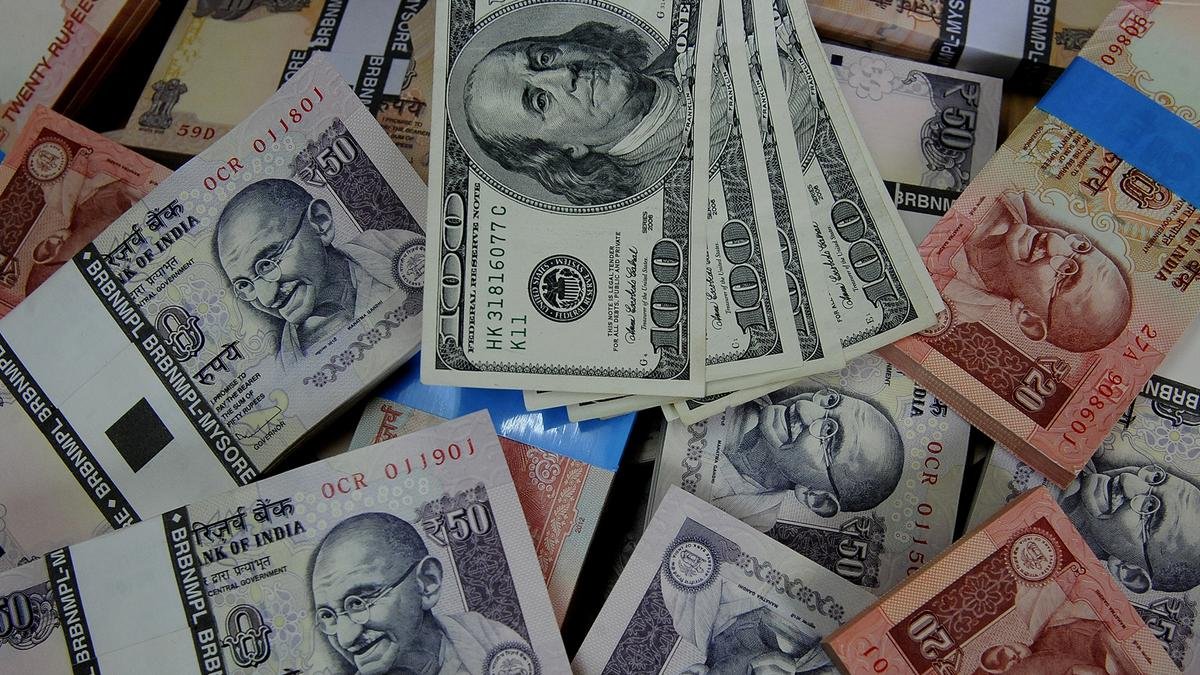
The Indian rupee strengthened on Wednesday, retracing to levels above 95 after weaker demand from oil importers and dollar selling in the non-deliverable forward (NDF) market, said currency dealers. The domestic currency settled at 94.97 per dollar, gaining 43 paise from its previous close, posting its biggest single-day rise in three weeks.
“There has been some selling in the NDF market by foreign banks while oil-importer demand was largely missing. As a result, the recent buy the dips sentiment that held for the past few days reversed today and helped the rupee to appreciate,” said a dealer at a private sector bank.
After Wednesday’s movement, the rupee ranked as the second-best-performing Asian currency, after South Korean won. Most Asian currencies were up on Wednesday. So far in 2026, the rupee declined 5.67%. Over the past one year, it has depreciated 9.5%.
“The rupee weakened over the past few days due to importers of oil. With that demand easing today, the currency found support,” said Anil Kumar Bhansali, head of treasury, Finrex Treasury Advisors LLP. In addition, inflows into debt market are also contributing to the rupee’s strength, he added.
Ritesh Bhansali, deputy CEO, Mecklai Financial Services, said that there has been some anticipation of inflows in the market, which has supported the currency during the day.
Although oil inventories are comfortable, importer demand is now driving the rupee. Oil is trading around $72 a barrel. “Falling crude is positive for the rupee, and at these oil levels the rupee should have tested 93.5. The demand from importers has driven the currency in recent days. Looking ahead, I think it can reach those levels supported by inflows from RBI measures.”
Bhansali expects the rupee to gradually appreciate if geopolitical tensions do not escalate and oil prices remain steady. “In that scenario, it could move toward about 94.10. But with the central bank likely to curb significant appreciation, the rupee should trade roughly in a 94–95.50 range in the near term.”