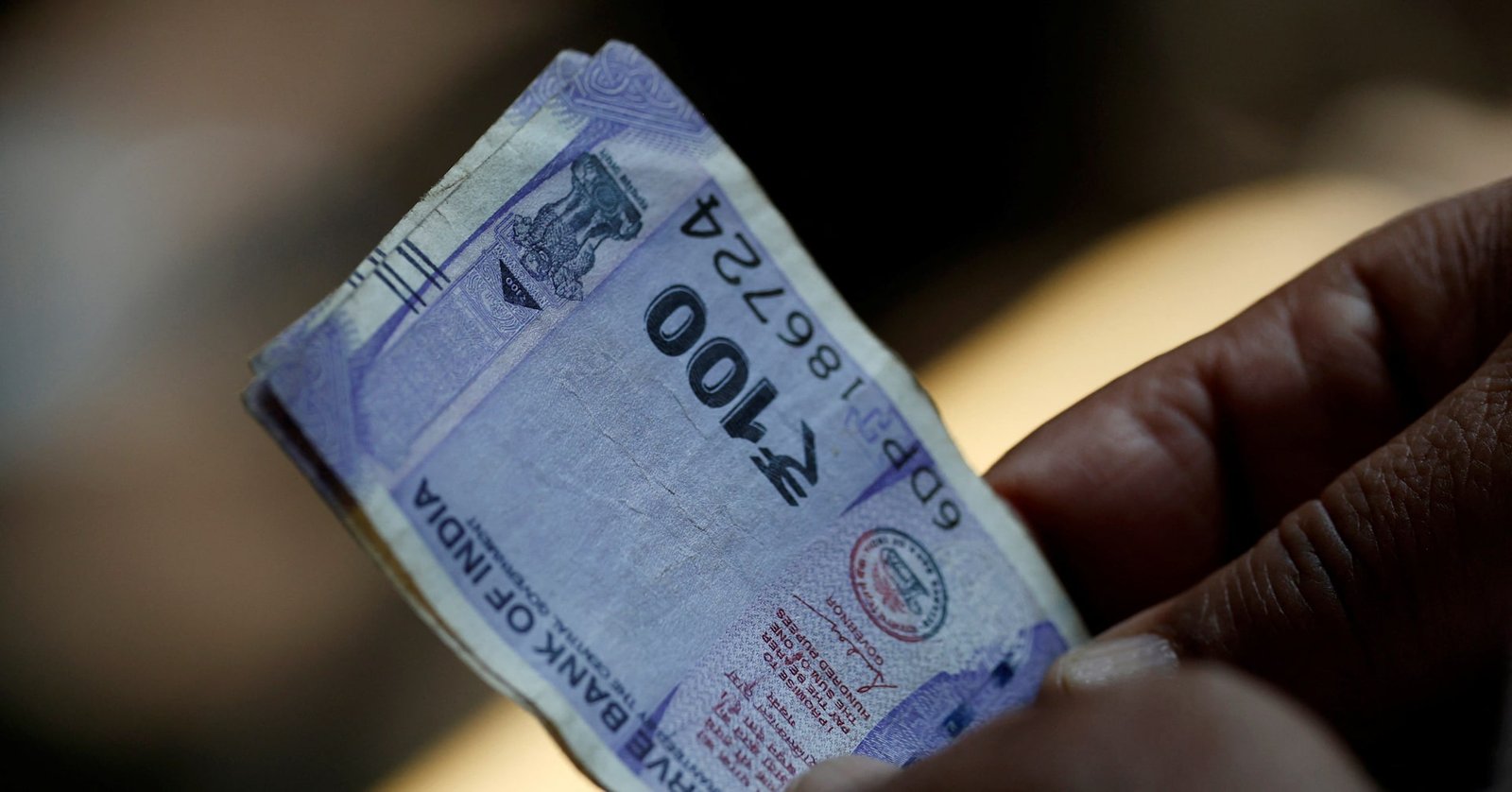
The currency faced some downward pressure as markets assessed the Reserve Bank of India’s decision to prematurely close its discounted foreign-exchange swap window for FCNR(B) deposits.
The RBI has moved the deadline for eligible fresh deposits to August 31 from September 30.
The central bank took the decision after foreign currency inflows through the scheme crossed $56.8 billion. The facility was aimed at encouraging banks to mobilise FCNR(B) deposits by offering a discounted dollar/rupee swap rate.
Why the RBI decision matters for the rupee
The strong FCNR(B) inflows have helped increase India’s foreign exchange reserves and improve the country’s external liquidity position. However, the inflows do not necessarily translate into an immediate or equivalent strengthening of the rupee.
Dhiraj Nim, economist and FX strategist at ANZ Research, said the rupee’s initial reaction to the RBI’s decision was negative but described the impact as likely to be temporary.
“I think there’s been a bit of a negative impact this morning, but I think it’s a very transient, sentimental impact. I don’t think the early closure will mean any lasting impact on the rupee,” Nim said on CNBC-TV18.
He also said the RBI had taken a well-timed decision given the scale of inflows.
According to Nim, the FCNR(B) scheme had boosted reserves, but the increase in reserves was not commensurate with the inflows because the RBI has also been intervening in the foreign exchange market to manage pressure from oil prices and the dollar.
Mitul Kotecha, head of FX and EM Macro Strategy, Asia at Barclays, said the early closure came as a surprise to the market, particularly after recent comments from RBI Governor Sanjay Malhotra.
However, he said the strong inflows suggested that the RBI may have been satisfied with the response to the scheme.
“There may have been a target in mind. It’s very hard to know, and there’s not been any statement on this,” Kotecha said on CNBC-TV18.
Strong inflows do not automatically mean a stronger rupee
The FCNR(B) flows have provided a significant boost to India’s balance of payments position. However, Kotecha said the impact on the spot rupee was always expected to be limited because the deposits are effectively swapped with banks.
“These are dollar flows, they’re swapped with banks. It’s more of a liquidity impact,” he said.
The rupee also continues to face pressure from higher oil prices and dollar demand from importers. Kotecha said importer demand for dollars remained significant, while maturing non-deliverable forwards could also limit the rupee’s ability to appreciate.
The dollar, meanwhile, has weakened after softer-than-expected US retail sales data reduced expectations of a Federal Reserve rate hike. However, Kotecha remains broadly constructive on the US dollar over the coming months.
Forex reserves provide a buffer
India’s foreign exchange reserves rose to around $707 billion as of August 7, a four-month high. The increase has been supported by the recent foreign currency inflows, although the RBI has also been using its reserves to manage volatility in the currency market.
Bankers said the RBI sold dollars through state-run banks last week as the rupee came under pressure.
The reserve buffer gives the central bank greater room to manage excessive volatility, but the direction of the rupee will continue to depend on factors such as crude oil prices, global dollar trends, capital flows and the RBI’s intervention.
What to watch for the rupee
The near-term reaction to the FCNR(B) window closure is likely to remain a key focus for the currency market. However, the expert view is that the move alone is unlikely to alter the rupee’s broader trajectory.
Kotecha expects the rupee to remain on a gradual depreciation path. Barclays has an end-2026 forecast of 95 per dollar and a mid-2027 forecast of 96.7 per dollar.
Nim, meanwhile, expects the rupee to remain around the 95.50-96 range over the coming few months, with depreciation resuming beyond the October-December quarter.
The broader outlook will therefore depend less on the closure of the FCNR(B) window alone and more on oil prices, the dollar, foreign portfolio flows and the balance of payments.
Watch the accompanying video for more