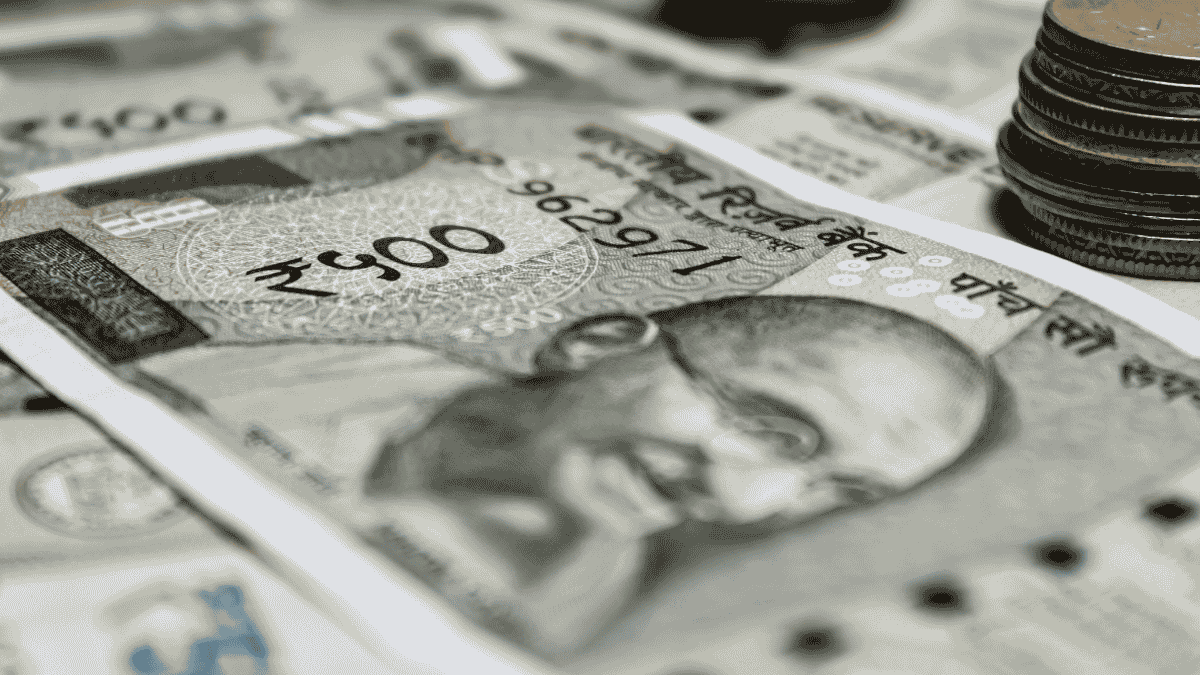
The Indian Rupee (INR) remains stronger against the US Dollar (USD) on Monday after two days of losses, with the USD/INR pair trading around 95.60 at the time of writing. However, the Indian Rupee (INR) may struggle in the coming period, potentially driving the pair higher, following the Reserve Bank of India’s (RBI) announcement to shut its FX swap facility for FCNR deposits a month ahead of schedule. Data released alongside the decision highlighted that the central bank’s policy measures, including the deposit swap window, successfully attracted nearly $57 billion.
Market traders expect the USD/INR pair to fluctuate between 95.00 and 95.50 this week. Some anticipate a short-term rush among overseas clients aiming to secure FX deposits before the facility officially closes on August 31, while foreign portfolio flows and routine hedging activity will further direct currency movement.
Investors will closely monitor the release of the minutes from the RBI’s August policy meeting, during which interest rates were kept unchanged. Looking ahead, most analysts project that the RBI will either initiate a shallow rate-hiking cycle starting in December or maintain its pause across the remainder of 2026.
India inflation uptick supports RBI’s steady policy stance
Analysts at Societe Generale highlight that India’s inflation backdrop remains broadly contained, noting that headline CPI “edged up modestly to 4.45% yoy in July from 4.38% in June,” a move they say “reinforc[es] the latest decision by the RBI to keep policy on hold.”
The USD/INR pair holds losses as the US Dollar (USD) declines amid weaker-than-expected US economic data and shifting central bank expectations. The US Census Bureau reported on Friday that Retail Sales fell by 0.6% month-over-month in July, following a 0.2% rise in June, coming in below the market consensus of 0.1% growth. On an annual basis, Retail Sales rose 5.0% in July compared to 6.8% in the previous month.
Traders have reduced their bets on Federal Reserve rate hikes following a slew of softer US data, including CPI, PPI, and Retail Sales. Markets are now pricing in a 33.1% chance of a rate hike next month, down from 44% last week according to the CME FedWatch tool.
Fed seen keeping hawks in check as disinflation evidence builds
Strategists at Scotiabank argue that last week’s data have likely provided sufficient reassurance on the inflation front to justify a more patient stance from policymakers. They highlight that “there is likely to have been enough evidence of disinflation in last week’s data (along with signs of slowing in the labour market) to allow Fed Chairman Warsh to keep the inflation hawks at bay,” reinforcing expectations that the Fed can resist pressure for an early shift back toward a more aggressive tightening bias.
Technical Analysis: USD/INR remains above moving averages within ascending channel
USD/INR holds losses after two days of gains, trading around 95.60 at the time of writing. The technical analysis of the daily chart indicates that the pair is remaining within the ascending channel, suggesting a prevailing bullish bias.
Additionally, the USD/INR pair holds a slight constructive bias as spot remains above both the nine-period Exponential Moving Average (EMA) at 95.4418 and the 50-period EMA at 95.3913, suggesting near-term dips are being cushioned by dynamic support.
The 14-day Relative Strength Index (RSI) hovers just below the 50 mark at 49.2, hinting at broadly balanced momentum after the recent pullback, while the latest FXS Fed Sentiment Index reading around 134.6 adds a modestly supportive macro backdrop without yet translating into a clear directional breakout on the chart.
(The technical analysis of this story was written with the help of an AI tool. Know more.)
US Dollar FAQs
The US Dollar (USD) is the official currency of the United States of America, and the ‘de facto’ currency of a significant number of other countries where it is found in circulation alongside local notes. It is the most heavily traded currency in the world, accounting for over 88% of all global foreign exchange turnover, or an average of $6.6 trillion in transactions per day, according to data from 2022.
Following the second world war, the USD took over from the British Pound as the world’s reserve currency. For most of its history, the US Dollar was backed by Gold, until the Bretton Woods Agreement in 1971 when the Gold Standard went away.
The most important single factor impacting on the value of the US Dollar is monetary policy, which is shaped by the Federal Reserve (Fed). The Fed has two mandates: to achieve price stability (control inflation) and foster full employment. Its primary tool to achieve these two goals is by adjusting interest rates.
When prices are rising too quickly and inflation is above the Fed’s 2% target, the Fed will raise rates, which helps the USD value. When inflation falls below 2% or the Unemployment Rate is too high, the Fed may lower interest rates, which weighs on the Greenback.
In extreme situations, the Federal Reserve can also print more Dollars and enact quantitative easing (QE). QE is the process by which the Fed substantially increases the flow of credit in a stuck financial system.
It is a non-standard policy measure used when credit has dried up because banks will not lend to each other (out of the fear of counterparty default). It is a last resort when simply lowering interest rates is unlikely to achieve the necessary result. It was the Fed’s weapon of choice to combat the credit crunch that occurred during the Great Financial Crisis in 2008. It involves the Fed printing more Dollars and using them to buy US government bonds predominantly from financial institutions. QE usually leads to a weaker US Dollar.
Quantitative tightening (QT) is the reverse process whereby the Federal Reserve stops buying bonds from financial institutions and does not reinvest the principal from the bonds it holds maturing in new purchases. It is usually positive for the US Dollar.