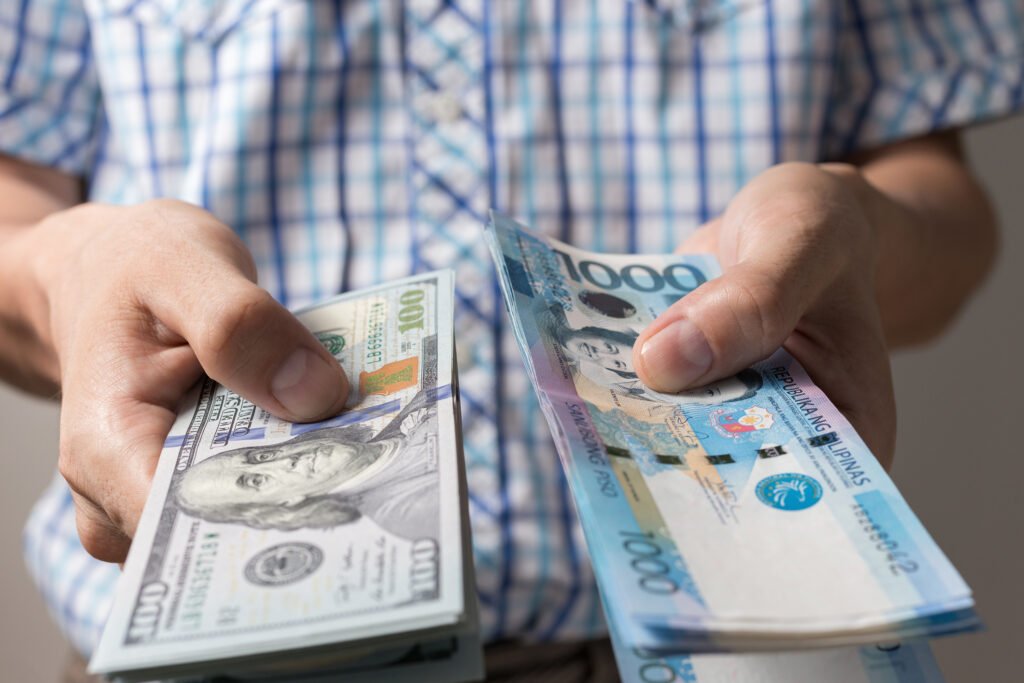

A PROLONGED Middle East conflict could weaken the Philippine peso further to P65 against the dollar on the assumption that the price of oil shoots up to $150 to $170 per barrel (Brent Crude), an analyst warned.
“65, probable on prolonged Middle East conflict and trades towards 150-170 [price of Brent Crude] ” Jonathan L. Ravelas, senior adviser at Reyes Tacandong & Co. told the BusinessMirror in a Viber message on Thursday.
According to Ravelas, his assumption is a conflict lasting three to nine months. He said this period will dictate oil prices and the direction (of the local currency.)
Asked how long is a “prolonged” Middle East conflict, he replied: “Right now it’s already prolonged. It’s been 10 weeks.”
“What more after nine months? Look at inflation from 2 to 7.2 percent, that is a huge jump. The key is, the longer the conflict lasts the higher probability of 65,” added Ravelas.
The analyst said this after the local currency plunged to a new record low of P61.64 against the dollar on Thursday.

Data from the Bankers Association of the Philippines (BAP) showed the Philippine peso closed at P61.64 against the greenback on Thursday. This rate is 26 centavos weaker than its previous finish of P61.38 on Wednesday.
Ravelas said the peso fell to this value after the greenback was “firmer on higher US Treasury yields as prospects of rate hikes this year.”
Philippine Institute for Development Studies (PIDS) Senior Research Fellow John Paolo Rivera told this newspaper that the peso hitting a new record low on Thursday likely reflects a combination of “stronger US dollar conditions, elevated oil prices, and concerns over the Philippines’s slower growth and higher inflation.”

“As a net oil importer, the country needs more dollars to pay for fuel, which adds pressure on the currency,” Rivera explained.
The PIDS senior research fellow noted that weak GDP outturn may have also weighed on sentiment by “reinforcing” expectations that growth will remain below target.
Moving forward, Rivera said the key concern is not just the level, but whether the depreciation remains orderly and does not trigger broader financial instability.

While the depreciation raises import costs and inflation risks, Rivera said it also improves the peso value of remittances and export earnings.
Within the trading session, the Philippine peso traded at the weakest level of P61.66 against the dollar and the strongest at P61.35 against the greenback, data from BAP showed.

Andrea Louise E. San Juan is a reporter at BusinessMirror covering the Bangko Sentral ng Pilipinas (BSP). Prior to being assigned to the Banking beat, she covered the Trade and Industry beat for almost four years. She earned her bachelor’s degree in Business Economics from the University of Santo Tomas in 2017. She joined BusinessMirror in April 2022.