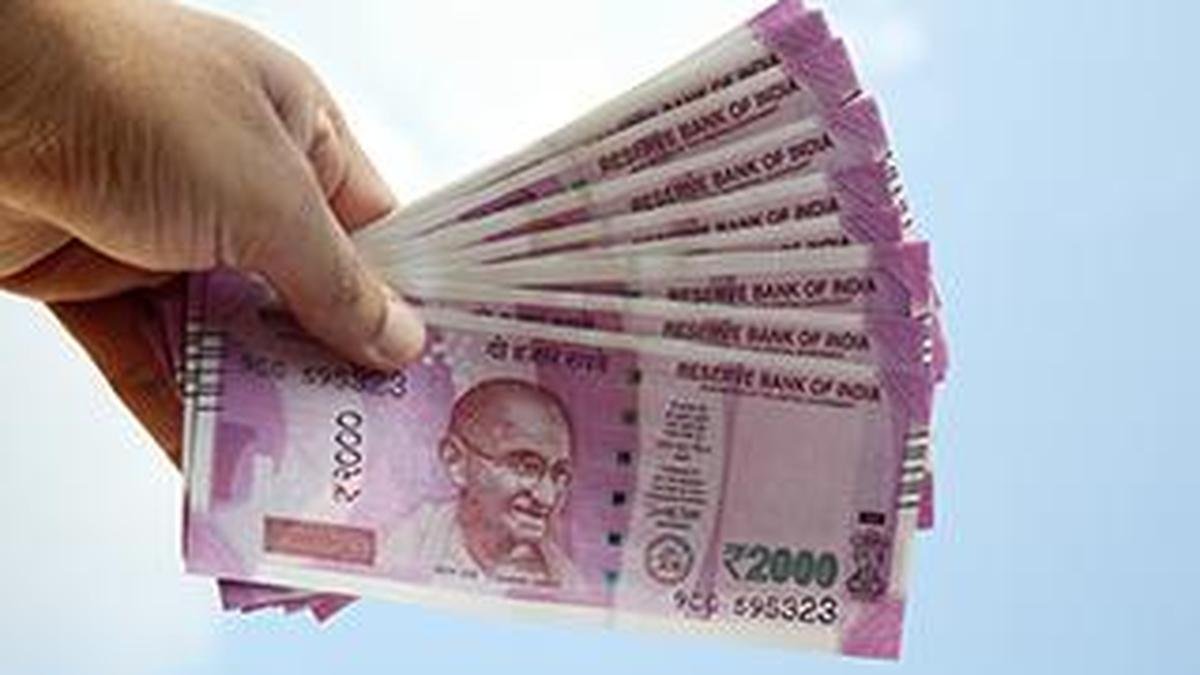
India’s currency slipped below the psychologically critical 90-per-dollar level on Wednesday, jolting the financial markets and amplifying concerns about the broader macroeconomic landscape. With the rupee losing over 5 per cent this calendar year, the breach of the 90-threshold on Tuesday sparked unease not because of one single shock, but on account of convergence of pressures that have steadily eroded sentiment.
On the surface, the macro backdrop appears supportive: crude oil prices have softened, offering relief on the import bill; inflation has cooled to below one per cent, easing household and corporate cost pressures; and GDP growth surprised on the upside with an impressive 8.2 per cent expansion in the September quarter. However, while these factors should ideally bolster a country’s currency, what the Indian rupee is witnessing is a sustained pressure.

And that has been driven by forces such as persistent dollar outflows, particularly from foreign portfolio investors booking profits and reallocating to more attractive markets abroad. While the outflow has steadily drained liquidity and heightened demand for the greenback, at the same time, the prolonged delay in finalising a trade deal with the United States has injected uncertainty into India’s external position.
Each passing week without clarity has only dampened market confidence and raised questions about future trade flows, tariff competitiveness, and the overall balance-of-payments outlook. As exports have come under pressure and experts say that RBI too has not actively intervened to provide strength to the rupee, a sharp jump in value of gold imports this festive season has put pressure on the rupee, say market participants.
Together, these pressures have created a disconnect between the strength of domestic fundamentals and the trajectory of the currency. What is pulling down the rupee is not weakness at home, but a combination of global risk appetite, shifting capital flows and policy ambiguity — factors that can overwhelm even strong economic indicators when they converge at the wrong moment.
The Reserve Bank, on the other hand, appears to be favouring a gradual depreciation to keep exports competitive in the wake of the 50% tariff imposed by US President Donald Trump. While a depreciation in currency may provide some support to exporters, many say that the RBI’s decision to stay away from intervention is a wise one, as it is not something they can artificially control. If they do, they will also end up dwindling their reserves, without achieving much.
Is India’s trade deficit widening?
A trade deficit is a situation when a country buys more (imports) than it sells (exports). Rise in trade deficit leads to depreciation of rupee against dollar, as India would end up buying more dollars to pay for the imports as against what it earns from exports. The increase in demand for dollars puts pressure on rupee and leads it to lose value.
Story continues below this ad
India’s trade position appears to be under renewed strain, with early signs suggesting that the deficit may be widening. A sharp drop in exports to the US, one of India’s largest markets, has been a major contributor to this shift. Merchandise exports contracted by 11.8 per cent year-on-year in October 2025, slipping to an eleven-month low of $34.4 billion. This decline came against the backdrop of higher tariffs and an unfavourable base, as exports had grown a strong 16.6 per cent in October 2024.
The weakness was broad-based. Oil exports dropped by 10.5 per cent, falling to a nine-month low of $3.9 billion as global crude prices declined. Non-oil exports fared no better, shrinking 12 per cent to $30.4 billion, also an eleven-month low. Aside from electronic goods — which managed to expand by 19 per cent — virtually every major export category registered year-on-year declines. Engineering goods, gems and jewellery, chemicals, and ready-made garments all saw sizeable contractions. Together, these segments accounted for nearly 90 per cent of the fall in non-oil exports, underscoring how widespread the weakness has become.
While exports faltered, imports moved in the opposite direction. Merchandise imports surged 16.6 per cent year-on-year to a record $76.1 billion in October 2025, up from $65.2 billion a year earlier. Gold import witnessed an extraordinary surge in the festive month of October as it tripled to an unprecedented $14.7 billion, compared with $4.9 billion a year earlier.
The emerging picture is one of an external sector under pressure: demand from major markets has softened, domestic appetite for imported goods remains strong, and the tariff environment continues to challenge export competitiveness. If these trends persist, India’s trade deficit could widen further in the coming months, adding additional stress to the currency and the broader balance of payments.
Deal with US still not done
Story continues below this ad
Market participants are growing increasingly uneasy as the long-anticipated trade agreement between India and the United States remains unannounced. . Should the deal continue to remain out of reach, the rupee may end up functioning as the system’s natural pressure valve. A gradual weakening of the currency could partly cushion the impact of tariff disadvantages that Indian exporters face relative to their global competitors.
“The concern now is not just about the timing,” one analyst said. “The bigger question is whether the absence of a deal will eventually widen the trade deficit.”
For investors and policymakers alike, the worry is that prolonged ambiguity could affect currency stability, export planning, and the broader sentiment around bilateral economic ties. Until a concrete announcement emerges, the market will continue to price in this uncertainty—most visibly through the rupee.
Dollar outflows
The lacklustre performance of India’s equity markets over the last 14 months has also prompted foreign portfolio investors (FPIs) to scale back their exposure. Over several months, they have been consistently selling Indian assets, putting steady downward pressure on the rupee.
Story continues below this ad
NSDL data shows that FPIs have withdrawn Rs 1.48 lakh crore from domestic equities since January 2025, a substantial pullback by any measure. What makes this trend particularly striking is that it has occurred despite India’s broadly stable macroeconomic backdrop.
Yet, numbers on the ground tell a different story from headline optimism. Over the past year, India has ranked among the weakest performers within the major global equity markets. The occasional record highs in benchmark indices obscure the fact that returns have materially lagged those in several other markets that have posted outsized gains. This stark divergence has led FPIs to treat India almost like a convenient liquidity source, from where funds are repeatedly withdrawn to pursue more lucrative opportunities elsewhere, say market participants.
The persistent outflows have also made their presence felt in the country’s external buffers. India’s foreign exchange reserves have declined by $12.1 billion between end-September and November 21, 2025, landing at $688.1 billion. Much of this decline stems from a fall in foreign currency assets, which have shrunk by $21.2 billion during the period. The drop has been partly offset by an increase of $9.2 billion in the value of gold reserves, but not enough to prevent an overall erosion.
High gold import amid high prices
A major driver of the import surge in October was the extraordinary jump in gold purchases. Gold imports tripled to an unprecedented $14.7 billion, compared with $4.9 billion a year earlier. This spike was fuelled by two powerful forces: robust festive-season buying and speculative demand triggered by the relentless climb in gold prices. Domestic gold prices have shot past Rs 128,000 per 10 grams.
Story continues below this ad
Beyond gold, import momentum remained firm. Non-oil, non-gold imports rose 12.4 per cent year-on-year to $46.5 billion, driven by strong demand for silver, electronic goods, fertilisers, and both electrical and non-electrical machinery—reflecting a combination of festive consumption, industrial requirements, and inventory rebuilding. In contrast, oil imports provided some relief, falling sharply by 21.7 per cent to $14.8 billion as global prices softened.
The broader picture, however, remains challenging. Record-high prices for metals and bullion have inflated India’s overall import bill at a time when export competitiveness is already under pressure due to steep US tariffs. This imbalance has weighed on market sentiment, particularly for import-intensive sectors such as machinery, electrical equipment, mineral fuels, and precious stones. Analysts note that the combination of elevated commodity prices and constrained export growth has left India’s external sector facing a period of pronounced stress, even as domestic demand stays resilient.
All told, surging gold prices and the resulting spike in imports have become a significant force shaping India’s trade dynamics—amplifying the pressures on the currency and adding to concerns about a widening trade deficit.
What’s RBI doing?
The central question in the market right now is whether the Reserve Bank of India is deliberately allowing the rupee to weaken. Economists offer mixed opinion about that interpretation. “The RBI is not pushing the rupee down,” noted the chief economist of a foreign bank. “What we are seeing is a reflection of global shifts and India’s own macroeconomic dynamics. The central bank has been selling dollars to smooth volatility, not to chase a specific exchange-rate level.”
Story continues below this ad
Even so, the RBI’s relatively restrained intervention – apparently aimed at making exports competitive — in recent weeks has contributed to the speed of the rupee’s decline. With the policy review scheduled for Friday, traders are eagerly awaiting signals on whether the central bank intends to draw a firmer line in defence of the currency. From a technical perspective, the rupee appears heavily oversold, and any meaningful recovery would require a sustained move back above 89.80.
Madan Sabnavis, Chief Economist at Bank of Baroda, highlights a behavioural pattern: importers are rushing in while exporters are holding back. “The dollar index is less than 100 and hence the rupee should be firm. The RBI appears to be apparently silent on intervention,” he said.
“All this is adding to the sentiment which is driving the rupee down. This will help exporters at the margin but is not good for importers or inflation. Any sale of dollars will also mean pressure on liquidity. Remember the IMF also had something to say about the rupee movement sometime back. Therefore, this is an interesting situation,” said Sabnavis. While a softer rupee does offer some marginal benefit to exporters, it simultaneously hurts importers and raises the risk of imported inflation.
It appears that the RBI is choosing a more measured, “soft-touch” approach to intervention. With its forward book already significantly drawn down—including in offshore non-deliverable forwards—it may be conserving its firepower. Rather than mounting a forceful defence, the central bank seems intent on using its resources judiciously, stepping in only when volatility threatens to become disorderly.
Story continues below this ad
For now, the RBI’s strategy suggests a balancing act: allowing the market to find its level while remaining ready to step in if the currency’s slide turns disruptive.
The market will be looking forward to a clearer picture on rupee’s movement from the RBI Governor Sanjay Malhotra when he unveils the monetary policy on Friday.
Experts say the dollar should get weaker in 2026 if the Fed continues with its rate cuts. But will the rupee strengthen? That will depend upon multiple factors, including conclusion of a trade deal with the US, the trajectory of gold imports and global crude oil prices. India’s domestic equity market performance will also play a role as that would mean inflow of funds into equities. These are questions being posed, for which, there are no clear answers as of now.
“We believe that any mark breached by the rupee which prevails for 2-3 days, becomes the new benchmark. The market is talking of 91, though we think post policy there should be a correction back to 88-89 levels,” Sabnavis said.
Analysts and markets are keeping their fingers crossed.