The Indian rupee ended Monday’s trade on a positive note, as the currency appreciated sharply, returning to the 95 territory against the greenback, and hitting a two-week high. This was aided by growing optimism over a potential peace deal between US and Iran, which helped cool off oil prices.
A slip in dollar index and supportive remarks by the RBI Governor also helped lift the sentiment for the domestic currency.
The currency started Monday’s trade on a high note, opening at 95.34 per dollar and went on to hit an intraday high of 95.10 before ending the trade at 95.23 per dollar, up 0.5% from its previous close.
The currency has appreciated by more than 1.5% from its record low of 96.96 per dollar, which it hit last week.
However, on a calendar-year basis the Indian rupee has depreciated by nearly 6%.
Slump in oil prices helps lift rupee
Oil prices slipped by more than 5% and fell below the $100 per barrel mark, hitting their lowest levels in over two weeks, as on Saturday US President Donald Trump said that a deal between Washington and Tehran was “largely negotiated”, and opening of the chokepoint- Strait of Hormuz would a part of the same.
Brent crude was quoted around the $97 per barrel mark, while US Benchmark, West Texas Intermediate was trading near the $91 per barrel level. The decline in oil prices weighed positively on the domestic currency, as oil is predominantly traded in dollars, and lower oil prices reduce the demand for greenback.
A decline in the dollar index also helped the currency gain momentum, as a soft dollar makes emerging market currencies more attractive for foreign investors.
RBI Governor says will curb excess volatility in forex markets
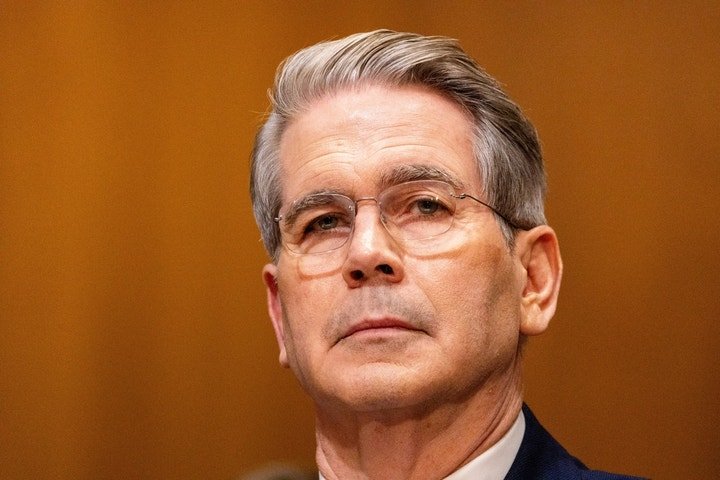
Amidst the excess volatility in the foreign exchange market, RBI Governor, Sanjay Malhotra in an interview with Mint said that the central bank will “do whatever is required” to manage orderly movement.
He added that the domestic currency has become undervalued both in nominal and in REER (real effective exchange rate) terms. Malhotra stated that once the situation in West Asia normalizes, the Indian currency could appreciate.
These remarks likely boosted the sentiment for the domestic currency, which currently is the worst performing Asian currency. ” This time the governor has clearly spoken on the direction of the intervention as it wants to control its weakness. This is a big change in the way RBI intervenes in the market seen very rarely from the central bank,” said Anil Kumar Bhansali, head of treasury, Finrex Treasury Advisors LLP.
Uncertainty continues to prevail
Currency market experts have repeatedly cited that oil remains an important determiner for the trajectory of the Indian rupee, and the Hormuz passage plays a critical role in the same as India, a net oil importer, meets more than 80% of its oil and energy requirements from the Middle East.
While reports suggest progress in the West Asia conflict, Trump has stated the US blockade on Iranian ports would continue to hold until a formal agreement is finalised between both countries, adding that White House will not rush into a deal.
These lingering uncertainties, continue to weigh negatively on emerging market currencies like Indian Rupee, Indonesian Rupiah, and Philippine Peso, which are net oil importers.
So far this year, foreign investors have sold domestic equities worth Rs 2.22 lakh crore, surpassing previous year’s record outflow of Rs 1.66 lakh crore. As per NSE data for May 22, FPIs were net sellers of Indian equities worth Rs 4,357 crore.
Outlook
“The rupee is expected to be in the range of 94.75 to 95.75 tomorrow with good upticks to be sold while importers to keep hedging the upside of the rupee,” Bhansali added.