Unlock the White House Watch newsletter for free
Your guide to what Trump’s second term means for Washington, business and the world
Good morning. There was an epic maybe-the-war-is-over rally on Wall Street yesterday, with the S&P 500 up almost 3 per cent. Technology led, and wartime winners such as energy and fertiliser companies lagged. The catalyst was both President Donald Trump and his defence secretary Pete Hegseth intimating that the US might declare an end to hostilities with Iran still in control of the Strait of Hormuz. But even if Trump decides to walk away with the regime still in place and in control of the strait, does that mean oil from the Gulf flows freely? We don’t know, but we have an easy time imagining how things might still go sideways. Send us your thoughts: [email protected].
The disappointing dollar
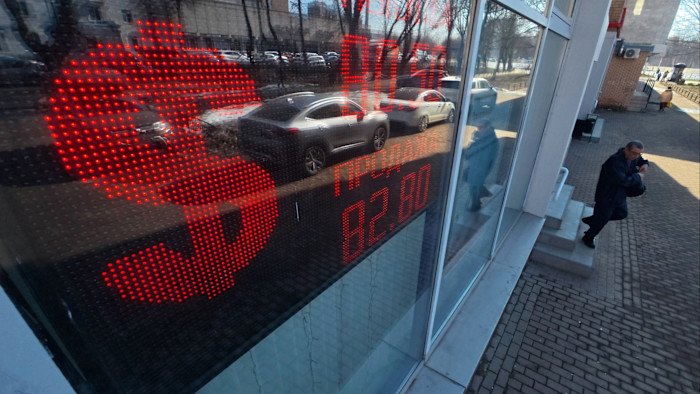
Even some of the most die-hard dollar believers (looking at you, Rob Armstrong) are having second thoughts about the currency’s supposedly unassailable status as the crisis in Iran grinds on.
The currency has pushed higher since the war started, as you might expect from a period of intense geopolitical instability. On the face of it, that looks like a poke in the eye for tedious naysayers like me, who over the past year or so have been questioning the dollar’s ability to act as a haven when the going gets tough.
But Team Naysayer has a few things to say about this.
One is anecdotal. Investors and analysts tell me that the pick-up in the dollar over the past month is less about the warm embrace of the world’s safest currency than getting back to neutral and unwinding some of the hedging that had been happening at the start of the year (dollar hedging puts selling pressure on the currency).
Another is that, compared to other episodes, this dollar rally is very weak sauce. War has driven the DXY dollar index up — by all of 2.6 per cent. That is a remarkably unremarkable performance by the standards of the past couple of years. You may recall that when Covid hit the fan, in March 2020, that same index screamed 8 per cent higher in 10 days (Wild times!) It added 10 per cent in a month from late September 2008, and kept on going. Even in a two-year snapshot, the move looks small. The currency is still within its 12-month trading range.

You might explain some of this away by assuming that, among the big central banks, the US Federal Reserve is the least likely to raise interest rates to tackle energy-driven inflation. This cuts against the relative appeal of the buck. But that doesn’t get you very far. It looks like the muscle memory that links global crises and dollar buying is fading.
Mark Sobel, chief economist at the Official Monetary and Financial Institutions Forum, and a 40-year US Treasury department veteran, says it feels like something has shifted:
As Steve Kamin and I noted in our FT termites piece, it appears that the dollar has lost some of its ‘special-ness’ — that is [the fact that] the dollar historically shoots up when the Vix spikes — after Liberation Day and this year’s Greenland threats.
The dollar did move up at the start of the Iran war, partly on traditional risk-off and safe haven considerations but also due to our energy independence. This was most notably the case on days punctuated by belligerence and tension.
But the dollar doesn’t appear to be holding that bid or experiencing sustained demand as the war proceeds, despite the more adverse economic consequences for others around the world.
Ajay Rajadhyaksha at Barclays is typically to be found in the “There Is No Alternative” camp, which holds that for all the US deficit issues, there’s simply no deeper, more liquid currency to hide in during a crisis. Now, he says, “we’re changing our tune somewhat” because of the dollar’s lacklustre performance.
“This crisis should have been the perfect storm in favour of the dollar,” he said. “The US is a gigantic energy superpower . . . Europe is very, very energy hungry, the same for China. The Fed is more willing to look through a one-time price-level shock.”
The war in Iran looks like a natural experiment that has found the dollar lacking — unless you think it doesn’t really represent a crisis at all, in which case I have a bridge to sell you.
(Martin)
$200 oil
Donald Trump badly wants a swift end to the war in Iran. But it is not clear he can get one. Bloomberg reports that even administration officials are modelling what an economy with oil prices as high as $200 per barrel would look like.
Oil at that level would not be unprecedented in recent history. Priced in 2026 dollars, oil briefly touched $200 in 2008, and hovered above $150 between 2011 and 2014:

Macquarie Group strategists think that if the war drags on to the end of June — they peg the odds of this at a meaty 40 per cent — $200 per barrel oil would ensue, which would push US petrol prices to about $7 per gallon. Only prices that high would put a meaningful dent in demand. The result would be a Covid-like drop in energy consumption, and a recession with US output shrinking by a per cent or so in the second quarter on a yearly basis.
Even economists who are confident in the US economy’s ability to weather oil prices as high as $150 per barrel acknowledge that $200 is a different story. Here is Skanda Amarnath of Employ America:
I’m not saying it’s going to be enjoyable or desirable, but the US economy can handle substantially higher oil prices without falling into recession . . . But when you start to get closer to $200, supply chains and firms aren’t used to budgeting for that reality. They don’t have any margin to absorb, so they’d have to pass through price and take the hit from demand that comes from it.
Robin Brooks at the Brookings Institution points out that consumers aren’t easily able to cut back on energy consumption in the short term; he thinks US demand elasticity for oil is overstated. If he’s right, there could be unpleasant effects on US aggregate demand at an oil price below $200.
The economic pressure on the president to find an off-ramp will increase sharply with every day, week and month that the strait is closed.
(Kim)
One good read
FT Unhedged podcast

Can’t get enough of Unhedged? Listen to our new podcast, for a 15-minute dive into the latest markets news and financial headlines, twice a week. Catch up on past editions of the newsletter here.