Are you planning a foreign vacation this summer? It might be a good idea to pause and have a relook at your budget. A holiday destination that seemed very much affordable a few months back might now look too costly, and it’s largely because of the rupee’s continuous slide against the US dollar.
The Indian currency has been under continuous pressure and is currently hovering around Rs 94 against the US dollar. It recently slipped to a historic low of Rs 95. Over the past 12 months alone, the Indian rupee has depreciated by around 10% to be among one of the worst-performing currencies in Asia. It has been weighed down by rising crude oil prices amid Middle East tensions, continued foreign fund outflows and a strong US dollar backed by high interest rates. As a result, anything linked to foreign currency has become more expensive.
From flight tickets and hotel bookings to daily expenses abroad, your foreign trip will now cost much higher in rupee terms. What looked like a well-planned budget earlier may now fall short, simply because the rupee buys less than it did before.
Your foreign trip now costs 12–20% more
The impact of a weakening rupee on your travel budget is not gradual, it is immediate and clearly visible the moment you start pricing your trip.
According to Pavan Kavad, Managing Director, Prithvi Exchange, “Foreign travel has become 15–20% more expensive as the rupee has weakened,” pointing to how almost every component of an overseas trip, from flights and hotels to local spending, is linked to foreign currency.
To understand the real impact, look at a simple example. A $3,000 trip that would have cost you around Rs 2.4–Rs 2.5 lakh earlier now costs closer to Rs 2.8–Rs 2.9 lakh. That means you are paying an additional Rs 40,000 to Rs 70,000 for the same trip, without any upgrade in your plans.
Pundri Kaksha, Vice President, Alankit Forex India Ltd, echoes this trend with a similar estimate. “A $3,000 trip has moved from around Rs 2.46 lakh to nearly Rs 2.85 lakh, marking an increase of about 16%,” he says, adding that the impact goes beyond just headline costs and reflects across every stage of travel spending.
The difference becomes even more pronounced when you are travelling with family. “A Rs 6 lakh family trip is now closer to Rs 7 lakh for the same itinerary,” Kaksha notes, highlighting how currency movement alone can stretch your budget by nearly Rs 1 lakh.
From the travel industry side, this cost escalation is clearly visible in bookings and consumer behaviour.
Govind Gaur, CEO, WanderOn, says the increase may look moderate at first glance but adds up quickly. “A trip that earlier cost Rs 2 lakh is now costing Rs 2.2–2.4 lakh. The rise is not always obvious in package pricing, but becomes visible through higher flight fares, hotel rates and visa costs.”
At a broader level, the increase is fairly consistent across destinations.
“Overall trip costs have gone up by 12–18%, depending on where you are travelling,” says Ninad Padwal, Cofounder, Toffee Tours and Travels. He adds that this is over and above the structural rise in travel costs seen after the pandemic, making international trips significantly more expensive than they were a few years ago.
In fact, Padwal points out that a trip which earlier cost around Rs 1.8–2 lakh per person is now closer to Rs 2.4–2.6 lakh, showing how both currency depreciation and rising base travel costs are combining to push budgets higher.
Put simply, even if your destination, hotel, and itinerary remain exactly the same, your final bill today is likely to be 12–20% higher than what it would have been a year ago.
Flights, hotels, visas—where you are paying more
The cost increase is not uniform, and it varies across components of your trip.
“The most immediate impact is on flight tickets,” says Govind Gaur, noting that airfares have risen by 12–18% due to dollar-linked costs like fuel and leasing.
At the same time, hotels and on-ground expenses are seeing the sharpest jump.
Ninad Padwal points out:
Hotels and local expenses are up by 15–20%
Flights have increased by 7–15%
Adding another layer, Mehardeep Singh, General Manager, Corporate Affairs, Rubystone Hospitality, explains that airfare remains the biggest cost component and is most sensitive to currency and fuel price changes.
Even basic expenses reflect this shift.
A $100 hotel room that earlier cost around Rs 8,200–Rs 8,500 now costs close to Rs 9,500.
Beyond this, costs like visa fees, travel insurance, and Tax Collected at Source (TCS) are also rising since they are linked to foreign currency.
Some destinations are hit harder than others
The impact of a weak rupee depends heavily on where you travel.
Trips to the US, the UK, other parts of Europe and UAE have become significantly more expensive—typically by 15–20%.
This is because these destinations are strongly linked to the dollar or euro. “Travellers face a double impact of higher base costs and currency depreciation,” says Govind Gaur.
On the other hand, destinations like Thailand, Vietnam and Indonesia are relatively less impacted.
“These markets offer better value as their currencies are more stable or move differently against the dollar,” he adds.
Ninad Padwal also highlights that cost increases in these destinations are lower, around 9–12%, making them more attractive for Indian travellers.
You are already changing how you travel
The impact of rising travel costs is not limited to your budget. It is quietly changing the way you plan and experience your trips.
Across the travel industry, a clear shift in behaviour is already visible. Around 15–20% of price-sensitive travellers are either postponing or cancelling their trips, especially long-haul vacations where the cost impact is the highest. At the same time, many are not giving up on travel altogether—but are adjusting their plans to fit the new reality.
This means shorter trips, tighter itineraries, and more conscious spending.
“This sharp rise in costs is prompting travellers to cut back on discretionary expenses like shopping and premium experiences,” says Pavan Kavad of Prithvi Exchange.
Instead of splurging on luxury stays or experiences, you are more likely to prioritise essentials—flights, accommodation, and key activities—while trimming anything that feels optional.
Pundri Kaksha of Alankit Forex India also points to a noticeable shift in how trips are being structured.
“Travellers are increasingly opting for shorter, more focused itineraries and tighter expense control,” he says, highlighting how budgeting has become a central part of travel planning.
There is also a growing preference for smarter payment choices. Travellers are moving towards prepaid forex cards and planning expenses in advance to avoid last-minute currency shocks and unpredictable card charges.
At a personal level, this change goes beyond just travel decisions.
You may find yourself reworking your overall travel budget, dipping into savings to maintain plans and cutting back on other lifestyle expenses like dining out or shopping. Because the pressure is not just on your holiday, it is on your entire financial plan.
“A weakening rupee has a ripple effect across your entire wallet,” says Kavad.
And that is why your travel decisions today are becoming more cautious, more calculated, and far more value-driven than before.
The hidden costs you may be underestimating
The rise in travel costs is not just about expensive flight tickets or hotel bookings. A weaker rupee also brings in a range of hidden costs that can quietly push your total spending higher than expected.
Several expenses that you may not actively factor into your budget tend to increase automatically when the currency weakens. These include visa fees, travel insurance, and taxes such as Tax Collected at Source (TCS), all of which are linked to foreign currency.
On top of that, there are additional leakages.
Forex conversion markups, especially when using credit cards abroad, can add to your costs. Dynamic pricing in flights and hotels—driven by both demand and currency fluctuations—can further inflate your overall bill if bookings are delayed.
Even your day-to-day spending during the trip like on food, local transport, shopping or experiences adds up much faster when every dollar costs more in rupee terms.
So how much more are you really paying?
If you break it down, the increase is quite significant, even for a standard trip.
A Rs 2 lakh trip can now cost around Rs 2.2–2.6 lakh
A Rs 3 lakh trip may stretch to Rs 3.3–3.5 lakh
A Rs 5 lakh family vacation can go up by Rs 60,000–Rs 90,000
And this is without any upgrade in your travel style.
What makes this sharper is the fact that international travel was already 30–40% more expensive compared to pre-pandemic levels due to higher airfares and global inflation. The fall in the rupee has only added another layer of pressure on top of that.
Should you cancel your travel plans?
Not really. Despite rising costs, the intent to travel remains strong.
“Indians are price-sensitive, but they continue to prioritise travel,” says Ninad Padwal, Cofounder, Toffee Tours and Travels.
What typically happens in such situations is a shift in behaviour rather than a complete pullback.
There is initial hesitation as costs rise and you adjust your budget and expectations and then travel plans resume, often in a modified form.
This pattern has played out before, especially after the pandemic when travel became significantly more expensive. And a similar trend is likely to emerge again.
In other words, you may delay, rethink, or tweak your plans, but you are unlikely to stop travelling altogether.
How you can reduce the impact
While you cannot control how the rupee moves, you can definitely control how you plan your trip—and that can make a meaningful difference to your final cost.
Experts say the key is to be more proactive and strategic, rather than treating travel planning as a last-minute exercise.
Plan and book early
One of the simplest ways to save money is to lock in your major expenses well in advance. Flight tickets and hotel prices tend to rise closer to travel dates, and any further currency volatility can make them even more expensive.
Manage your forex smartly
Currency timing can play a big role in your overall budget. “Planning forex purchases within 60 days of travel and spreading conversions over time can help manage volatility,” says Pavan Kavad, Managing Director, Prithvi Exchange.
Instead of converting your entire amount at once, you can stagger it over a few weeks to average out exchange rate fluctuations.
Use prepaid forex cards
Payment choice also matters. Pundri Kaksha, Vice President, Alankit Forex India Ltd, points out that prepaid forex cards are increasingly being preferred as they “help avoid fluctuating exchange rates and additional markups at the time of billing.”
They also give you better control and predictability over your spending during the trip.
Lock costs in advance
Another effective way to reduce risk is to minimise exposure to currency fluctuations during your trip. “All-inclusive packages allow travellers to pay a significant portion of their expenses in rupees before departure,” Kaksha adds, helping reduce uncertainty later.
Choose destinations wisely
Where you travel can significantly influence how much you spend.
Opting for destinations where the rupee has relatively better purchasing power or where overall costs are lower can help you manage your budget without compromising much on the experience.
Travel off-season and stay flexible
Lower demand periods often come with better deals on flights and hotels. Being flexible with your dates and travel plans can help you take advantage of discounts and avoid peak pricing.
Summing up…
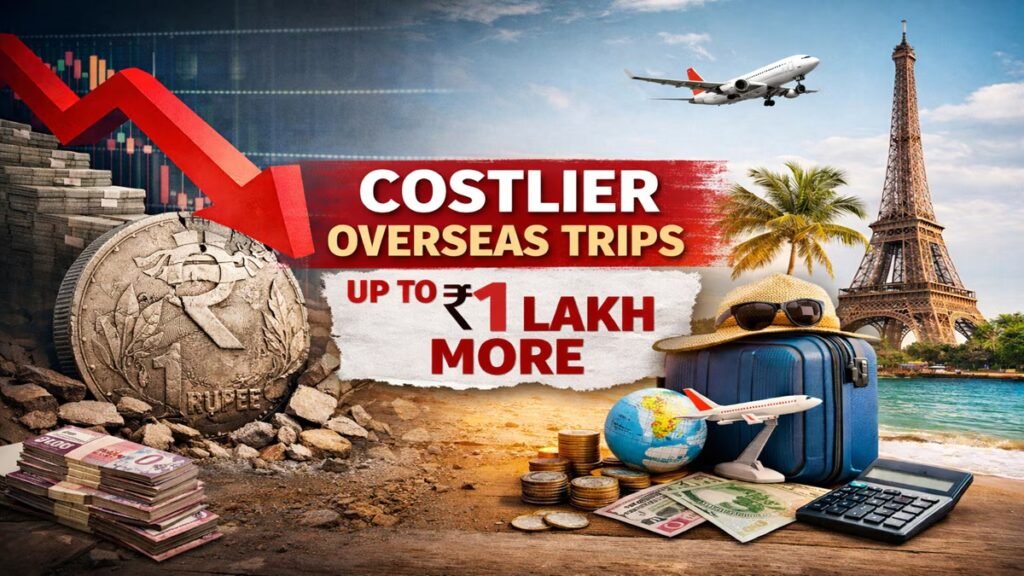
The rupee fall has made your foreign vacation more expensive by around Rs 1 lakh in normal cases, depending on your destination and travel style.
But that doesn’t mean your travel plans need to be cancelled. It simply means you need to plan smarter. Because in today’s environment, the difference is no longer just about where you travel, but it is about how well you manage your money before and during the trip.
Disclaimer:
The estimates on travel cost increases are indicative and based on prevailing exchange rates, industry inputs, and expert views. Actual expenses may vary depending on destination, travel dates, booking timelines, and individual spending patterns.