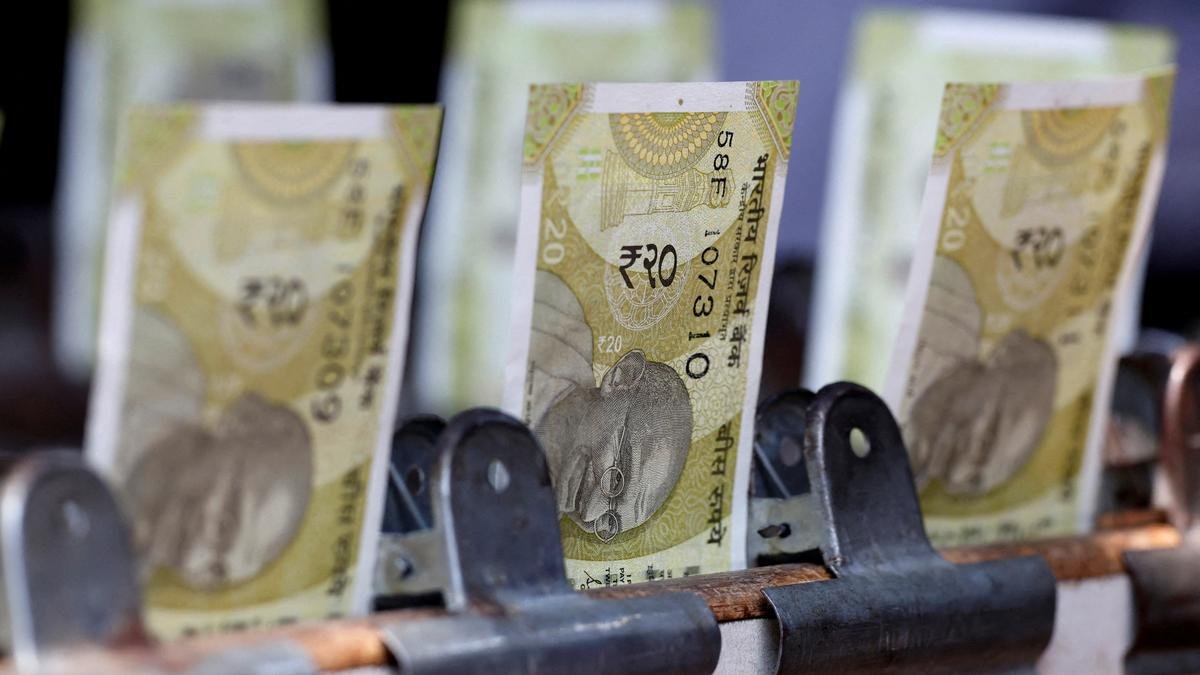

The Indian rupee logged its sharpest weekly drop since May, with Friday’s uneventful trading session closing out the week, as elevated oil prices and strong merchant dollar demand renewed worries about the currency’s trajectory.
The rupee closed at 96.28 per dollar, down about 1 per cent week-on-week, stung by a 13 per cent rise in Brent crude oil prices as fighting between the US and Iran intensified, choking energy supplies through the Strait of Hormuz yet again.
Iran said it launched fresh strikes on US facilities in the Middle East on Friday, including the first direct attack in Syria, after a sixth straight night of US strikes on Iranian military facilities.
Brent crude oil prices were last up nearly 2 per cent on the day at $85.7 per barrel.
Dollar sales by state-run banks, most likely on behalf of the Reserve Bank of India, helped the rupee snap a four-day losing streak even as merchant dollar demand remains robust, traders said.
“Exporters have once again withdrawn from the market anticipating further weakness. Importers are not inclined to let any dip (on $/ ₹) go,” an FX salesperson at a foreign bank said.
Meanwhile, another brutal selloff for chipmakers rippled through global stock markets on Friday but Indian stocks held their ground on account of their scant exposure to the booming artificial intelligence sector.
MSCI’s broadest index of Asia-Pacific shares, excluding Japan, was down nearly 3 per cent, while India’s Nifty 50 rose 1 per cent.
In the near term, traders are keeping their focus on two factors: oil prices and how firmly the RBI will stand against further rupee weakness as the currency approaches record low levels of near 97 per dollar.
“Should rupee depreciation pressures persist, the RBI may find itself caught between a rock and a hard place, balancing spot-market operations and managing its forward-dollar book,” said Krishna Bhimavarapu, APAC economist at State Street Investment Management.
The central bank’s net forward dollar liabilities stood at $106.6 billion in May.