The sharp fall in the Indian rupee in the last few months has mostly been triggered by strong domestic flows via the systematic investment plans (SIPs) that provided an exit route to foreign investors who wanted to encash their investments in an expensive market, suggests a recent note by Jefferies.
A potential valuation correction, artificial intelligence trade (AI) trade unwinding and the Strait of Hormuz opening for business, the note said, could stem these outflows.
“Not current account deficit (CAD), but all-time low capital flows is the culprit for INR pressure. Equity market driven outflows accounted for $78 billion over the last two years, as strong domestic flows provided an easy exit to foreign capital escaping an expensive market,” wrote Mahesh Nandurkar, managing director at Jefferies in a coauthored note with Abhinav Sinha and Priyank Shah.
According to data from the Association of Mutual Funds in India (Amfi), net inflows into existing equity schemes climbed to a record ₹38,503 crore in March 2026 and stayed largely flat at ₹38,410 crore in April 2026. The previous high was recorded in October 2024, when existing schemes attracted net inflows of ₹37,840 crore, the data showed.
Rupee
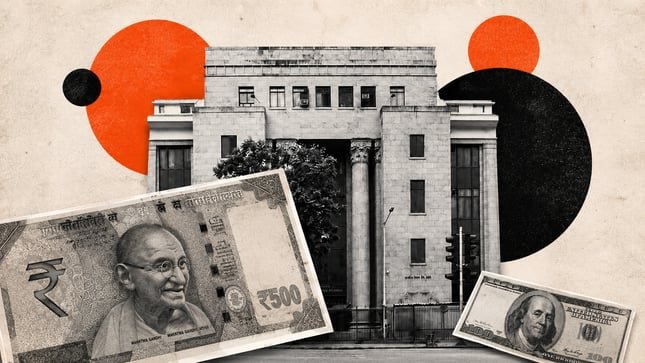
Thus far in calendar year 2026 (CY260, the rupee has depreciated around 7 per cent against the US dollar to surpass the 96 mark and making it one of the worst performing emerging market (EM) currencies during this period.
However, there is hope.
“Trend in Net FDI was mixed with Net FDI increasing and declining in 2 time each out of 4 episodes. The same can happen again if AI as the dominant global investment theme slows down. However, a weaker INR has not historically boosted exports.
FPI selling
Meanwhile, foreign portfolio investors (FPIs), according to Jefferies’ estimates, have sold a net $44 billion worth of Indian stocks since April 2024. Capital account surplus has thus declined to just around 0.5 per cent during FY25-26 (the lowest ever), versus 2.6% surplus during prior 10- years.
“Strong domestic flows (strong MF flows thanks to SIPs and tax advantage for equity investments, higher equity allocation by EPFO and NPS) continue to absorb heavy foreign selling in equity markets. Consequently, the balance of payments (BoP) was in negative during the past two years and another negative BoP year is in the offing,” Nandurkar said.
“We expect the FY27 CAD to remain comfortably contained below 2% of GDP, which remains a manageable level. Our base-case scenario factors in crude oil prices averaging US$90 per barrel (from June onward) and a 10% decline in gold imports,” the note said.