
The US dollar strengthened against the euro and Pound Sterling as oil prices surged over 6% following the collapse of US-Iran peace talks, reinforcing energy-driven inflation concerns.
Oil Surges Over 6% as US-Iran Peace Deal Fails
Markets opened the week to another weekend energy shock as oil rallied over 6%.
There were too many contested points for the US and Iran to overcome and a peace deal is distant. However, the 2-week ceasefire is holding for now.
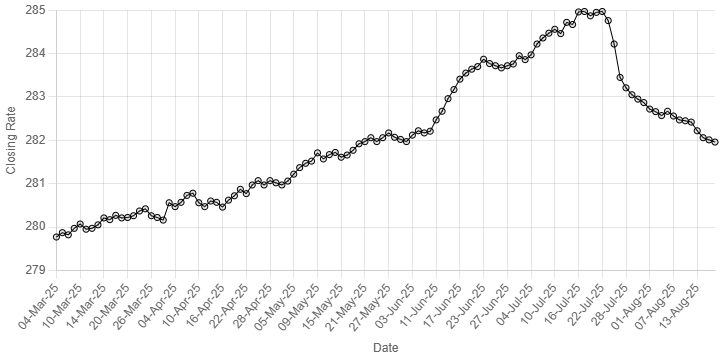
The euro and pound are under pressure but EURGBP is mostly unchanged at 0.87.
The collapse of the latest round of US-Iran peace talks has sent another shock through global energy markets, ending hopes for a diplomatic resolution that might have eased regional tensions.
A peace deal was never going to be straightforward and a 21-hour negotiation between the US and Iran over the weekend ultimately led to nothing. Iran would not agree to give up Uranium enrichment or fully open the Strait before a full peace deal was signed. In response, the US will blockade the Strait and Iranian ports at 10am ET on Monday.
Brent crude futures surged toward the $95 mark following the news, marking one of the sharpest single-session gains of the year. Market participants are concerned that without a formal agreement, the “shadow war” at sea and targeting of energy infrastructure could escalate. US Secretary of State Antony Blinken noted that the gap between the two nations remains “significant and deeply concerning,” suggesting that the window for a return to the 2015 nuclear framework is rapidly closing. This sentiment was echoed by Iranian officials, who maintained that the US refusal to provide long-term guarantees made any progress impossible.
The failed talks have also had an impact on the currency markets. The US Dollar has found renewed strength as a safe-haven asset and a beneficiary of higher interest rate expectations driven by energy-led inflation. In contrast, the Euro has struggled under the weight of higher import costs. EURUSD slipped around 0.35% toward the 1.168 level as investors fretted over the Eurozone’s sensitivity to energy price shocks. Meanwhile, commodity-linked currencies like the Canadian Dollar have outperformed, but the broader trend remains one of dollar dominance.

In the fixed income space, the 10-year US Treasury yield climbed as the rally in oil revived fears that inflation will remain “sticky,” forcing the Federal Reserve to keep rates higher for longer. Higher yields have, in turn, pressured equity markets.
That said, sticky inflation because of energy costs is less of a risk than the last inflation wave created by wages and a tight labour market. US CPI was released last Friday and jumped to 3.3%, broadly in line with expectations and nearly 1% higher than the previous month. It may climb further, but as
ING point out, underlying inflationary pressures are soft so higher inflation should fade if and when oil prices come back down.
“Gasoline price hikes prompted a jump in headline inflation, but core pressures were more benign than feared. We have much greater confidence that inflation will be transitory this time around, given the lack of demand impetus and weaker corporate pricing power versus 2022.”
The issue then is how long oil prices will stay high and whether economies can shoulder the extra costs. The EU is under pressure, as is Asia as it is an energy importer. The United Kingdom is also under threat due to its weak economy. Prime Minister Starmer has expressed frustration about the domestic impact, as the rally in oil threatens to undo recent progress made in bringing down the headline inflation rate. Furthermore, the cost-of-living crisis continues to weigh on consumer confidence.
While both the pound and Euro have lost ground against the US dollar in recent weeks, they are generally static compared to eachother, with EURGBP stuck around the 0.87 level.