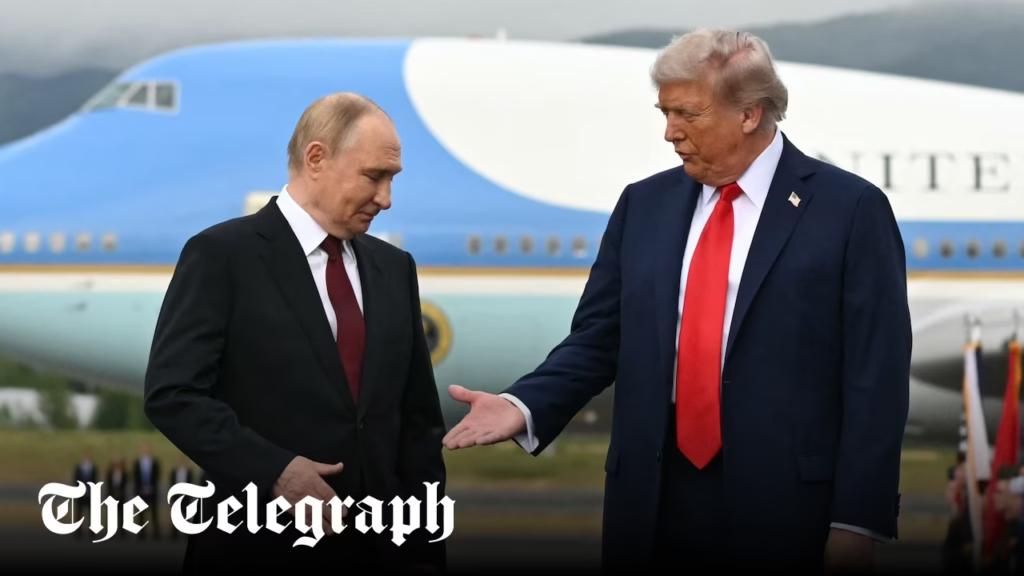
Much of the recovery was driven by expectations that Mr Trump might force a ceasefire in Ukraine on terms favourable to Russia.
Tatiana Orlova, from Oxford Economics, said the actions of the president had driven much of the roubles moves this year.
She said: “There was a bout of weakening in July and August, when Donald Trump started changing tack, and tried to exert pressure on Russia via the main trading partners that purchase Russian oil.
“In late July, Trump announced additional tariffs on imports from India, the largest buyer of Russian oil exports.”
The currency also strengthened a touch even after sanctions were applied to energy giants Rosneft and Lukoil.
Ms Orlova said this was “a bit of a conundrum”.
“In the last couple of months the rouble seems to have become immune to the sanctions,” she added. “One of the reasons could be that Russia trades less and less in US dollars or euros with its trading partners.”
Still, the rouble is still weaker than it was before Vladimir Putin expanded his war in Ukraine into a full-scale invasion in 2022. Before that point, the exchange rate stood at around 73 roubles to the dollar.
Russia stops money from leaving the country, which may be artificially propping up the rouble’s value.
Jane Foley, a currency strategist at Rabobank, said: “We have got capital controls in place in Russia, so if you like [the stronger exchange rate] gives a false impression of the strength of the economy.
“Often when currencies strengthen we associate that with a strong economy, but with capital controls you are getting a significantly altered view.”
The world’s worst-performing currencies came in Turkey, Ethiopia and Argentina.
The lira fell 17.6pc against the dollar over the year, the birr 18pc and the peso 29pc.
It means over the past decade Argentina’s currency has lost 99pc of its value, after a long series of economic crises.