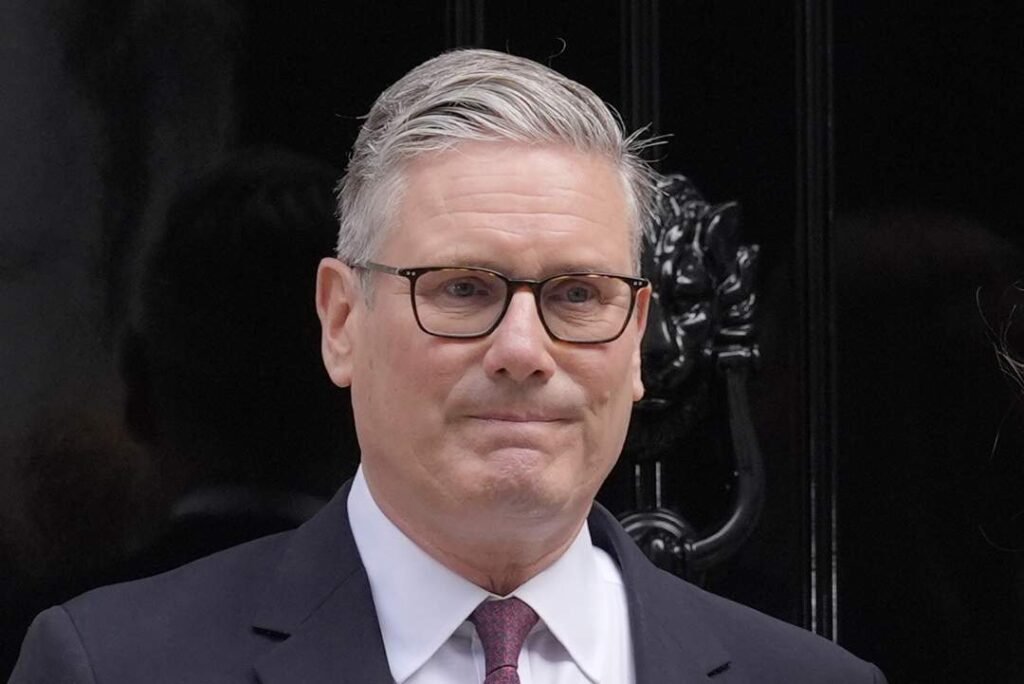
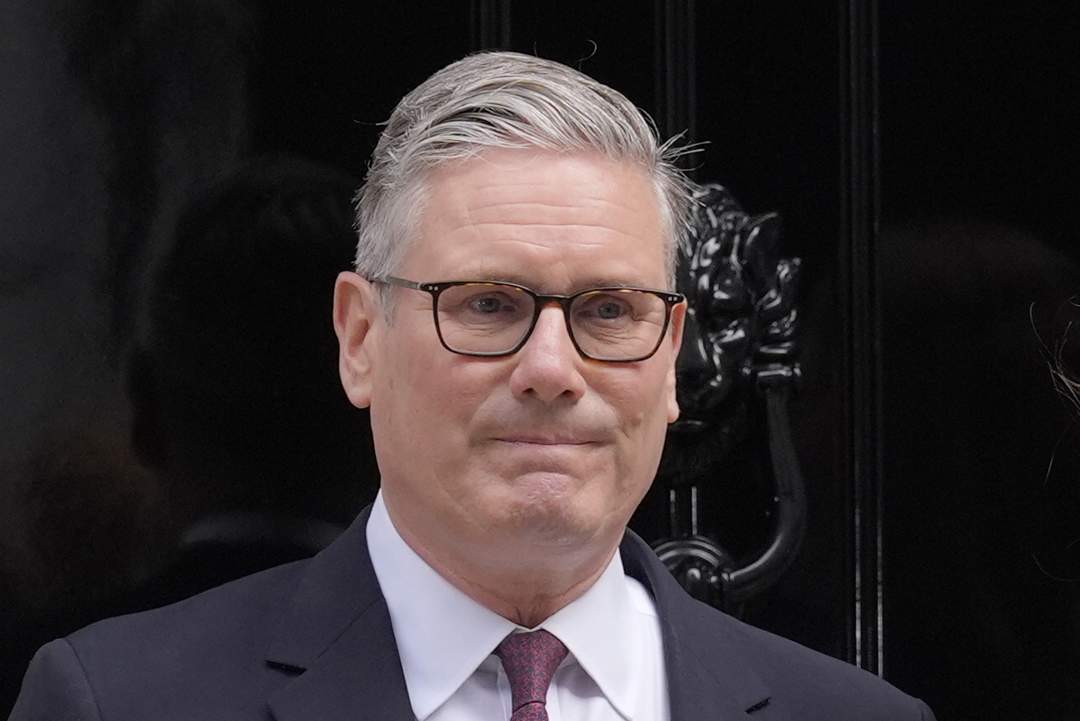
UK Prime Minister Sir Keir Starmer announces his resignation outside 10 Downing Street, London.
Andrew Matthews/PA Images via Getty Images
The pound traded near this year’s low as Keir Starmer said he would step down as Britain’s prime minister, with traders weighing whether a new Labour administration could revive concerns over the UK’s fiscal outlook.
Sterling slid as much as 0.4% to touch $1.3181 early on Monday, approaching its 2026 low of $1.3159 set in March, before paring losses. A break below the March low would put the currency at its weakest level since November.
Starmer’s announcement followed Andy Burnham’s victory in the Makerfield by-election, which returned the Greater Manchester mayor to Parliament and cleared the path for him to mount a leadership challenge.
The key question for investors is what the impact on the country’s finances will be if Burnham, a former minister, becomes premier as expected. He has so far offered little clarity on the policies he’d pursue, making it difficult to gauge the ramifications for future borrowing. Markets are nervous about any potential increase in bond sales to fund spending, given that the UK is already struggling with its debt levels.
“Markets will be focused on Burnham’s views on fiscal policy and whether there will be any relaxation of the current fiscal rules,” Commonwealth Bank of Australia strategists, including Kristina Clifton in Sydney, wrote in a note to clients. “A loosening in fiscal rules would likely be poorly received by the UK bond market,” and weigh on the pound, they said.
Bloomberg macro strategist Skylar Montgomery Koning said: “The market reaction to a likely Andy Burnham premiership suggests investors see this as political noise rather than a genuine threat to UK fiscal credibility. UK politics has struggled to generate lasting relative weakness in UK assets since the Liz Truss crisis. Markets already price a political risk premium. That looks to be the signal again now.”
Options traders were already positioned for further pound weakness. One-week risk reversals, a widely used gauge of market sentiment, traded near the most bearish levels for sterling in a month.
The pound has been pressured recently as questions mounted over Starmer’s fate following heavy losses in local elections last month. Expectations that the Bank of England may raise interest rates less than its US counterpart this year have also weighed on the currency, with sterling weakening about 2.5% since the elections on 7 May.
For Steve Brice, global chief investment officer, group wealth management at Standard Chartered in Singapore, political uncertainty can lead to a buying opportunity, but he has to see a selloff first.
“If Burnham thinks he can come in and spend his way to growth, I think the markets will have a different view of that,” he said. “Markets will usually win out, and I think he’s smart enough to realise this.”
The pound’s performance against the euro suggests it is fairly valued in the short term, according to ING Groep NV currency strategist Francesco Pesole.
This is both good and bad news for sterling as “it signals that markets are relaxed about this government change, but that means a greater downside for the pound should fiscal concerns resurface,” Pesole said.