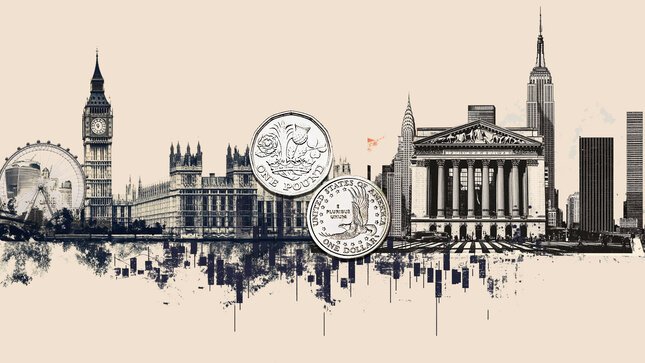

The Pound Sterling edged higher after UK inflation rose to 3.3%, although gains were limited as markets focused on easing geopolitical tensions following an extension of the US-Iran ceasefire.
Pound to Euro (GBP/EUR): 1.15036 (+0.01%)
Pound to Dollar (GBP/USD): 1.35095 (-0%)
Euro to Dollar (EUR/USD): 1.17437 (-0.01%)
UK Inflation Rises to 3.3% as Energy Costs Show in Data
UK CPI rose from 3.0% to 3.3%, as expected.
The rise was primarily driven by fuel costs.
Markets breathe a sigh of relief as the US Iran ceasefire is extended.
Markets have had to contend with multiple drivers over Tuesday and early Wednesday and have stayed relatively steady.
First up was the testimony by Kevin Warsh, the Fed Chair Designate.
Warsh argued for a “regime change” in monetary policy, prioritizing inflation fighting over the current approach and citing past “fatal policy errors”.

While he sought to assert independence from the White House, stating that while the President hadn’t demanded specific rate actions, he believed “the operational independence of monetary policy is [not] particularly threatened when elected officials… state their views on interest rates”.
Warsh signaled a tighter focus for the Fed, urging it to stay in its “lane” by reducing focus on social and environmental issues and skepticism regarding a strict 2% inflation target.
Market reactions were mixed: hawkish comments on inflation pushed Treasury yields higher, but his suggestion that AI could improve productivity and alleviate inflationary pressures provided a “high-tech” defense for future, lower rates.
The US dollar was slightly higher but steady.
Just after the testimony, two major news items hit the wires.
The first sent the S&P500 50 points lower as Vice President Vance cancelled his trip to Islamabad as Iran were not planning to attend.
That caused some concerns on the impending ceasefire deadline, which was due to expire on Wednesday evening.
However, around 30 minutes later, the move completely reversed as President Trump extended to deadline indefinitely to allow Iran some time to come up with a proposal.
UK Inflation Jumps Higher Again
Wednesday morning brought some key inflation out of the UK.
The release showed another increase as headline Consumer Price Index (CPI) inflation rose to 3.3% in the 12 months to March, up from 3.0% in February, matching the consensus estimate.
Before the hostilities began in late February, many expected inflation to dip below the Bank of England’s 2% target by April, but that milestone now appears out of reach for the near term.
The primary driver for the jump was fuel prices, which saw their largest monthly increase in over three years.
Petrol and diesel costs were the main upward contributors to the annual rate, with the average price of petrol reaching 140.2 pence per litre.
Airfares and food prices also added to the upward pressure.
ONS Chief Economist Grant Fitzner noted that “Inflation climbed in March, largely due to increased fuel prices… Airfares were another upward driver this month, alongside rising food prices”.
The only significant downward offset came from clothing, where prices rose by less than they did at the same time last year.
While headline numbers rose, the underlying “core” inflation—which excludes volatile energy, food, alcohol, and tobacco—unexpectedly eased slightly to 3.1% from 3.2%.
However, services inflation, a key metric for domestic price persistence monitored by the Bank of England, edged up from 4.3% to 4.5%.
This stickiness suggests that while external energy shocks are hitting the headline rate, internal price pressures remain firm.
The reaction in markets was measured, as the data mostly matched expectations.
GBPUSD saw some initial support as the higher inflation print led markets to consider rate hikes or an extended pause.
With the Bank of England’s 2% target now looking more distant, traders are betting that the central bank will have to keep the Bank Rate at its current 3.75% for longer or even hike.
The Euro to Dollar (EURUSD) exchange rate remained largely focused on Eurozone dynamics, though the pound’s relative strength on the back of “higher-for-longer” rate bets helped pull EURGBP lower to just below 0.87.