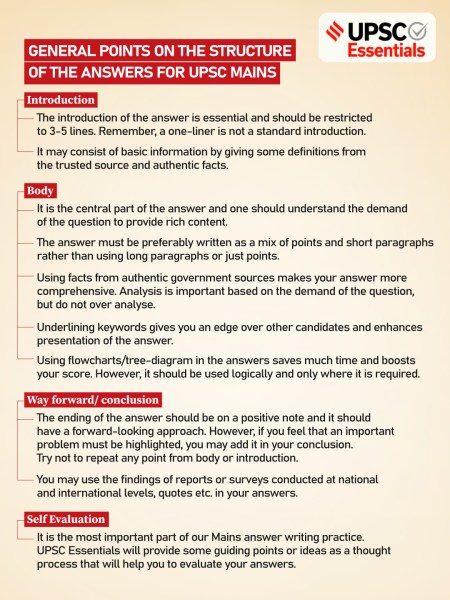
UPSC Essentials brings to you its initiative for the practice of Mains answer writing. It covers essential topics of static and dynamic parts of the UPSC Civil Services syllabus covered under various GS papers. This answer-writing practice is designed to help you as a value addition to your UPSC CSE Mains. Attempt today’s answer writing on questions related to topics of GS-3 to check your progress.
🚨 Click Here to read the UPSC Essentials magazine for May 2026. Share your views and suggestions in the comment box or at manas.srivastava@indianexpress.com🚨
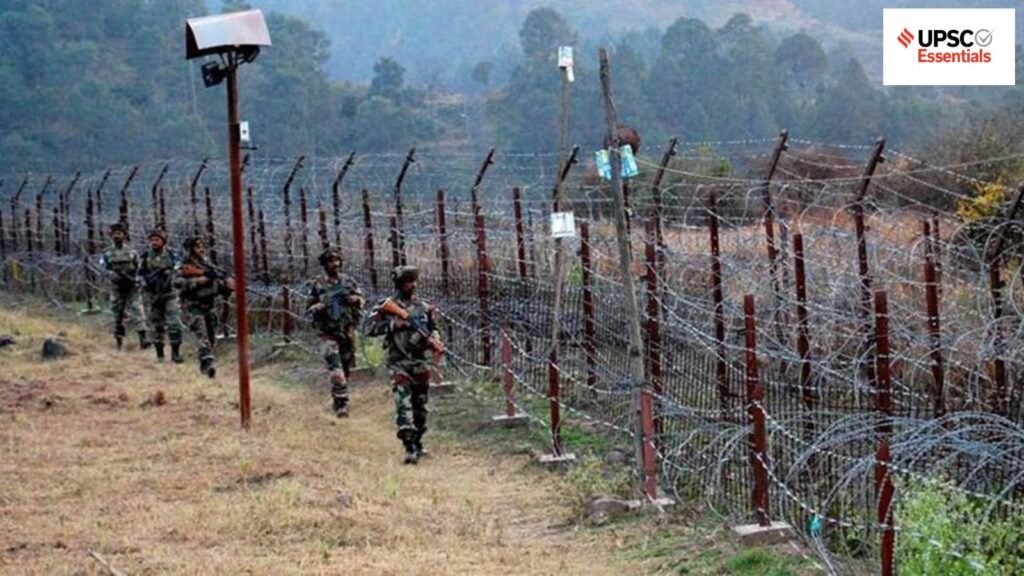
Border management is not merely a military challenge but also an administrative and policing challenge. Discuss in the context of India’s western border.
QUESTION 2
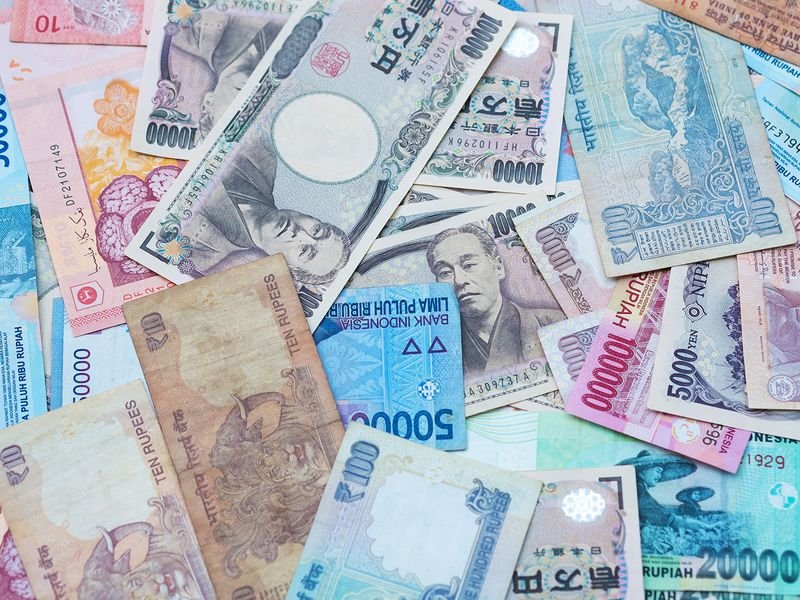
To what extent can the recent depreciation of the Indian rupee be attributed to changing economic fundamentals rather than market overshooting? Discuss.
QUESTION 1: Border management is not merely a military challenge but also an administrative and policing challenge. Discuss in the context of India’s western border.
Relevance: The question integrates border management, internal security, centre-state coordination, and governance reforms, all important GS-III topics. It reflects the evolving nature of security threats where administrative capacity and intelligence gathering are as important as military preparedness.
Note: This is not a model UPSC answer. It only provides you with a thought process which you may incorporate into the answers.
Introduction:
Story continues below this ad
— India’s western border with Pakistan is a sensitive frontier encompassing diverse terrains, including land, coastal, and desert regions. Extending over approximately 3,323 km, it passes through Gujarat, Rajasthan, Punjab, the Union Territory of Jammu & Kashmir, and the Union Territory of Ladakh.
Body:
You may incorporate some of the following points in your answer:
— The western frontier faces dangers of infiltration, cross-border terrorism, and hostile operations, necessitating the deployment of specialised personnel such as the Border Security Force (BSF).
— The Ministry of Home Affairs identifies securing borders against hostile elements and preventing illegal crossings as a core objective of border management.
Story continues below this ad
Why is it both an administrative and a policing challenge?
— Border police must monitor settlements near the international boundary and address difficulties caused by population mobility in these areas. Administrative presence is critical for preserving law and order in remote frontier areas.
— Migration from within and outside the country is a serious issue in border districts. Detecting and verifying suspicious movement needs local intelligence networks and police investigations, not just military action.
— Drug trafficking was rated as one of the most serious policing issues in districts bordering Pakistan. Such risks necessitate criminal investigation, intelligence gathering, and cooperation between state and federal authorities. Recently, data compiled by the Punjab Police and central agencies revealed that more than 40% of the 128 Pakistani drug smugglers on a watch list for pushing narcotics into Indian Punjab are concentrated in just two districts of Pakistan’s Punjab province—Lahore and Kasur. This highlights the complex security challenges along India’s western border with Pakistan.
— Administrative restructuring enhances supervision, response capability, and local accountability.
Conclusion:
— The western border indicates that border management goes well beyond simply guarding the line. Migration, drug trafficking, border security, key infrastructure protection, and multi-agency coordination all necessitate robust administrative and enforcement structures in addition to military readiness.
Story continues below this ad
— Effective management of the western border requires coordination among the BSF, State Police, Intelligence Bureau, Narcotics Control Bureau, district administration, and coastal security agencies. Information sharing and joint operations are critical to counter cross-border threats.
— Border Area Development Programme (BADP) and infrastructure development in border villages help reduce isolation, improve state presence, and enhance cooperation of local communities in border security.
— Comprehensive border management combining military preparedness, technology, administration, policing, and local community participation is essential.
(Source: Gujarat’s new police range for Pakistan border, with implications for national security)
Points to Ponder
What institutional and technological measures can strengthen multi-agency border management along the western frontier?
Challenges in border management
Related Previous Year Questions
Story continues below this ad
Terrorism is a global scourge. How has it manifested in India? Elaborate with contemporary examples. What are the counter measures adopted by the State? Explain. (2025)
What are the major challenges to internal security and peace process in the North-Eastern States? Map the various peace accords and agreements initiated by the government in the past decade. (2025)
QUESTION 2: To what extent can the recent depreciation of the Indian rupee be attributed to changing economic fundamentals rather than market overshooting? Discuss.
Relevance: This question links monetary policy, exchange rate management, capital flows, and external sector stability—core GS-III Economy themes. It also tests the ability to distinguish cyclical market movements from structural economic trends.
Story continues below this ad
Note: This is not a model UPSC answer. It only provides you with a thought process which you may incorporate into the answers.
Introduction:
— Over the past year, the Indian rupee has lost more than 10% of its value against the US dollar.
— The RBI believes the rupee is undervalued based on its Real Effective Exchange Rate (REER), but experts disagree on whether the depreciation represents a structural shift in economic fundamentals or a temporary market overshoot.
Body:
You may incorporate some of the following points in your answer:
Depreciation as a Reflection of Changing Economic Fundamentals
— Weakening capital inflows: Since April 2024, net inflows from FDI and FPI have been negative, totalling $18.4 billion, showing a reduction in foreign capital available.
— Persistent trade and current account deficits can exert downward pressure on the rupee by increasing demand for foreign currency.
— The era of low global interest rates is coming to an end. In the decade preceding 2022, advanced nations saw unusually low interest rates. As global monetary policy normalised, capital became more choosy, decreasing inflows to India.
— Limited India-specific investment pull factors: Strong FDI inflows from 2005 to 2010 were associated with a healthy private investment cycle. After 2010, a major portion of foreign investment was driven by plentiful global liquidity rather than by distinctive domestic prospects.
— Structural Balance of Payments adjustment: If the decrease in capital inflows is due to a structural collapse in the Balance of Payments (BoP), a weaker currency may be the natural equilibrium outcome rather than a temporary distortion.
Conclusion:
— The rupee’s recent fall appears to be primarily driven by shifting economic fundamentals, specifically decreased capital inflows and global interest rate normalisation. However, the significant drop in REER and concerns over investor morale indicate that some level of market overshooting cannot be ruled out.
— As a result, the devaluation is best understood as a combination of structural adjustment and transitory market excesses, making calibrated RBI intervention preferable to aggressive exchange-rate defence.
(Source: RBI rate hike or massive deposit mobilisation drive: what does ‘undervalued’ rupee need?)
Points to Ponder
What indicators can help distinguish between structural depreciation and temporary market-driven volatility?
Related Previous Year Question
Craze for gold in Indians has led to a surge in import of gold in recent years and put pressure on balance of payments and external value of rupee. In view of this, examine the merits of Gold Monetization Scheme. (2015)
Previous Mains Answer Practice
UPSC Essentials: Mains answer practice — GS 3 (Week 156)
UPSC Essentials: Mains answer practice — GS 3 (Week 157)
UPSC Essentials: Mains answer practice — GS 2 (Week 156)
UPSC Essentials: Mains answer practice — GS 2 (Week 157)
UPSC Essentials: Mains answer practice — GS 1 (Week 156)
UPSC Essentials: Mains answer practice — GS 1 (Week 157)
Subscribe to our UPSC newsletter and stay updated with the news cues from the past week.
Stay updated with the latest UPSC articles by joining our Telegram channel – IndianExpress UPSC Hub, and follow us on Instagram and X.