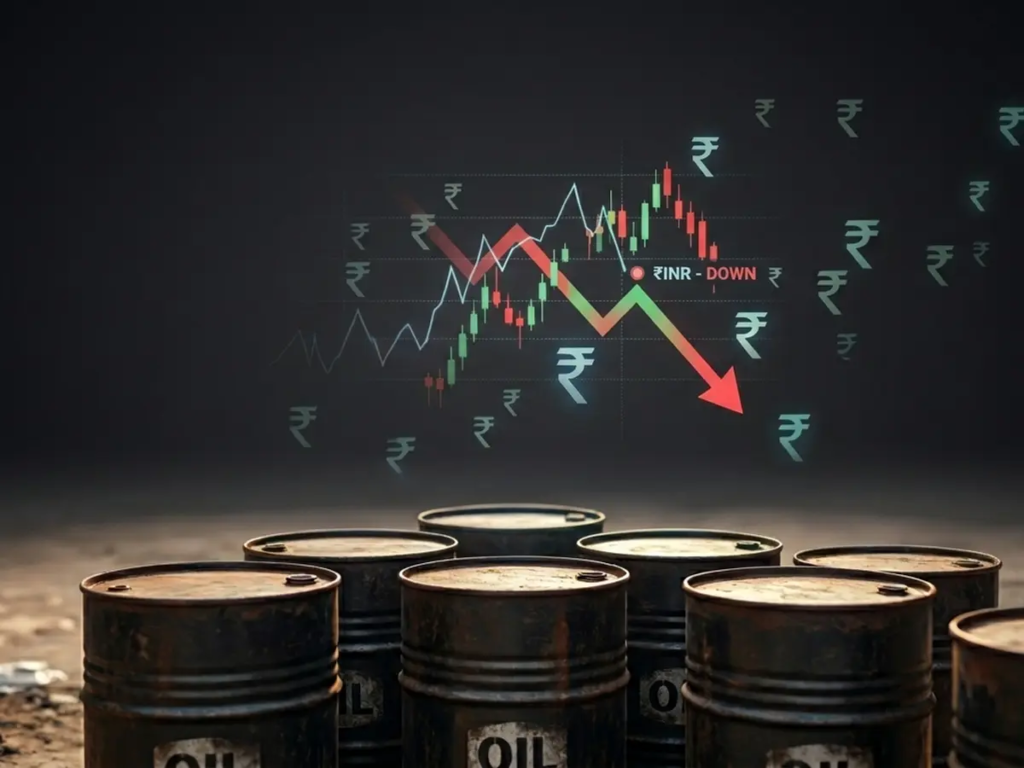
Oil prices have moved past the $126 a barrel after surging 13 per cent in the last 24 hours, and then settling around $122.31 a barrel in intraday trading, its highest level since 2022. Last time Brent Crude topped $120, it was during the Russian invasion of Ukraine, when it was trading at $139 per barrel. In the early hours of Thursday, the US benchmark crude WTI also rose more than 3 per cent and hit over $110 per barrel. The Indian basket of crude oil, representing a weighted average of sour (Oman/Dubai) and sweet (Brent) grades, is hovering around $116+ per barrel, lower than the peak of $135+ per barrel on April 7.
The recent surge is the result of the stalemate in the US-Iran talks. Trump appears to be willing to let the Hormuz blockade, as he is unwilling to allow use Iran the nuclear leverage. Iran wants the postponement of nuclear negotiations and lifting of the US blockade in the Persian Gulf in exchange for lifting the Hormuz blockade. A deal which will be considered a defeat for Trump by many among Trump’s voters, as the US is going for midterms later in 2026. Meanwhile, the UAE has decided to exit OPEC to boost its production capacity and manage the increased demand, but the whole exercise is futile unless the usual traffic is restored in the Strait of Hormuz. The market is spooked by these stand off, and is anticipating an extended disruption in the naval traffic through the vital choke point.
The Indian market traded weakly following the global cue. At the time of closing, Sensex was down 582.86 points or 0.75 per cent at 76,913.50, and the Nifty was down 180.1 points or 0.74 per cent at 23,997.55. Crude-sensitive stocks like Oil company HPCL fell 2.14 per cent, BPCL declined 1.38 per cent, and IOC slipped 1.3 per cent in the intraday trading. Similar weak trading was seen in aviation, tyre and paint stocks.
Between January 1 and April 30, the Brent Crude changed from $60.75 a barrel to $126 a barrel, a 100-110 per cent rise in prices. During the same time period, the Indian Rupee weakened from 89.96 to 95.01 against each dollar, approximately by 5.61 per cent. The rupee’s slide is not just due to oil shock; it had been on a downward trajectory since mid or early 2025, since US President Donald Trump’s election to the office and his trade war. For a country like India, which is import-dependent for fertilisers and energy needs and trades mostly in dollars. The Rupee-oil shock means a mounting import bill, a widening of the trade deficit, inflation and potential slowing down of economic growth.