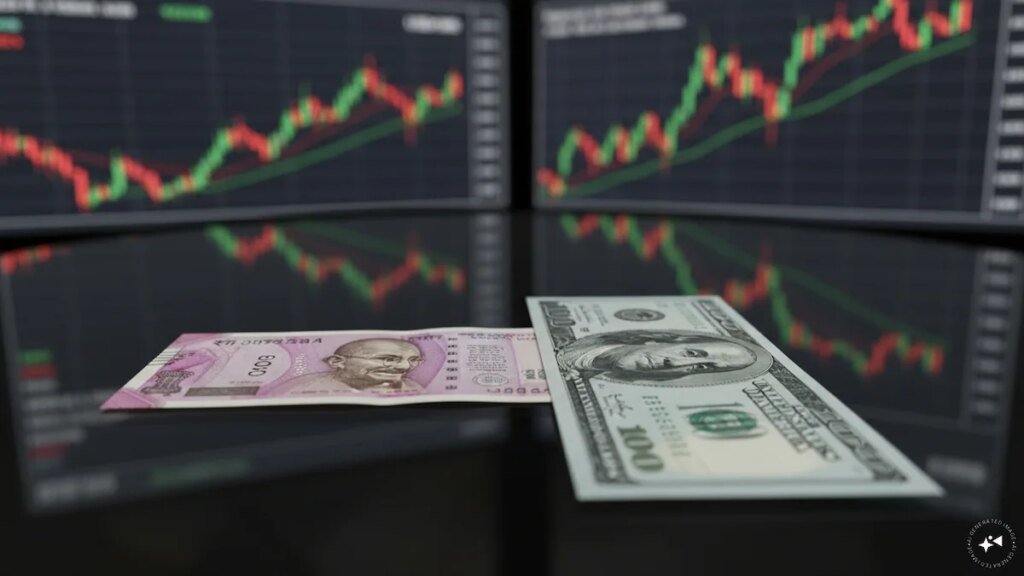
The Indian rupee opened higher at 94.92 against the US dollar on Thursday (October 15), compared with Wednesday’s (October 14’s) close of 95.15, gaining 23 paise at the opening bell.
The domestic currency has drawn support from a pullback in US Treasury yields after an initial surge following stronger-than-expected US inflation data for September.
Expectations of a Federal Reserve rate hike in October have also eased, with traders pricing in a lower probability of an increase.
Market attention remains focused on the Reserve Bank of India (RBI) and the extent to which it is willing to intervene to contain the rupee’s depreciation. The central bank has introduced measures to curb dollar demand and speculative positions in the currency market, followed by direct dollar sales.
“The question now is how far the RBI is willing to go, and how much further the market will allow it,” a currency trader at a bank said, noting that the rupee had faced resistance during its recovery beyond the 95-per-dollar level in the previous session.
Sonam Srivastava, Founder and CEO of Wright Research, said high crude oil prices, foreign investor outflows and relatively limited capital inflows have weighed on the rupee this year.
The RBI’s October 10 measures seek to curb speculative and precautionary dollar demand by tightening limits on banks’ foreign exchange positions, restricting the rebooking of cancelled contracts and opening a direct dollar window for oil companies.
Srivastava said the measures had helped moderate currency volatility, although their impact on the cost of hedging remained an important consideration for Indian businesses.
The RBI has also introduced a 20% Foreign Exchange Risk Reserve requirement on specified rupee derivative contracts exceeding $2 million. The requirement could increase the cost of offering currency hedges, with some of the additional expense potentially passed on to clients.
For the rupee’s medium-term direction, Srivastava said crude oil prices, India’s balance of payments and movements in the US dollar would remain key factors. A more balanced distribution of hedging demand between importers and exporters would also be an indicator to watch for signs of easing pressure on the currency.
-With Reuters inputs