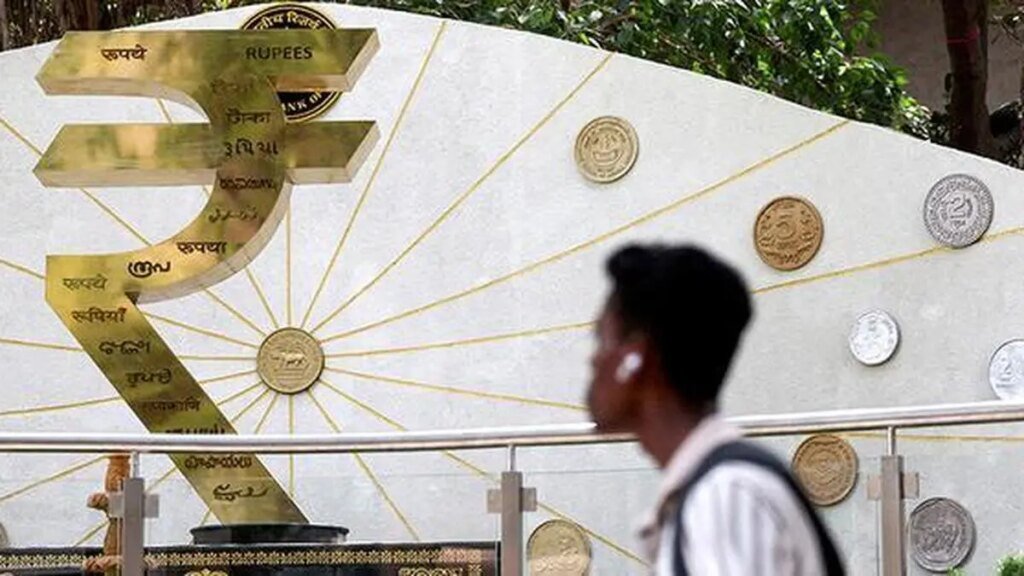
The Indian rupee dropped to its weakest level in nearly a month on Wednesday after U.S.
President Donald Trump said the interim accord with Iran to end
the war was “over,” sending oil prices soaring and hurting Asian
currencies.
Traders said the Reserve Bank of India had likely intervened
in the foreign exchange market to limit the rupee’s fall via
dollar sales from state-run banks.
The currency closed at 95.5550 per dollar, down
0.6% on the day. It had touched a low of 95.60, its weakest
since June 11.
Oil prices jumped about 6% on Wednesday, hitting a two-week
high after U.S. President Donald Trump said the memorandum of
understanding ending the conflict with Iran was “over”, renewing
fears of disruptions to Middle East oil supplies.
Indian stocks fell 2%, their steepest drop in over three
months, and the yield on the 10-year bond rose 8 basis points.
“Oil prices (are) squarely where the focus will be in the
near term, alongside any signs of broad strengthening in the
dollar,” said Dhiraj Nim, economist and FX strategist at ANZ.
“Long as oil prices remain elevated, INR is likely to face
pressure.”
Higher oil prices are a key risk for net energy importer
India and a sustained rise threatens to slow growth and lift
inflation.
“Just when it looked like the macros are improving, Middle
East uncertainty is back on the table,” a trader at Mumbai-based
bank said, referring to the recent turn in bias on Indian assets
following the interim ceasefire and a slew of policy measures
aimed at attracting dollar inflows.
“It’s likely that TACO (‘Trump Always Chickens Out’) trades
could play out but markets may not be as easily convinced as
last time,” the trader added.
Elsewhere, global stocks and bond prices tumbled, as
investors fled risk assets.
U.S. stock index futures slid sharply on Wednesday, with
Nasdaq futures touching a four-week low while the yield on the
10-year U.S. Treasury note rose to a peak of 4.585%, its highest
in over one month.
Published on July 8, 2026