Last Updated:
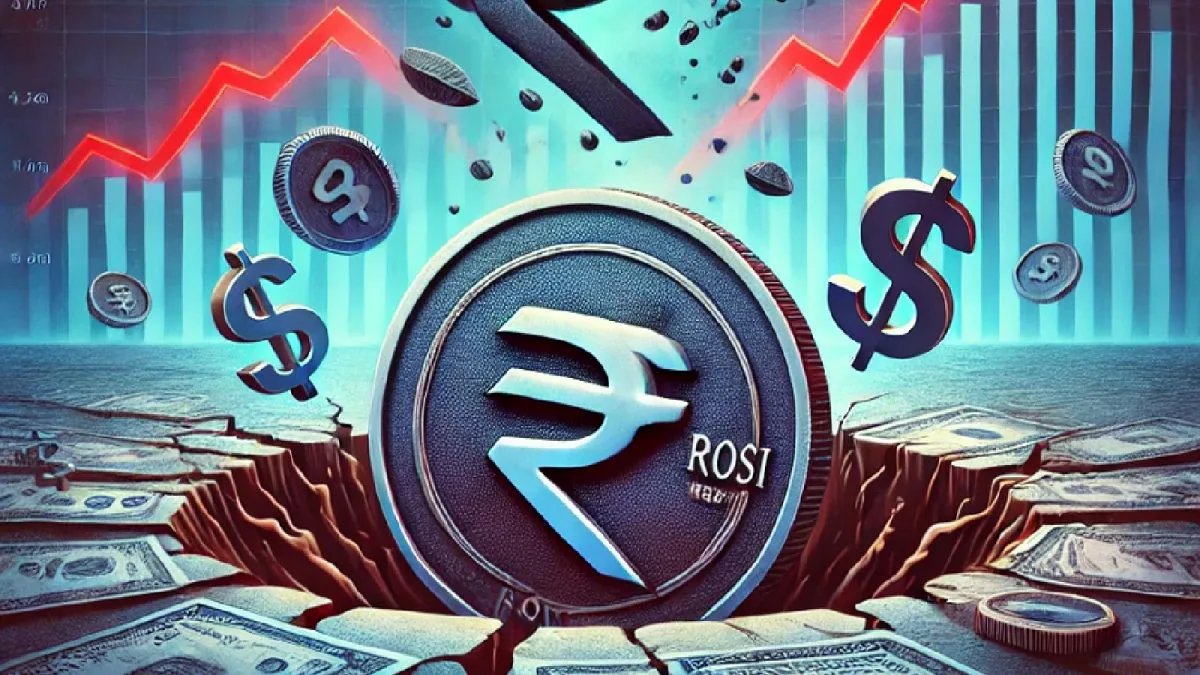
Rupee has declined by 6.5% in 2026. Last year, it had depreciated by 10.4%. While this concerns economists and traders, a weakening rupee can have real consequences for households




Experts say investors who believe in infra and real estate and are ready to take a slight risk can explore Invits (Infrastructure Investment Trust).
The rupee rose slightly to 95.38 against US dollar on Friday, thanks to the falling crude oil prices after President Donald Trump hinted at possible deal with Iran. But the graph of the Indian currency has been on a sharp decline since the Iran war began.
In the current calendar year, the rupee has declined by 6.5%. Last year, it had depreciated by 10.4%. While currency movements may seem like a concern only for economists and traders, a weakening rupee can have real consequences for Indian families vis-a-vis fuel, foreign travel, investments and inflation.
Does this signal that Indians need to be more cautious about their savings and investments? Let’s see what the experts are saying.
“The currency depreciation was something which we have been embracing ever since the war began. The level of the rupee is not as concerning as the pace at which it has moved,” said Tushar Badjate, Director, Badjate Group — a financial services and educational conglomerate based in Nagpur. “Though Rs 86 to Rs 95 looks sharp, we have seen that the RBI has come to rescue pretty well in such situations. Headwinds for economic growth will largely be driven by energy prices and trade route jamming. All eyes remain on how all of this will culminate into inflation and how much of it will come affecting our houses,” Badjate added.
Why Is The Rupee Falling Again?
The recent pressure on the rupee stems from a combination of global and domestic factors. One of the biggest concerns is the rise in crude oil prices triggered by geopolitical tensions in West Asia. India imports more than 85% of its crude oil requirements, making it highly vulnerable to energy price shocks.
In its biggest single-day decline in a month, the Indian rupee fell 77 paise to 95.71 against the dollar, with the dollar index also increasing to 100.21 before settling at 99.89, reported Financial Express.
When oil prices rise, India needs more dollars to pay for imports. This increases demand for the US currency and puts pressure on the rupee.
At the same time, the US dollar has maintained its strong valuation and global dominance due to persistently high Federal Reserve interest rates, lower relative inflation, and a broad lack of viable alternatives. This has directly affected international trade and exchange rates globally. Whenever risk aversion rises, foreign investors often pull money out of emerging markets and move capital into dollar-denominated assets such as US Treasury bonds.
This combination of expensive oil, a strong dollar and occasional foreign capital outflows creates a challenging environment for the rupee.
“The proximate triggers have been the spike in crude prices, broader dollar strength, and risk-off FII outflows. Calling this ominous overstates the case. The move sits within the band of measured EM currency adjustments that typically accompany oil-related geopolitical shocks. The RBI carries adequate reserves to manage disorderly volatility, and the depreciation pace, though uncomfortable, remains within historical risk parameters. Watchful, not alarming,” said Harshal Dasani, Business Head, INVAsset PMS.
What Does A Weak Rupee Mean For Common Man?
For most people, the impact of a falling rupee is felt indirectly. The most immediate concern is inflation. Since India imports large quantities of crude oil, a weaker rupee makes those imports more expensive. Higher import costs can eventually translate into increased prices for fuel, transportation and goods across the economy.
Many consumer products sold in the country also contain imported components. Electronics, smartphones, laptops, medical equipment and certain automobile parts can become costlier when the rupee depreciates significantly.
The impact is even more visible for families planning overseas education. Tuition fees, accommodation expenses and living costs abroad are typically paid in dollars, pounds or euros. A weaker rupee means students need more money to cover the same expenses.
Foreign travel also becomes more expensive. The impact is particularly visible for long-haul destinations such as the US and Europe, where travel costs have risen sharply. Industry estimates suggest that travellers are now spending tens of thousands of rupees more for the same itinerary, with the additional expense in some cases approaching Rs 1 lakh.
A typical international trip costing around $3,000, which previously required roughly Rs 2.4 lakh to Rs 2.5 lakh, now costs close to Rs 2.8 lakh to Rs 2.9 lakh. In other words, travellers may end up paying an additional Rs 40,000 to Rs 70,000 without making any changes to their plans.
Overall, overseas travel has become up to 20% more expensive in recent months, with long-haul routes to the US and Europe witnessing the steepest increase. Every hotel booking, flight ticket or holiday package denominated in foreign currency costs more when the rupee loses value.
Even households with no direct exposure to foreign currencies can feel the impact through rising living costs if inflation begins to accelerate.
“Overseas education costs and foreign currency, loan, EMIs require recalibration into the household budget. Discretionary international travel and high-end imports warrant timing discipline, not avoidance,” cautioned Dasani. “The instinct to panic-buy dollars or hold cash in foreign currency rarely pays off and adds transaction costs. The disciplined response is a budget revisit on the import-sensitive line items, not an overhaul. Calm planning beats reactive spending in currency cycles of this nature,” he added.
Should Investors Be Worried?
Financial advisers generally caution against reacting emotionally to short-term currency movements.
The rupee has gradually weakened against the dollar over several decades, yet India’s economy has continued to expand and create wealth. Long-term investors who remained invested in equities, mutual funds and productive assets have historically generated returns despite periodic bouts of currency volatility.
Indian households deployed a massive Rs 4.5 lakh crore into equity markets in 2025. Mutual fund Assets Under Management (AUM) hit a historic milestone of Rs 81 lakh crore, with sustained Systematic Investment Plan (SIP) inflows exceeding Rs 3 lakh crore annually.
Experts often draw a distinction between volatility and wealth creation. Currency markets can fluctuate sharply in the short term because of geopolitical events, central-bank actions or investor sentiment. However, long-term investment returns are typically driven by economic growth, corporate earnings and productivity.
This means that investors should be careful about making drastic portfolio changes solely because the rupee has weakened over a few weeks or months.
“I’d recommend investors should have a look at high yield debt products which have a solid credit rating. Some portion could also be attributed to hybrid funds as they may prove more tax effective and will ride the roller coaster of volatility better than all other categories. I would not shy away from exploring Invits (Infrastructure Investment Trust) as an investment option for largely those investors who believe in infra and real estate, want a more convenient exposure, are ready to take a slight risk and want more returns in FDs,” stressed Badjate.
For systematic investment plan (SIP) investors, continuing disciplined investments may prove more effective than attempting to time currency movements.
How Can Indians Protect Their Wealth?
Rather than trying to predict the rupee’s next move, experts recommend focusing on diversification. A diversified portfolio spreads risk across different asset classes, reducing dependence on any single market outcome. Equities, debt instruments, fixed deposits, gold and international assets each play different roles in a long-term financial plan.
“The current backdrop favours a multi-asset construction over a single-instrument tilt. Quality large-cap diversified equity remains the anchor allocation. Sovereign Gold Bonds and physical gold offer a useful currency-hedge layer, particularly given the geopolitical risk premium in the bullion complex. Laddered fixed-income exposure with a tilt towards short-to-medium duration balances reinvestment risk against carry. Selective international diversification through approved feeder vehicles addresses currency concentration without taking active FX risk. Direct dollar speculation through unregulated channels is to be avoided. The discipline is in combining these, not in chasing any one of them,” explained Dasani.
Gold also tends to attract investor interest during periods of geopolitical uncertainty and currency volatility. Since gold prices are influenced by international markets and are denominated in dollars globally, a weaker rupee can often support domestic gold prices.
Today, the gold price in India averages approximately Rs 14,600 to Rs 14,900 per gram for 24 Karat (99.9% purity), and roughly Rs 13,300 to Rs 13,600 per gram for 22 Karat (91.6% purity).
Maintaining adequate emergency savings remains equally important, stress experts. Investors who have sufficient liquidity are less likely to make panic-driven decisions during market volatility.
Who Benefits From A Weak Rupee?
“Yes. Export-oriented sectors are among the primary beneficiaries of a weaker rupee. India’s leading IT companies derive nearly 70 to 90% of their revenues from overseas markets, while major pharmaceutical companies generate a substantial portion of sales from the US and Europe. As foreign earnings are converted into rupees, profitability often improves. Auto ancillary exporters supplying global automobile manufacturers also stand to benefit. Conversely, sectors heavily dependent on imported raw materials, such as aviation, oil marketing, electronics manufacturing, and certain industrial businesses, may face margin pressures due to rising input costs,” said Badjate.
Families receiving remittances from relatives working abroad may see gains as well. Every dollar, pound or dirham sent home converts into more rupees when the domestic currency weakens.
India receives more than $125 billion annually according to World Bank estimates. For many households, a weaker rupee can therefore increase the value of overseas income.
Can The RBI Stop The Fall?
The RBI possesses several tools to manage currency volatility. According to Dasani, the RBI can use the spot dollar sales from reserves to smooth disorderly moves, which has been visible through the rupee depreciation. The forward and futures markets provide a second channel that allows intervention without immediate reserve drawdown.
Badjate, however, said, “It will not be fair to recommend what should the RBI do. As reader of economics, I would probably think of ways to attract more foreign capital into the country especially because there is a lot of exit from India of late. May be a pro-active dollar inventory management will ease things out as the current reserves exceed $700 billion.”
The government and RBI have also periodically announced steps aimed at encouraging foreign investment and improving dollar inflows.
On June 5, the Monetary Policy Committee (MPC) of the RBI decided to keep the repo rate unchanged for the second time in a row, at 5.25%.
The RBI also decided to increase the limits for investment by NRIs and OCIs in equity instruments traded on the stock market without SEBI registration. Further, the same facility is being extended to all individual Persons Resident Outside India (PROIs) at par with NRIs and OCIs.
“While these measures are expected to strengthen our balance of payments, we will continue to make the right policy adjustments to further promote exports and attract and incentivise capital inflows,” RBI Governor Sanjay Malhotra had said.
However, central banks cannot completely dictate exchange rates in a market-driven system. Their primary role is to prevent disorderly movements and maintain stability rather than defend a specific currency level indefinitely.
Foreign exchange reserves exceeded $700 billion in recent months. Though they currently hover just above $682 billion due to recent RBI interventions to defend the rupee. These robust reserves provide import cover for roughly 11 months.
Ultimately, exchange rates reflect broader economic realities, including trade balances, capital flows, inflation trends and global investor sentiment.
For most Indians, the weakening rupee should not be viewed as a reason for panic but as a reminder of the importance of financial planning.
About the Author

Shilpy Bisht is a News Editor at News18, where she leads the English app operations. She writes on world affairs, health, AI, career, business, and issues affecting women and children. A former print …Read More

Stay Ahead, Read Faster
Scan the QR code to download the News18 app and enjoy a seamless news experience anytime, anywhere.