
The Reserve Bank of India is believed to have intervened (selling dollars) in the market through state-run banks to stem further fall in the rupee
The rupee slipped to a record closing low against the US dollar on Wednesday amid rising oil prices, persistent FPI-related dollar outflows and geopolitical uncertainty linked to the West Asia conflict. The Indian currency closed at at 94.8450 per US dollar, down about 31 paise against the previous close of 94.54.
The Reserve Bank of India is believed to have intervened (selling dollars) in the market through state-run banks to stem further fall in the rupee, according to forex dealers. Stalled diplomatic efforts to resolve the West Asia war, coupled with reports that US President Donald Trump has instructed aides to prepare for an extended blockade of the Hormuz Strait, led to benchmark Brent crude jumping over 3 per cent to near $115 per barrel.
India is heavily dependent on crude oil and gas imports for its energy requirements. A spike in the prices of these commodities has a depreciating effect on the rupee. Elevated oil prices can widen the current account deficit and push up inflation through higher import costs.
The central bank may turn more aggressive in the market if the rupee breaches the psychologically crucial 95 mark, say dealers.
Dilip Parmar, Senior Research Analyst, HDFC Securities, said: “The Indian rupee hit a record low close as rising crude oil prices and a surging US dollar weighed on it. Also, the domestic liquidity remained tight as importer demand outpaced supply, while the central bank stayed on the sidelines. We see USDINR trading between 94.10 to 95.15 with positive bias.”
Meanwhile, State Bank of India’s economic research department has cautioned that without timely balance of payments (BoP) support measures, inflationary expectations could become unanchored amid persistent rupee weakness and volatile capital flows.
The measures suggested by the ERD include a scheme soliciting funds from the diaspora, better tax treatment for investments in G-Secs, restricting remittances for deposits abroad and reducing the annual LRS (liberalised remittance scheme) limit temporarily in FY27.
“The current rupee depreciation is not in line with India’s macro fundamentals. It is, therefore, imperative to control the second-round effects. Exchange rate depreciation leads to higher imported inflation.
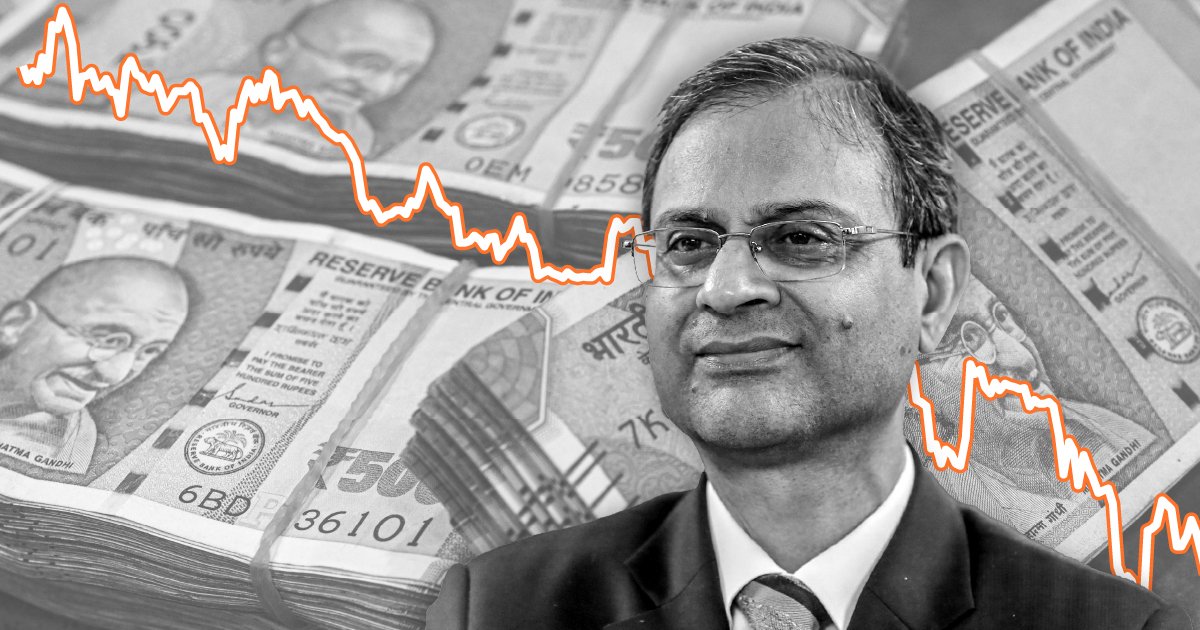
“Hence, ensuring that inflationary expectations does not get unanchored, we need a structural solution to India’s BOP (balance of payments) deficit,” said Soumya Ghosh, Group Chief Economic Advisor, SBI in a note.
The rupee declined 6.39 per cent between April 2, 2025, and February 27, 2026. But following the onset of the West Asia war, it fell further by 3.63 per cent.
SBI’s ERD economists observed that the exchange rate cannot serve as a shock absorbing mechanism in perpetuity, as increased levels of uncertainties and volatilities will transform it into a pass-through mechanism of imported inflation seeping through multiple channels, unanchoring inflationary expectations and defeating at times the very purpose of prudent and agile monetary policy making.
It is thus imperative that a comprehensive set of measures are required given that BoP could be negative for the third consecutive year.
G-Sec yields rise
Yield of the 10-year benchmark Government Security (G-Sec) rose two basis points to close at 7 per cent from previous close of 6.98 per cent on hardening global crude oil prices.
Nuvama, in a report, said: “On Wednesday, the 10Y benchmark (6.48 GS 2035) opened steady at 6.98 per cent… Over the day, yields stayed higher and elevated to 7 per cent as Brent crude futures topped $115/barrel for the first time in nearly a month.
“The uncertainty about a US-Iran peace deal and reopening of the Strait of Hormuz resurfaced after US President Donald Trump posted a warning to Iran on the resumption of military strikes, pushing up crude.”
Published on April 29, 2026