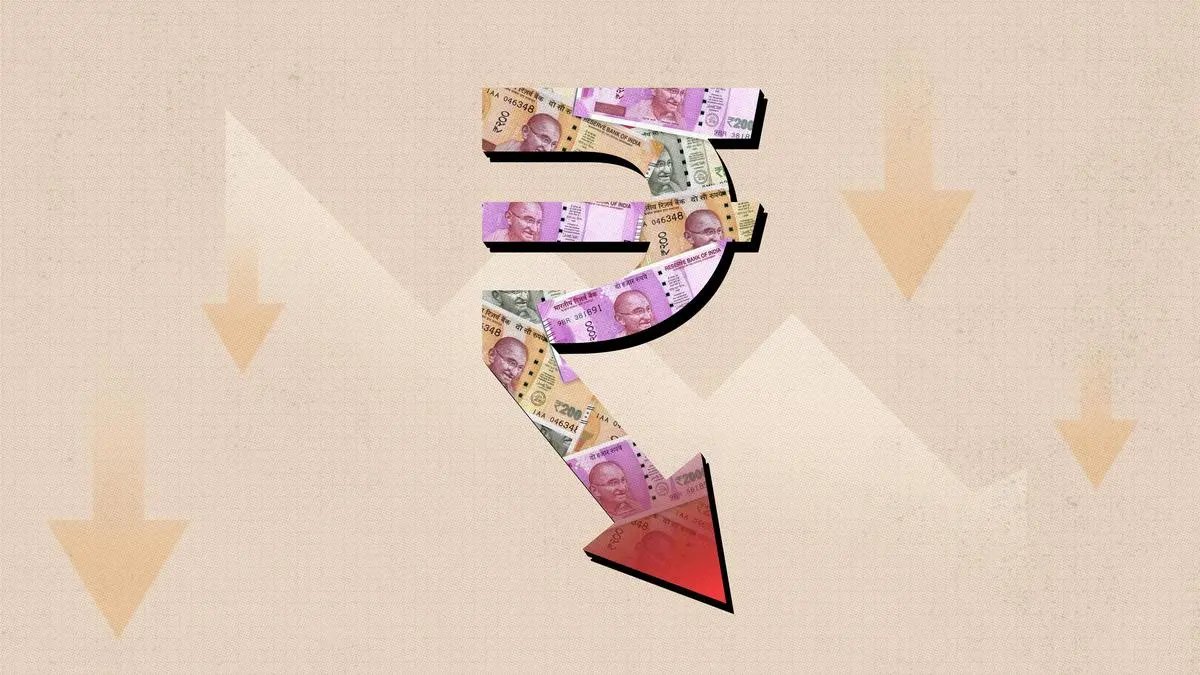
Forex traders pointed to persistent foreign institutional outflows and subdued net foreign direct investment inflows as key factors weighing on the rupee
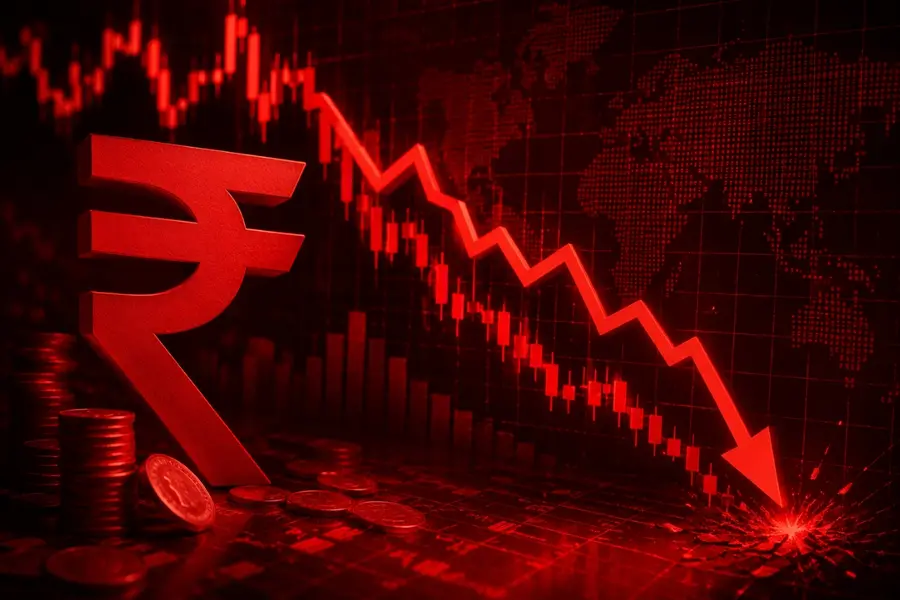
Mumbai: The Indian rupee weakened in intraday trade on Friday, briefly slipping below the key 96-per-dollar mark, as a combination of stronger US dollar demand, rising crude oil prices and sustained foreign capital outflows pressured the currency.
In interbank trading, the rupee opened at 95.86 and slid to an intraday low of 96.14 before recovering some losses. It had closed the previous session at 95.64, after touching a fresh record low of 95.96 earlier, reflecting heightened volatility in currency markets.
Market participants attributed the weakness to a firm US dollar index, which rose to around 99.3, alongside hawkish commentary from US policymakers and stronger-than-expected US economic data. Broader Asian currencies also came under pressure.
Crude oil prices added to concerns, with Brent crude rising over 3% to about USD 109 per barrel, increasing import cost pressures for India and widening external account worries.
ALSO READ | Fuel price surge worsens: CNG gets costlier after petrol and diesel hike
Forex traders pointed to persistent foreign institutional outflows and subdued net foreign direct investment inflows as key factors weighing on the rupee. Structural concerns around global uncertainty, relatively high valuations, and limited large-scale AI-linked investment flows were also cited as dampeners for capital inflows.
On the domestic equity front, markets traded slightly weaker, with the Sensex down around 131 points and the Nifty marginally lower by 17 points.
Despite recent volatility, foreign institutional investors turned net buyers on Thursday, investing approximately Rs 187 crore into equities, according to exchange data.
ALSO READ | Centre tightens rules on duty-free gold imports to curb diversion
On the macroeconomic front, India’s trade data showed exports rising 13.78% year-on-year to USD 43.56 billion in April, while imports increased 10% to USD 71.94 billion, resulting in a trade deficit of USD 28.38 billion.
Globally, sentiment was also influenced by geopolitical developments, including high-level talks between US and Chinese leadership in Beijing, which were described as “historic” and “landmark” but did not yield concrete agreements on key disputes, leaving markets cautious.
Published: 15 May 2026, 03:43 pm IST
Subscribe to our Newsletter
Disclaimer: Kindly avoid objectionable, derogatory, unlawful and lewd comments, while responding to reports. Such comments are punishable under cyber laws. Please keep away from personal attacks. The opinions expressed here are the personal opinions of readers and not that of Mathrubhumi.