Last Updated:
US-Iran peace framework reopening the Strait of Hormuz sends crude lower, lifts Sensex, Nifty, rupee, gold and Bitcoin, as global markets rally on reduced supply & inflation fears.




The Iran-US agreement, announced after talks between Washington and Tehran, includes the reopening of the Strait of Hormuz and the removal of the US naval blockade, significantly reducing concerns over disruptions in global energy supplies.
Iran-US Deal: Indian and global financial markets witnessed a sharp reaction on Monday after the United States and Iran announced a framework agreement aimed at ending their conflict, easing geopolitical tensions in West Asia and reopening the strategically crucial Strait of Hormuz.
The development triggered a broad rally across equity markets, strengthened risk appetite among investors and pushed crude oil prices sharply lower. Gold and Bitcoin, however, also moved higher as markets reassessed the outlook for inflation, interest rates and global economic growth.
The agreement, announced after talks between Washington and Tehran, includes the reopening of the Strait of Hormuz and the removal of the US naval blockade, significantly reducing concerns over disruptions in global energy supplies.
Crude Oil Falls as Supply Disruption Fears Ease
Crude oil prices were among the biggest movers following the announcement. US crude oil prices declined about 4.3 per cent to $81.23 per barrel after investors priced out the risk of a prolonged supply shock from the Middle East.
The Strait of Hormuz is one of the world’s most important oil transit routes, carrying nearly one-fifth of global petroleum consumption. Concerns over a possible blockade had pushed oil prices higher in recent weeks.
The peace framework and the reopening of the shipping route have reduced fears of supply disruptions, leading traders to unwind geopolitical risk premiums embedded in crude prices.
For India, which imports more than 85 per cent of its crude oil requirements, lower oil prices are considered a major positive. Softer crude prices can help reduce inflation, improve the current account deficit and lower the government’s import bill.
Sensex and Nifty Rally as Risk Appetite Returns
Indian equity benchmarks opened sharply higher as investors welcomed the de-escalation in West Asia. The BSE Sensex surged 1,144 points, or 1.51 per cent, to 76,672 in early trade, while the NSE Nifty 50 jumped 351 points, or 1.49 per cent, to 23,974.
The rally was broad-based across sectors and market capitalisations.
Financial stocks led gains, with banking and non-banking financial companies benefiting from expectations that lower oil prices could ease inflationary pressures and support economic growth.
Broader market indices also participated in the rally. The Nifty Smallcap 100 gained 1.8 per cent, while the Nifty Midcap 100 rose nearly 1.5 per cent.
Market volatility eased as well, with India VIX declining, indicating lower investor anxiety following the geopolitical breakthrough.
Rupee Likely to Benefit from Lower Oil Prices
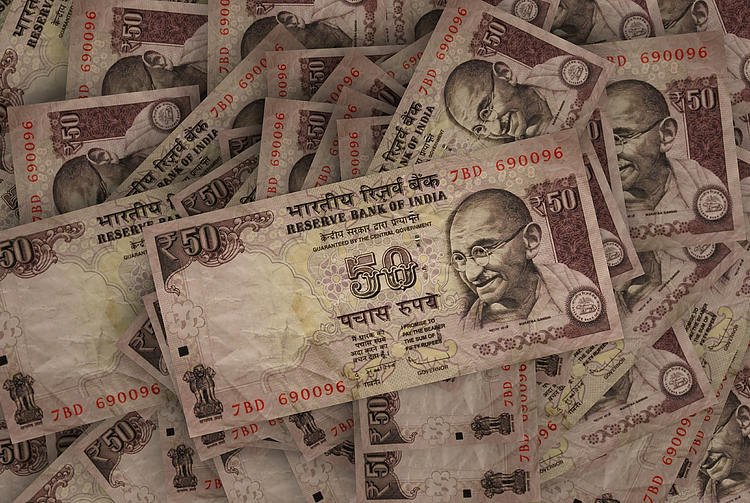
The Indian rupee is expected to gain support from the decline in crude oil prices. The Indian rupee on Monday strengthened by 53 paise to 94.65 against the US dollar in the opening session, amid lower crude oil prices and hopes of FPI return after the US-Iran peace deal. It had closed at 95.18 in the previous session on Friday.
India is one of the world’s largest oil importers, and lower crude prices generally reduce the country’s import bill and demand for dollars by oil marketing companies.
A sustained decline in oil prices can help narrow India’s current account deficit and improve foreign investor sentiment toward Indian assets, both of which tend to support the domestic currency.
Currency traders will closely monitor whether crude remains below recent highs and whether foreign institutional investors continue their buying momentum in Indian equities.
Gold Jumps More Than 2% Despite Peace Deal
Gold prices moved in the opposite direction to oil, rising sharply despite the easing of geopolitical tensions. Spot gold climbed 2.5 per cent to $4,322.87 per ounce, its highest level since June 9, while US gold futures rose 2.5 per cent to $4,344.80.
The rally suggests that investors are increasingly focusing on the possibility that lower oil prices could help moderate inflation and eventually support a more accommodative interest-rate environment globally.
Gold has also continued to receive support from strong central bank purchases, diversification away from dollar assets and persistent demand for safe-haven investments amid broader global uncertainties.
Bitcoin Extends Gains Above $65,000
Bitcoin also advanced following the announcement, reflecting improving risk sentiment across global markets.
The world’s largest cryptocurrency traded around $65,783, up more than 2 per cent over the previous 24 hours. Its market capitalisation stood at approximately $1.3 trillion, with trading volumes exceeding $23 billion.
Cryptocurrencies generally benefit when investors are willing to take on more risk. The decline in oil prices and the reduced threat of a wider regional conflict boosted appetite for higher-risk assets, supporting Bitcoin and the broader digital asset market.
Global Markets Cheer the Development
The positive sentiment was visible across global markets. Japan’s Nikkei surged more than 4 per cent, South Korea’s Kospi gained over 4 per cent and Australia’s ASX 200 rose about 1.4 per cent. US stock futures also moved higher, with Nasdaq futures outperforming on expectations of lower inflationary pressure and improved economic conditions.
Investors are now watching whether the initial framework evolves into a final agreement. Iranian officials have indicated that negotiations could continue over the next 60 days before a formal accord is signed.
About the Author

Haris is Deputy News Editor (Business) at news18.com. He writes on various issues related to personal finance, markets, economy and companies. Having over a decade of experience in financial journalis…Read More
Read More