

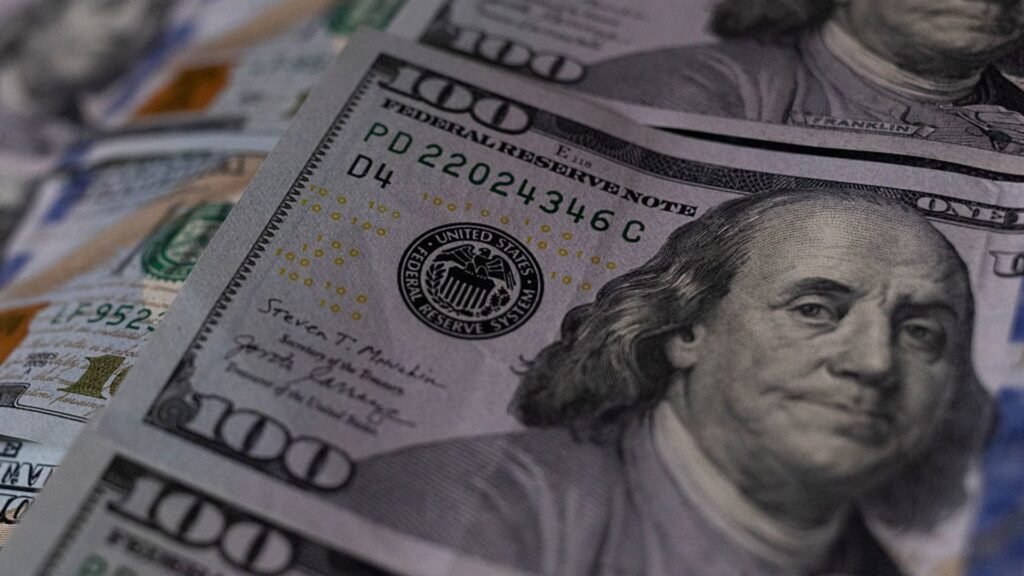
The dollar found support following a bumpy few days and held firm in Tuesday’s Asia session while traders waited for U.S. inflation data, which could push it higher if it bolsters rate hike bets.
Matias Baglietto | Nurphoto | Getty Images
The dollar steadied on Tuesday following a bumpy few days, helped by hawkish remarks from Federal Reserve Governor Christopher Waller ahead of US inflation data that could lift it further if rate hike bets strengthen.
Headline consumer inflation is seen picking up to 3.9% and core to 2.8% year-on-year in October, according to economists polled by Reuters, and a miss on either side will shape the dollar in the coming weeks.
“We’ve seen two consecutive stronger core CPI prints, so if we saw a third such print today, it would definitely add to concerns amongst market participants and also the Federal Reserve over the risk that higher energy prices are spilling over into broader inflation pressure,” said Lee Hardman, senior currency analyst at MUFG.
“That would obviously strengthen the need for the Fed to hike rates more, and the market would see that as a positive development for the dollar,” he added.
A downside surprise “would reinforce the selling momentum that we’ve seen over the last 24 hours.”
Waller, an influential Fed governor, got in ahead of the data, however, saying on Tuesday that the central bank ought to raise short-term borrowing costs next month even if inflation cooled last month. And he said it should consider an upsized half-point rate hike if the inflation picture worsens.
Markets are now fully pricing a December rate hike from the Fed, upping expectations after those remarks.
That gave the dollar a small lift, but traders were still cautious ahead of the data, with the pound down 0.1% at $1.3425 and the dollar also slightly firmer on the yen at 158.1.
The euro was flat at $1.2265, as lower energy costs helped give it some support after recent underperformance.
That calm came after a dramatic couple of sessions in currency markets.
A blowout October jobs report on Friday, with hiring more than twice the forecasts, sent the dollar surging, pushing the euro down 0.7%. That move then reversed on Monday, as a tumble in oil prices and gains for stocks knocked the dollar lower.
The trade- and sentiment-sensitive Australian dollar rose by nearly 1% through Monday to sit at $0.6918 on Tuesday and the New Zealand dollar gained even more, reaching $0.5634, with both fairly steady on Tuesday.
The kiwi caught an extra boost as results from last weekend’s election suggested the incumbent three-party coalition would stay in power, reducing uncertainty and the likelihood of any changes to the central bank’s mandate.