Unlock the Editor’s Digest for free
Roula Khalaf, Editor of the FT, selects her favourite stories in this weekly newsletter.
The writer is chief economist at Allianz, a senior fellow at Harvard Kennedy School and a member of the French Council of Economic Analysis
The past few weeks have offered a masterclass in dollar dominance — and its contradictions. As the Iran conflict drove oil prices to record highs, the world rushed to buy more expensive crude, which meant buying more dollars first, even if it meant selling gold holdings, the very hedge against this kind of crisis.
The episode illustrates, with unusual clarity, that former US Treasury secretary John Connally’s quip from 1971 — “Our dollar, your problem” — remains as true today as ever. Every geopolitical tremor, every Fed decision, spreads instantly through a world wired for dollars. Increasingly, the world is asking: is there no alternative?
There is. But Europe must build it.
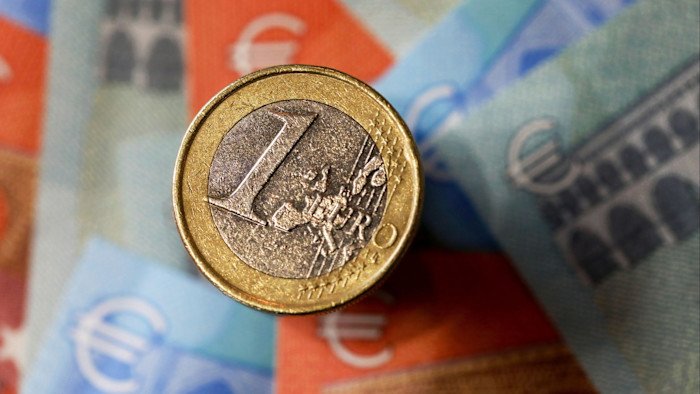
The euro is already the world’s second currency, representing roughly 20 per cent of global foreign exchange reserves. Yet it punches far below Europe’s economic weight. The EU accounts for 16 per cent of world trade — more than the US — but only 18 per cent of global commerce is invoiced in euros, against 60 per cent in dollars. This is not destiny. It reflects remediable structural failures: a fragmented sovereign debt market, an incomplete capital markets union and a chronic shortage of safe euro assets.
We now have the greatest opportunity to strengthen the euro since its creation. But windows close. China has established 39 swap lines — reciprocal agreements between central banks to exchange currencies — worth almost $600bn with trading partners and is systematically building renminbi infrastructure across the global south. Europe must now decide whether the euro remains a powerful regional currency or becomes a genuine pillar of the international monetary order.
The reform agenda is clear. Europe must first dramatically expand its stock of safe euro assets through joint issuance — EU Bills for short maturities, EU Bonds financing common goods such as defence and climate investment.
Second, Europe must deepen its capital markets through a pragmatic “28th regime” — a voluntary harmonised legal framework for companies operating across the single market — while empowering the European Securities and Markets Authority as a genuine pan-European supervisor.
Third, the ECB must scale its international liquidity facilities dramatically. Its Eurosystem Repo Facility for Central Banks currently serves just eight central banks and peaked at €4bn. The Fed’s dollar swap lines hit $600bn in 2008 with no credit losses. Broader, cheaper euro liquidity lines are a strategic investment, not a reckless gamble — and they should be matched by a deep offshore financing market in euros, the infrastructure equivalent of the eurodollar system that underpins dollar dominance.
Beyond finance, Europe must align its own spending with its monetary ambitions. It should make access to European stimulus or support programmes conditional on euro invoicing throughout supply chains. Euro invoicing clauses should also become standard in new trade agreements.
Then there is the digital frontier — where inaction is itself a choice. Today, 99 per cent of global stablecoin capitalisation is dollar-denominated. If that persists, the financial architecture of the future will simply embed dollar dominance in new code. Europe’s Markets in Crypto-Assets Regulation is the world’s most advanced crypto-asset framework. It should be leveraged to promote euro-denominated stablecoins with greater room for innovation and transparency.
At the same time, and maybe more profoundly, Europe needs to double down on developing a digital euro with genuine interoperability with wholesale Central Bank Digital Currencies, with tokenised deposits, and with the payment systems of partner regions from India to Latin America. Finally, every element of this ecosystem must be built on post-quantum cryptography, a field where European — and particularly French — mathematical expertise is world-class, and where early adoption would confer lasting technological leadership.
The Iran crisis is a reminder of a structural reality: a world financially wired for one currency, growing anxious about its issuer, but with nowhere else to go. Reducing that dependency is in the interest of every country that buys energy, issues debt or trades across borders. Our dollar, your problem, said Connally. It is time for Europe to offer something different: Our euro, your solution.