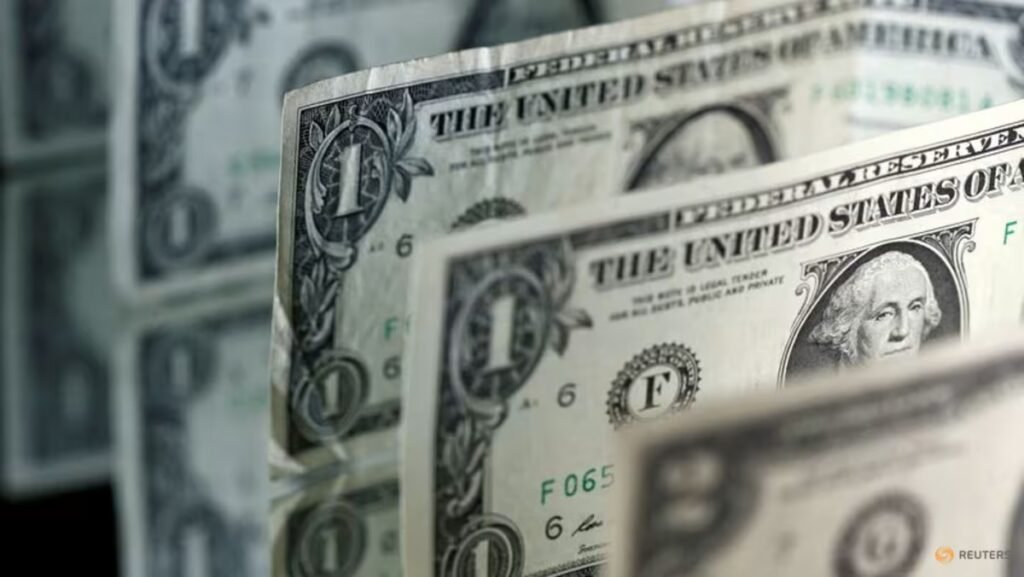
NEW YORK, March 18 : The U.S. dollar strengthened against other major currencies on Wednesday, clawing back losses from the past two sessions after data showed a more-than-expected increase in U.S. producer prices.
The data indicates the Federal Reserve might take longer to cut interest rates amid elevated oil prices driven by the Middle East conflict. The Fed is widely expected to hold rates steady later on Wednesday.
Data from the U.S. Labor Department showed that the Producer Price Index surged 0.7 per cent, while economists polled by Reuters had forecast a 3 per cent rise.
The dollar has strengthened overall since the U.S. and Israel attacked Iran almost three weeks ago, reaching a 10-month high late last week as the conflict and rising oil prices drove investors into safe-haven U.S. assets.
The dollar was last up 0.42 per cent at 0.788 against the Swiss franc.
The euro was down 0.17 per cent at $1.1518.
“The PPI is not a terribly good predictor of the CPI (consumer price index) or PCE (personal consumption expenditures) but we do have a bit of a trend here of higher prices,” said Joe Trevisani, senior analyst at FX Street.
“So is this really a predictor of much higher inflation? I don’t think so. However is it a good predictor or at least a warning for the Fed? Absolutely. The Fed is going to be wary of cutting rates with any type of inflation indicators that are running in the wrong direction.”
The dollar index, which measures the greenback against six major peers, was up 0.26 per cent at 99.83, snapping two straight sessions of declines.
Money markets broadly expect the Fed to cut rates once this year, compared with the two reductions priced in before the conflict.
RATE DECISIONS IN FOCUS
Other major central banks are poised to announce their rate decisions this week, including the European Central Bank, Bank of England and Bank of Japan.
They are all widely expected to maintain interest rates but traders will look for clues on where borrowing costs are heading amid a potential inflationary shock from the Middle East war.
The Japanese yen weakened 0.28 per cent against the greenback to 159.46 per dollar.
Japanese Prime Minister Sanae Takaichi is due to depart on Wednesday for a meeting with U.S. President Donald Trump.
Sterling was down 0.21 per cent at $1.3326.