Unlock the Editor’s Digest for free
Roula Khalaf, Editor of the FT, selects her favourite stories in this weekly newsletter.
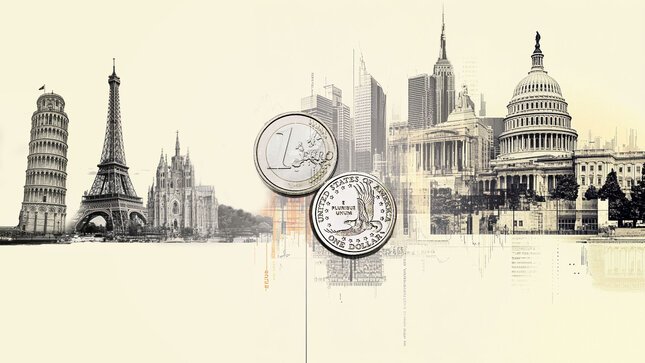
Bulgaria’s government scrapped its draft budget on Tuesday after huge anti-corruption protests, raising the risk that Sofia enters 2026 without a budget just as it adopts the euro.
The budget was withdrawn halfway through the parliamentary approval process after nationwide demonstrations against planned tax rises. Protesters argued the government was too corrupt to be entrusted with imposing higher taxes.
The turmoil adds to concerns that, despite its impending entry into the Eurozone, Bulgaria’s government lacks the political authority to maintain tight fiscal policies, which are usually a requirement of euro area members.
Prime Minister Rosen Zhelyazkov said his coalition was willing to compromise to get the budget passed. ‘‘Currently, without a budget a few weeks before Bulgaria’s entry into the Eurozone, we have no right to abdicate,’’ he said in a press conference on Tuesday. “We will cancel as a proposal all the topics that arouse concern.”
Bulgaria was given approval to join the Eurozone in June after repeated delays due to political instability and failures to meet required inflation targets. It also faced a populist backlash against the shared currency.
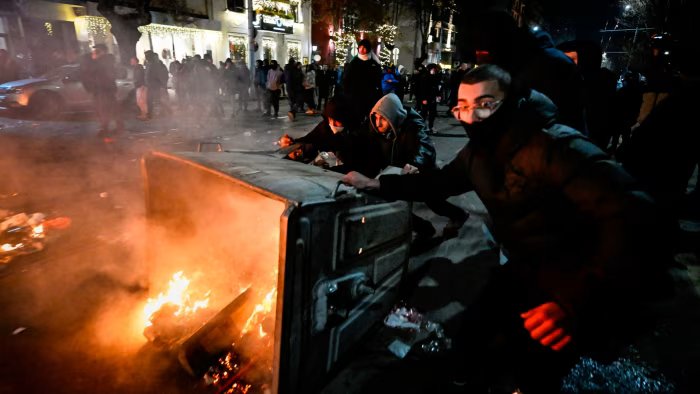
On Monday, tens of thousands of people took to the streets in Sofia and across the country to protest against the budget plans, with some protesters turning over waste bins and destroying police vehicles.
“In this state, private business is pressured, young people stop dreaming, and everyone is equally poor, equally unfree,” former centrist premier Nikolai Denkov said before the protest.
In an emergency session, the government asked parliament to release the budget for reconsideration, a process that will probably extend into the new year.
The prime minister’s fragile coalition relies on tycoon Delyan Peevski’s DPS-New Beginning party to maintain a majority in parliament. Bulgarian opposition parties and the country’s president have called for that power structure to end.
Peevski has been banned from the US for corruption and is also sanctioned by the UK for “attempts to exert control over key institutions and sectors in Bulgarian society through bribery and use of his media empire”. He denies the accusations.
President Rumen Radev, a pro-Russian former general, called for the government to resign and hold early elections in a social media post on Monday. “This is not a clash of police and protesters, but a provocation of the mafia that aims to confront them,” he said. “The violence needs to stop . . . Bulgarians said NO to this government.’’
In a social media post, Peevski blamed the tense protests on Radev-linked “agitators . . . driving the country towards anarchy . . . just to trigger elections and seize power through bloodshed”.
A snap vote would be Bulgaria’s eighth since 2021, when huge protests led to the downfall of a series of shortlived governments led by the centre-right Gerb party of Boyko Borisov.
That led to a marginally more stable government, but the upheaval over the budget showed that public confidence in it is waning.
Mario Bikarski, senior Europe analyst at risk intelligence company Verisk Maplecroft, said that the political tremors and budget delay “will create financial uncertainty from January” and “limit the government’s ability to respond to potential shocks.”
“Concerns about large-scale corruption and the influence of Peevski within the government will persist,’’ he said. ‘‘This will ensure that the government remains unpopular.”