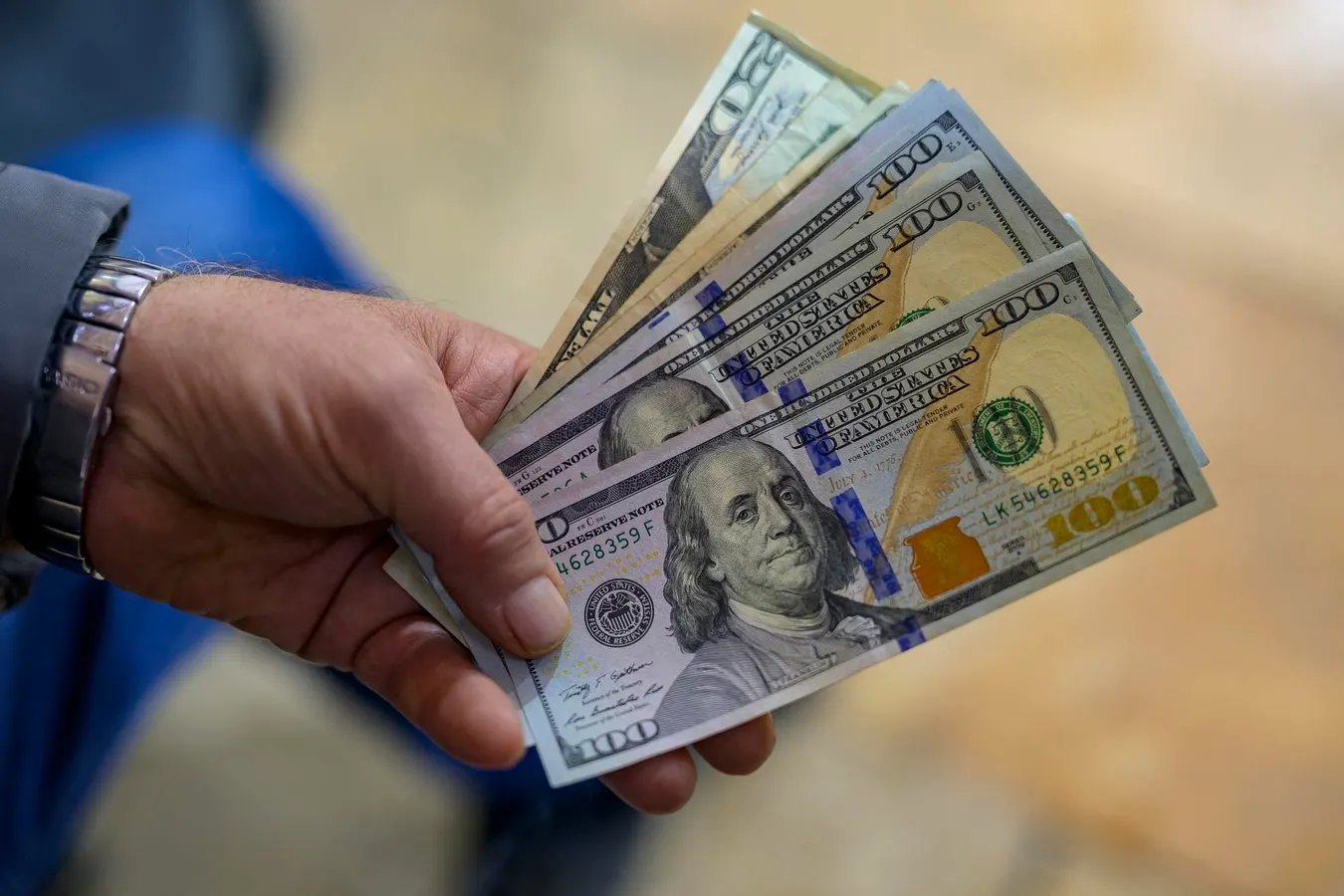
A bunch of American dollars banknotes (1$), US, circa 1985. (Photo by Alfred Gescheidt/Getty Images)
Getty Images
The US dollar’s decline over the past year and a half has been steady, significant, and largely underappreciated as a portfolio variable by individual investors. The dollar finished 2025 down roughly 9% on a trade-weighted basis — its worst annual performance in over a decade — and has continued softening into 2026 as the Federal Reserve maintains an easing bias and tariff-driven uncertainty complicates the US growth outlook. For investors whose portfolios are denominated in dollars but hold meaningful assets outside them, or who hold commodities, international equities, or fixed income with currency exposure, this isn’t a passive backdrop. It’s an active return driver.
Why This Dollar Cycle Is Different
Dollar weakness is not unusual in the context of Fed easing cycles. When US interest rates fall relative to those in other economies, the yield advantage that attracts global capital into dollar-denominated assets narrows, and the currency typically softens. That’s the cyclical story, and it’s the dominant explanation for what’s happening now. The Fed cut to a target range of 3.50%–3.75% in late 2025 and market pricing implies further reductions ahead, while the European Central Bank has been less aggressive and the Bank of Japan has continued normalizing from ultra-loose policy.
What makes this episode somewhat different from prior dollar decline cycles is the coincidence of several forces simultaneously. First, the geopolitical and trade policy context has introduced questions — however premature — about dollar reserve status. The US running a deficit at full employment, combined with tariff policies that fracture traditional trade relationships, has prompted some institutional investors to reassess their structural dollar exposure. Second, the “debasement trade” has taken on unusual momentum: gold surpassed $4,400 per ounce, Bitcoin reached all-time highs above $125,000, and a meaningful rotation into non-dollar assets and hard assets has been visible in capital flows. Third, for the first time in years, international equity markets offer genuinely competitive earnings growth prospects, reducing the US premium that justified dollar overweight.
ING analysts have characterized the current weakness as more cyclical than structural — and that framing is probably correct. The dollar remains the currency on one side of roughly 89% of global FX transactions, and reserve diversification away from the dollar is a decades-long story measured in tenths of percentage points per year, not a sudden cliff edge. But cyclical weakness can be persistent, and even a sustained move from current levels to the low-to-mid 90s on the DXY — where several institutional forecasters now see year-end — has material portfolio consequences.
The Currency Tailwind In International Equities
The most direct and underappreciated implication for individual investors is what dollar weakness means for unhedged international equity returns. For US investors holding foreign stocks or funds without currency hedging, returns are composed of two components: the local market return and the currency translation effect. When the dollar strengthens, overseas returns shrink in dollar terms — a headwind that plagued international equity investors for much of 2014 to 2022. When the dollar weakens, the currency translation effect adds to returns. A European equity market that returns 10% in euro terms might deliver 14% or 15% to a US investor if the euro appreciates meaningfully against the dollar during the same period.
This currency tailwind, combined with genuinely improving earnings dynamics in European and select emerging market economies, is part of why EM equity ETF inflows are running at their strongest pace in over a decade. Country-level return dispersion across global equity markets has normalized after years of US dominance. For investors who have been underweight international exposure, the FX math has meaningfully changed.
Commodities And The Dollar Inverse
The relationship between the dollar and commodity prices is one of the more reliable macro correlations in financial markets. Most globally traded commodities — oil, gold, copper, agricultural products — are priced in dollars. When the dollar falls, the purchasing power of non-US buyers increases, supporting demand. Simultaneously, a weaker dollar reduces the cost burden for commodity producers in local currency terms, making supply expansion more economically viable. The net effect, historically, is that commodity prices tend to move inversely to the dollar, with exceptions during demand shocks.
Gold’s record run above $4,400 reflects this partly, though central bank buying and geopolitical risk premium have amplified the move beyond what dollar weakness alone would explain. Oil’s move toward $100 per barrel similarly reflects a mix of genuine dollar tailwind and supply disruption premium. For investors assessing commodity exposure, it’s worth distinguishing between what’s driven by dollar dynamics — and would reverse if the dollar strengthens — and what reflects more fundamental supply and demand shifts that are less FX-sensitive.
The Hedging Decision For International Exposure
Whether to hedge currency exposure in international portfolios is one of those deceptively simple questions that quickly becomes complex. In a falling-dollar environment, unhedged exposure benefits from currency translation. But currency regimes change, and the dollar can reverse sharply on a risk-off event — geopolitical escalation, a financial shock, or an unexpected Fed pause — that reignites safe-haven dollar demand. Even in a structural dollar decline scenario, intra-year volatility can be substantial.
The practical framework for most investors involves thinking about time horizon and the purpose of the international allocation. For a long-term strategic allocation, paying for constant currency hedging can erode returns meaningfully through hedging costs and bid-ask spreads, particularly when the hedge ratio needs to be actively maintained. For shorter-term tactical positions, or for investors who genuinely cannot tolerate the additional volatility of unhedged FX exposure, hedged vehicles offer cleaner equity-market-only exposure.
What The Debasement Trade Actually Signals
The surge in gold and Bitcoin alongside dollar weakness has generated breathless commentary about the dollar’s impending structural collapse. That framing overstates the evidence considerably. IMF reserve data shows dollar share of global reserves at roughly 57% in late 2025, down modestly from prior years but nowhere near a cliff-edge trajectory. The debasement trade is better understood as reflecting genuine concern about the US fiscal trajectory — the deficit running at historically elevated levels during a period of full employment — combined with dollar weakness that mechanically boosts the dollar price of hard assets. It’s a real risk premium, not a prediction of dollar collapse. Understanding that distinction helps investors calibrate how much of the commodity rally is durable versus reflexive.
The dollar’s slide is real, measurable, and consequential. Investors who treat it as background noise rather than an active portfolio variable are missing one of the most significant macro regime shifts of the current cycle.