


Image © Adobe Images
The dollar is set to extend its gains against the pound for as long as the selloff in AI stocks spreads through global markets, as investors seeking safety buy the US currency regardless of where the selloff began.
The dollar is the best-performing major currency on Friday as a selloff in US technology shares spreads through global markets, although a number of analysts had expected an AI-led selloff to weigh on the US currency.
The dollar is higher against every G10 currency: the pound-to-dollar exchange rate is down 0.46% at 1.3388.
“Amidst the risk-off episode, the dollar has regained some ground with the DXY rising towards 101.6 as investors sought safe-haven assets,” says Khang Sek Lee at MUFG.
The euro-to-dollar rate is down 0.40%, and the Norwegian krone is the weakest performer with a loss of 0.99%.
The dollar also gains 0.32% against the yen and 0.25% against the Swiss franc, the two currencies investors traditionally buy in times of market stress.
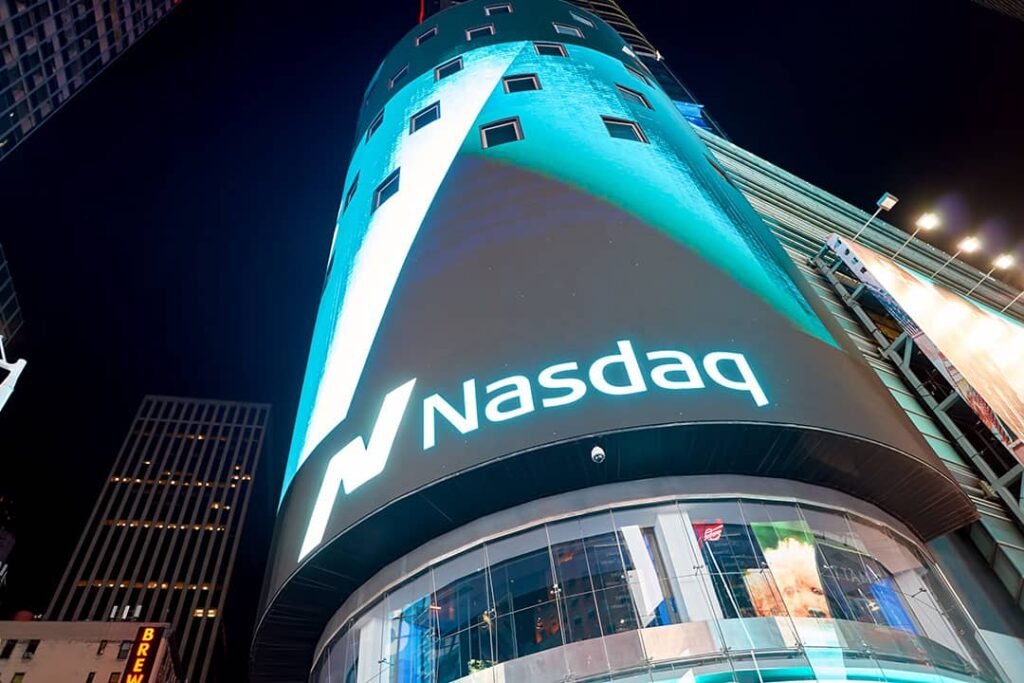
The Nasdaq 100 fell 6.4% on Thursday, its worst session since March 2020, and the Philadelphia Semiconductor Index fell 12.3%.
The selloff follows the Democrats’ sweep of both houses of Congress in Tuesday’s midterm elections, “the market yesterday instead went “all in” on concerns that the AI rollout will now be halted as there is a compact resistance among Democrats to building more data centers,” says Johan Javeus, Senior Economist at SEB.

“Democratic wins at the state and local level are likely to lead to short-term data centre moratoria, potentially affecting about 45% of planned US data centre capacity expansion,” says Alec Phillips at Goldman Sachs.
“The view is that there is now a mandate against data centres, although there is strong evidence to suggest that the landslide was much more a repudiation of the current administration as opposed to a policy debate. Either way, the net result is that the roll-out in USA will very likely be slower for at least the next two years,” says Richard Windsor, an independent technology analyst and founder of Radio Free Mobile.
However, Goldman’s Phillips expects any moratoria to be short-lived, as data centres ranked low on voters’ list of priorities.
The selloff has spread to Asia, where South Korea’s Kospi triggered a circuit breaker and Japan’s Nikkei approached bear market territory.
Foreign investors selling Asian technology stocks convert the proceeds into dollars, “the 12% plunge in US semiconductor stocks risks triggering another wave of foreign equity outflows from foreign investors selling South Korea and Taiwan equities,” says MUFG’s Lee.

The dollar’s gains come despite a fall in the US interest rate expectations that have underpinned it since the Federal Reserve began raising rates again in September.
The two-year Treasury yield, the maturity most sensitive to Fed expectations, fell 11 basis points to 4.47% on Thursday.
Markets price around a 70% chance of a December Fed hike, down from 80% before the midterm elections.
The dollar is rising as a safe haven, although falling US yields work against it.
Selloffs that start on Wall Street rarely stay there, as investors around the world cut risk at the same time and hold the proceeds in dollars.
Analysts Bet on the Yen to Beat the Dollar in an AI Selloff
The dollar’s gains against the yen challenge analysts who argued the Japanese currency is the better hedge against a selloff in AI stocks.
Strategists at CIBC set out the opposite outcome on Thursday, “we believe selling USD/JPY will outperform in an AI-driven selloff where we could see capital flight out of the US (AI-driven selloff → SPX ↓ → DXY ↓),” says CIBC’s Luis Hurtado.

“Short USDJPY is, in our view, the best hedge in FX for a drawdown in the AI trade,” says a note from Goldman Sachs’ FX strategists.
OCBC says falling US yields are blunting the dollar’s safe-haven appeal and leave the yen as the standout hedge against volatility centred on the US.
The yen and the franc did outperform the dollar on Thursday, although the dollar has overtaken both on Friday as the selloff spreads beyond Wall Street.
The Pound Faces Strong US Jobs Data Without Rate Support
The Bank of England raised Bank Rate to 4.0% on Thursday and signalled further hikes, but the pound has lost all of the gains it made on the decision.
“GBP/USD is facing a less supportive short-term rate differential, as the GBP curve shows greater dovish flexibility when oil prices drop,” says ING.
The dollar’s next test comes with the US payrolls report for October at 13:30 London time, where the consensus looks for 65,000 jobs and an unemployment rate of 4.2%.
Weekly jobless claims fell to 189,000 on Thursday, below every economist’s estimate.
“We expect another strong 65,000 increase in US payrolls and a low unemployment rate of 4.2% which will help re-strengthen expectations for a December Fed rate and support the USD,” says Carol Kong at Commonwealth Bank of Australia.
Pound Sterling Live continues to hold a constructive medium-term view on the pound, although demand for the dollar as a haven is set to cap the pound-dollar rate for as long as stock markets remain under pressure.
GBP/USD has slipped below its 100-day moving average at 1.3393, and the 200-day average at 1.3423 now stands as resistance.
The pound is likely to struggle to get back above that level for as long as the selloff in AI stocks keeps spreading.