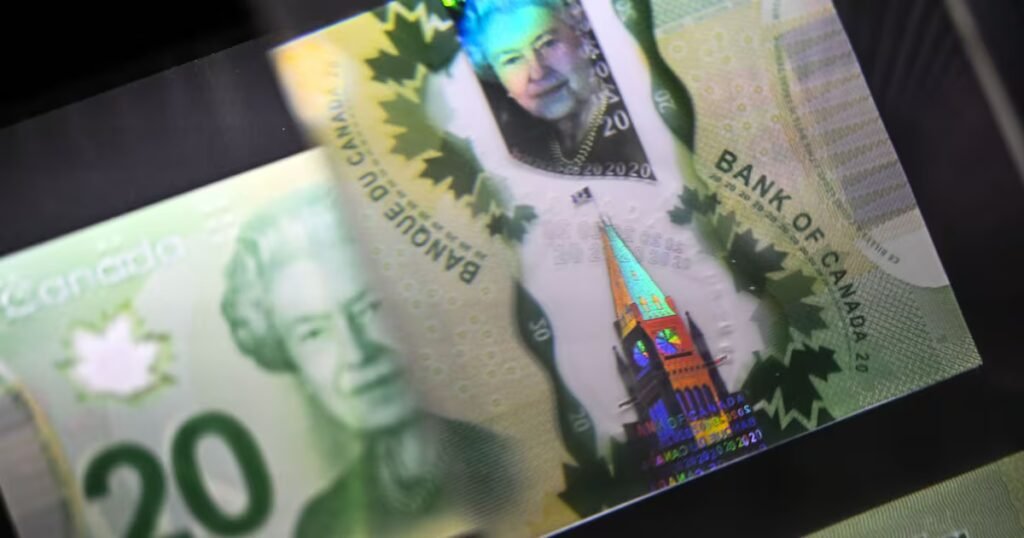
Differences in Canadian and U.S. economic conditions are putting central bank policy expectations under scrutiny. For the Canadian dollar, the timing of interest rate decisions could help determine its next move.
BNN Bloomberg spoke with Jayati Bharadwaj, head of FX strategy at TD Securities, about her currency forecast, Canadian inflation risks and the economic signals shaping her expectations.
Key Takeaways
- Bharadwaj sees October and December as too early for Bank of Canada rate hikes, citing a softer labour market, contained inflation and trade uncertainty.
- Rising diesel prices could spread inflation through transportation, agriculture and consumer goods, although she says Canadian data have yet to show that effect.
- Further Federal Reserve rate hikes could keep the Canadian dollar under pressure near 70 U.S. cents.
- The Canadian dollar could strengthen starting in early 2027 as the Bank of Canada begins raising rates.
- The Alberta referendum is low on her risk list, with Canada’s broader ties to Europe and Asia carrying more weight in her currency assessment.

Read the full transcript below:
LINDSAY: The Fed and the Bank of Canada were both holding interest rates for the past couple months, but following the Fed’s recent rate hike, our next guest is expecting to see more divergence between the central banks. Joining us now to share her perspective is Jayati Bharadwaj, head of FX strategy at TD Securities. It’s great to have you join us. Thanks for taking the time.
JAYATI: Thank you so much for having me.
LINDSAY: So, what do you think is putting the Bank of Canada and the Federal Reserve now on different paths?
JAYATI: It’s definitely very fascinating how we have seen a global bond market sell-off play off. So, markets are clearly priced for hikes in both the Bank of Canada and the Fed as well. But what we are trying to distinguish is how there’s a global risk premia in the bond markets, which is not just unique to U.S. or Canada, but is a more global issue. But that’s a pure risk premium.
But what you want to segregate is how much of the macro momentum in these economies are justifying these hikes, and that’s where we see some divergence in the U.S. and the Canadian landscape, which is where, on the U.S. side of the equation, we have seen the labour market be extremely resilient. And unfortunately, on Canada, while the unemployment rate is stable, it is one of the high — it is on a higher end compared to its G10 peers.
The second key difference between these two economies is that, on the U.S. side, core inflation, which is the Fed’s gauge for hitting its inflation target, never really fully went back to two per cent. And now there’s been concerns of inflation and core inflation being a lot more sticky, especially with all of this AI buildout and capex investment into the U.S. Whereas, on the Canada side of the equation, both core and headline inflation have been relatively well behaved, despite the oil price shock being much, you know, significantly higher, and oil prices trading where they are.
So, from the macro and inflation side of the things, Canada differs from the U.S. in not having as tight of labour market, not so much significant wage pressures. And on the inflation side of the equation, inflation pass-through of higher oil prices has also been a lot more concerning on the U.S. side, where core inflation never really went back to target, which is why we don’t think that the BoC should be in as much of a hurry to hike interest rates.
While clearly the Fed can hike a lot more aggressively, and definitely in October as well, so we do disagree with markets pricing for both central banks to keep on hiking. So we do think that October and even December are a little bit too early for the BoC to hike, so that’s contrary to what markets are pricing.
LINDSAY: Because you say the near-term forecasts for the Bank of Canada are misaligned with Canada’s domestic backdrop. Like, what do you think markets are getting wrong about Canada’s economy right now?
JAYATI: So the one interesting aspect is that markets are priced for tightening everywhere. You know, a lot of that has to come with the oil price shock that we’re dealing with. That, unfortunately, is not a U.S. issue, not a Canada issue. It’s a global issue. But historically, central banks have always been cautious and patient in treating these supply-side shocks.
So now the difference is: is BoC is still going to be patient in treating this shock as a supply-side shock, and allow it to play out? Given that the economy is modest and soft, it’s not overheated and, you know, overboiling that the U.S. — like the U.S. economy is. So that likely warrants a lot more caution from the Canada side.
The other thing, which is more peculiar to Canada, is the uncertainty with the trade and tariff situation. We do know that the Canadian economy has gone through a period of correction, where business and consumer confidence has been on the softer side. The Section 232 tariffs have weighed on some parts of the economy. We also now have the uncertainty with Section 338 and whether those tariffs on Jan. 1 will come into effect.
So all of that is also keeping the domestic backdrop a little bit on the softer side in Canada. We do know — we do think that the BoC will be able to hike, but that’s probably an early 2027 story. It’s just harder for us to see that happen in 2026, which is what markets are pricing.
LINDSAY: You also say that inflation in Canada has not been spreading to other sectors, but do you think that could change? Like, we’re seeing diesel prices continue to rise. Do you think that could change if we see that continuing to happen?
JAYATI: I think the diesel prices are definitely the tricky situation, which is why we have seen a lot of efforts from U.S. administration, and you have seen headlines over the last couple of weeks of how they’re trying to talk to their global counterparts.
Even a headline came out yesterday that U.S. is trying to tell EU to release their emergency diesel reserves because diesel prices are ultimately what feed into global supply chains and, you know, transportation, which ultimately feed into agricultural prices as well.
So there is definitely that concern that the longer diesel prices continue to rally and remain strong, that can filter through into agriculture and then key consumer baskets. So that kind of concern is more prevalent in the U.S., given that inflation is significantly higher than target, and you are already seeing that AI buildout.
I think it will be the next step of concern that comes into Canada. We’ve just not seen that in the data yet. Like, even the most recent inflation — core inflation measures are not surprising to the upside; they remain well contained. But that’s definitely on our radar as we watch for risks to our outlook.
LINDSAY: If the Fed continues to hike rates, what does that mean for the loonie?
JAYATI: I think that’s also one question we’ve been getting a lot from our clients and investors who are, you know, interested in understanding: how do relative interest rate differentials filter through into the Canadian dollar outlook?
So we do think that we will be at an interesting junction here, where right now we do think that the Fed hikes first. You know, there’s clearly, you know, economy is heating, inflation pressure concerns broadening out. Fed members have also been on the hawkish side.
So we do think that, in the near term, the Canadian dollar will remain under pressure as the Fed is hiking interest rates. So we do expect USD/CAD to remain, you know, pressure to the upside around 1.42, or if you think in opposite terms, CAD/USD to remain around the 70¢ mark — is trading right now.
But in early 2027, starting in January, is when we expect that equation to flip, which is where we do think that the Bank of Canada then starts playing catch-up to hiking interest rates. Given that interest rates right now are in modestly stimulative territory, but in 2027 you might not need them to remain as such, and then that flips, and then we expect the Canadian dollar to start strengthening into 2027.
LINDSAY: Well, let’s be quick with this last answer, but you’ve got the Alberta referendum next month on your radar as well. Is this something that’s factoring into your forecast at all?
JAYATI: Not yet, because it’s a vote. It has been a vote for a vote till now, and we have seen that the voter turnout, you know, can make a significant shift in, you know, in in determining the result. We don’t think it’s a major risk at this point.
There’s a lot of other key factors in terms of Canada being actually being able to be closer to the EU and Asia in terms of their broader alliance and shifting away from the U.S. I think those are much bigger important factors to the Canadian dollar. But the Alberta referendum is is not high up on our risk list.
LINDSAY: Okay, we got to leave it there. Jayati Bharadwaj, head of FX strategy at TD Securities. Really great to have you join us. Thanks for your time.
—
This BNN Bloomberg summary and transcript of the Sept. 30, 2026 interview with Jayati Bharadwaj are published with the assistance of AI. Original research, interview questions and added context was created by BNN Bloomberg journalists. An editor also reviewed this material before it was published to ensure its accuracy and adherence with BNN Bloomberg editorial policies and standards.