The Australian Dollar held steady after the Reserve Bank of Australia left interest rates unchanged at 4.35%, as a hawkish message from policymakers was balanced by signs that previous rate hikes are already cooling inflation and the wider economy.
Australian Dollar Steady after RBA Holds Rates Steady
The RBA held rates steady as expected.
While the Governor and the statement sounded hawkish, and warned of more hikes if needed, inflation came in softer than expected and higher rates could already be having an impact.
The economy is expected to slow, but that is a necessary trade-off in the fight against inflation.
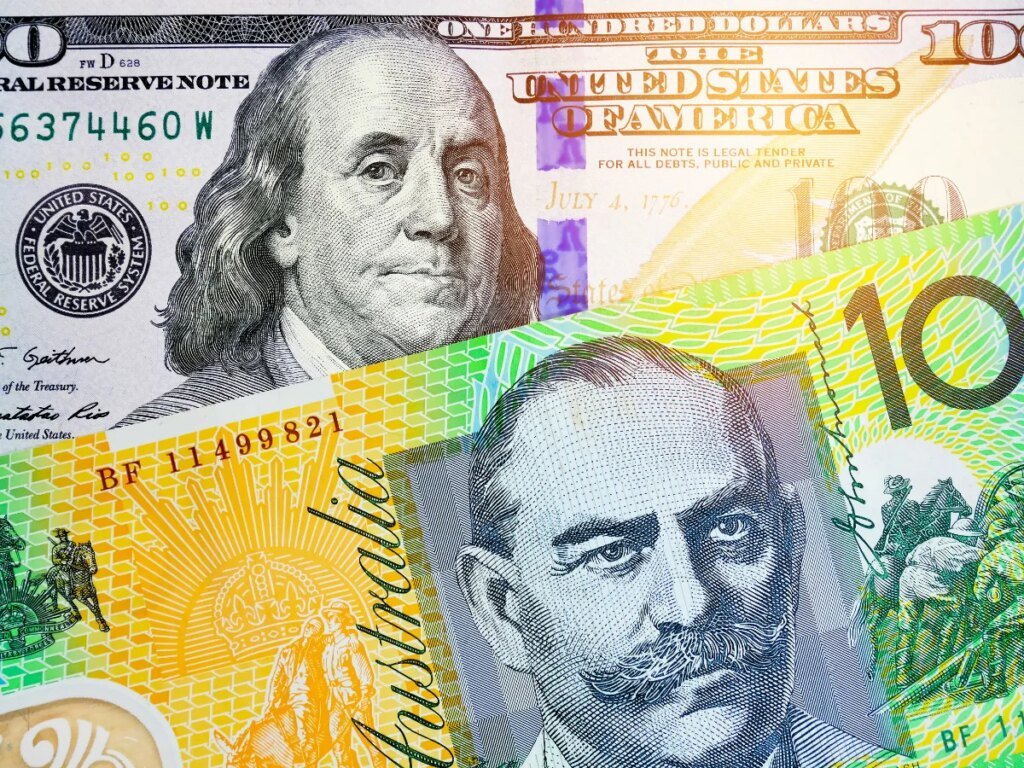
This week’s only central bank action came from Australia and the RBA meeting. With 3 hikes already this year, markets expected a hold this time, and the RBA did not deliver any surprises. This was evident in the Australian Dollar which is unchanged from Monday and trading a very tight range, with AUDUSD oscillating between 0.704 and 0.707.
RBA on Hold, Likely for an Extended Period
The Reserve Bank of Australia left the cash rate unchanged at 4.35% in a unanimous decision at its August meeting, the second straight hold after three increases earlier in the year that totalled 75 basis points.
The board noted that financial conditions have tightened and the economy appears to be slowing as expected, with consumer spending growth moderating and housing prices declining in several capital cities. New housing loans have also fallen noticeably.
At the same time the board stressed that inflation remains too high. Headline inflation stood at 3.8% in the year to June while the preferred trimmed mean measure was little changed at 3.6%, still well above the 2-3% target band.
The impact of the Middle East conflict on prices has so far been smaller than anticipated, yet oil and related commodity prices remain elevated and some firms continue to pass higher costs through to other goods and services. Updated forecasts show inflation is not expected to return to around the midpoint of the target range until late 2027, with upside risks still present.
Governor Michele Bullock said the board remains focused on ensuring higher inflation expectations do not become embedded in price and wage setting. “We expect that a period of subdued growth will be required to bring inflation down substantially,” she told the post-meeting press conference. She added that a rate hike was discussed alongside a hold, unlike the June meeting when only a hold was considered, and that cuts were not on the agenda. “And we will go again if we need to. And I think personally that it is quite possible we might need to go, but we will wait and see what the data tells us,” Bullock said.
The board statement itself left the door open explicitly, noting it would increase the cash rate further if upside risks materialise. However, hikes will not be needed if inflation stays contained and Westpac expect the banks is now on hold for an extended period.
“The RBA has evidently concluded that the base case is that rates are on hold. Headline and trimmed mean inflation have both come in lower than the RBA expected in May, and the labour market and housing market are both weaker than it expected. Pass-through of higher energy prices came in quickly and in size – as we flagged at the time. But as we noted in our change of rate call, this pass-through has since tapered off, undershooting the RBA’s expectations.”
Markets had widely expected the hold after softer-than-forecast second-quarter inflation data, and the initial reaction was muted.
The decision leaves the RBA in a data-dependent holding pattern. Unemployment is expected to rise gradually as growth slows, and productivity remains historically weak, constraining the economy’s potential. Markets now price a lower chance of another hike this year than before the meeting, though the governor’s remarks kept the risk alive into the November gathering when fresh forecasts will be available. For now the pause provides some relief to borrowers, but the message is clear that inflation remains the priority and the cycle is not yet declared over.
Australian Dollar Prices: This Week
| USD | EUR | GBP | JPY | CAD | AUD | NZD | CHF | |
|---|---|---|---|---|---|---|---|---|
| USD | -0.06% | -0.47% | +1.00% | -0.95% | -0.20% | +0.20% | +0.42% | |
| EUR | +0.06% | -0.41% | +1.06% | -0.89% | -0.14% | +0.25% | +0.48% | |
| GBP | +0.47% | +0.41% | +1.48% | -0.48% | +0.27% | +0.67% | +0.89% | |
| JPY | -0.99% | -1.05% | -1.46% | -1.94% | -1.20% | -0.80% | -0.58% | |
| CAD | +0.96% | +0.90% | +0.49% | +1.97% | +0.75% | +1.16% | +1.38% | |
| AUD | +0.20% | +0.14% | -0.27% | +1.21% | -0.75% | +0.40% | +0.63% | |
| NZD | -0.20% | -0.25% | -0.66% | +0.81% | -1.14% | -0.40% | +0.22% | |
| CHF | -0.42% | -0.48% | -0.89% | +0.58% | -1.36% | -0.62% | -0.22% |
The FX heat map compares how Australian Dollar (AUD) has performed against a basket of major currencies over the past week. The largest move was against the Japanese Yen, where Australian Dollar made its strongest advance. Data comparing prices today (12/08/2026 09:07 UTC) and daily close on 05/08/2026.
To read the table, choose the base currency from the left-hand column and then move across to the quote currency along the top row. For example, the GBP row and USD column shows the weekly percentage move in GBP/USD.