Englander also expects the Federal Reserve to keep interest rates unchanged through 2026, as he does not see any major economic imbalance warranting a policy shift. While he remains cautious on emerging-market currencies, including the Indian rupee, he says a sharp decline in the dollar would require a significant disappointment in AI-driven productivity growth.
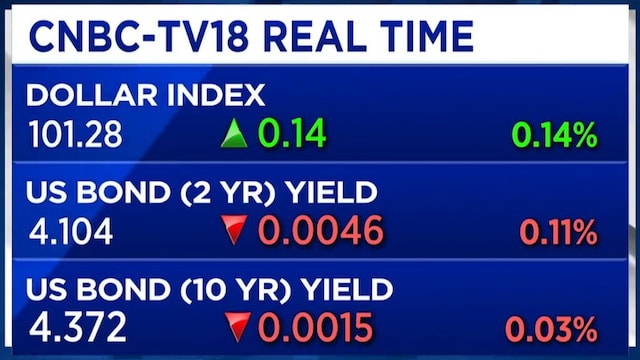
This is an edited transcript of the interview.Q: Your view on the dollar index, because that is been creeping up slowly, and the Fed action. We will watch the US non-farm payroll data due on July 2. Markets are shut on July 3, but this will be a read for what the Fed does in September. What’s your expectation on the dollar index and the Fed?
A: We expect the dollar index to continue edging upwards. Where we differ from most of the market is that we don’t see it as mainly a cyclical force; we see it as a structural force. We think artificial intelligence (AI) and broader productivity growth are important forces pushing up real interest rates—not for bad reasons, but because of higher productivity of capital. We think that has added support to the dollar and will continue to do so.
By contrast, we expect the Fed to stay flat through 2026. We don’t see any huge imbalance or emerging imbalance that would make it move.
Q: So, what’s the view—dollar higher or lower?
A: Think of long-term interest rates. The biggest and most powerful driver of a currency is what the market believes the sustainable long-term interest rate is. If we are correct, and the data already indicates that US long-term productivity growth is picking up, it means the Fed’s forecast that the neutral interest rate is 1% and that fed funds will ultimately drop to about 3% is probably wrong.
We are likely to see higher rates, not because the Fed is tightening or trying to obstruct the economy, but because that is the equilibrium level the economy needs, given the forces at play. The big driver of the dollar will be capital inflows—equity portfolio inflows, direct investment inflows and private equity inflows, supported by fixed income. We don’t see short-term policy rates as the biggest mover.
Q: So, short-term policy rates are not going to be the biggest mover. You are saying the dollar stays higher, which is intuitively softer for commodities. Peace talks could also cool some of the commodity prices that had overheated. In that context, what is your view on commodities and emerging markets?
A: We think emerging markets, in FX terms, are going to continue to be under pressure. The US is probably well positioned to be the first user, or at least gain the greatest initial advantage, from these new technologies. It will be hard for emerging markets to keep up.
What I would add is that there is a large segment of emerging markets that doesn’t get talked about much—so-called frontier markets. The perception of risk in these markets has narrowed considerably versus traditional emerging markets, and their strength may be part of the reason traditional emerging markets are facing pressure.
Q: What does that mean for India? A few AI plays in emerging markets have done extremely well, with returns matching or even exceeding some developed markets. Do you think that trade continues?
A: We don’t see oil having much further to go, and that is the big reason for the downward adjustment in dollar-INR that we made at the beginning of May. From here, it’s more going to be the rate story and the growth story.
There is nothing we see that is terrible about India, but we don’t see it as being particularly well advantaged at this stage. So, we do see some pressure on the rupee.
Q: Some pressure on the rupee. The trading community, including investors like Paul Tudor Jones, has been betting that we are at the cusp of a big slide in the dollar. It hasn’t happened yet. What would it take for that view to play out?
A: We would have to be heavily disappointed in AI and productivity growth because that would take away the support for real interest rates and the support for nominal interest rates that we see building.
Watch the full conversation here

Equities are also counting on earnings growth driven by productivity growth and technology. If that support were removed, the motivation for capital flowing into the US would disappear, and the US would become just another big country with a large fiscal deficit and a large external deficit. That would be a formula for a weak dollar.
But if we continue to see this kind of robust growth, which drives earnings growth and makes the US an attractive destination for capital, we see dollar strength rather than weakness.
Catch all the latest updates from the stock market here