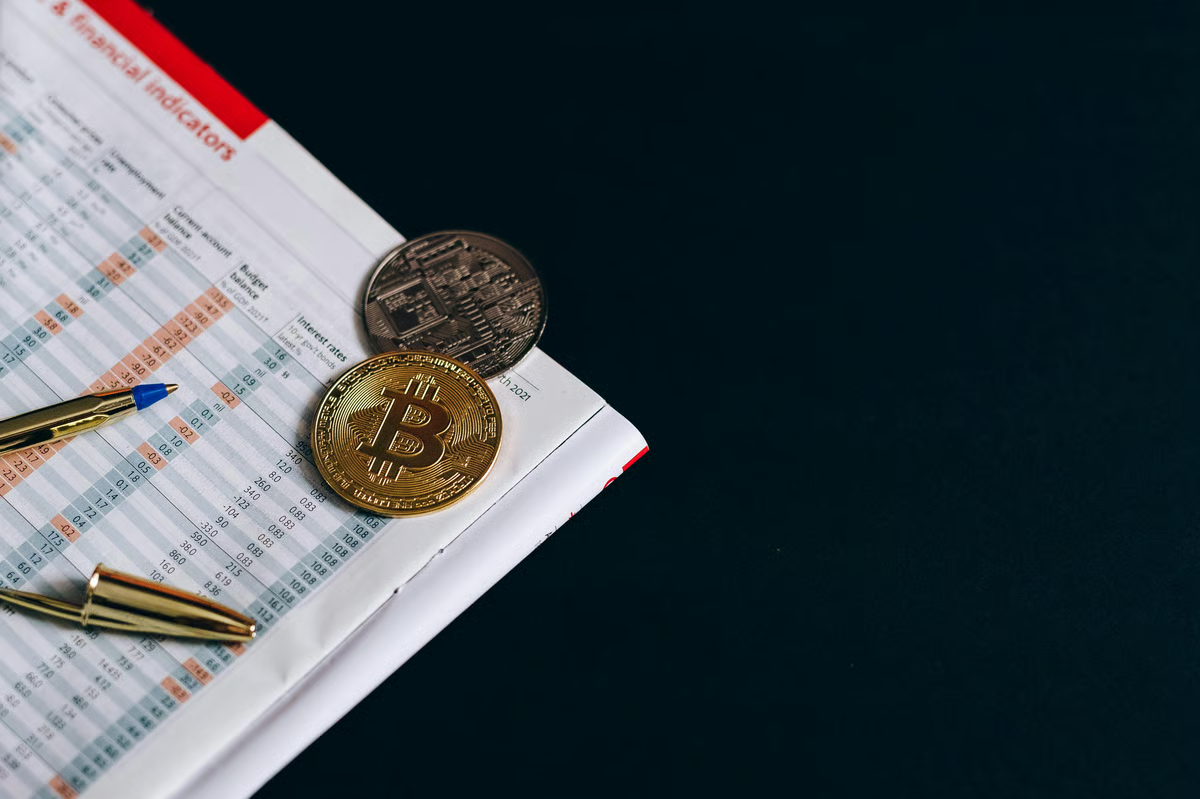
NEW YORK, NY / ACCESS Newswire / September 8, 2025 / Proof has always been the foundation of markets. Money moves on trust, contracts rely on evidence, and supply chains run on verified records. What plastics have lacked is that same currency of proof. That changes now. Through SMX’s (NASDAQ:SMX) partnership with Singapore’s A*STAR, the world’s first national plastics passport is being built.
It’s a timely contribution. For decades, recycling has been driven more by ambition than by execution. Governments set aggressive targets, brands pledged billions, and NGOs pressed for accountability. Yet without a way to generate trusted evidence, results consistently fell short. Recycled content was often reported on estimates or self-declarations, leaving regulators skeptical and consumers doubtful. The absence of proof kept plastics locked in the category of liability- costly to manage and nearly impossible to value.
That is precisely where the plastics passport creates a break with the past. SMX’s molecular markers embed a unique, tamper-resistant code directly into materials at the point of manufacture. This invisible code doesn’t just link to a record- it creates a digital passport that persists through production, use, recycling, and even chemical transformation. Instead of chasing data after the fact, proof now moves with the material itself, turning sustainability claims into verifiable, auditable facts.
Singapore Takes The First Step Toward Valuing Waste
Singapore’s decision to implement this model nationally shows how transformative the concept can be. This is not a pilot program or a corporate experiment. By adopting SMX’s technology through A*STAR, the nation has made proof the default, not the exception. That policy choice elevates evidence into something more than compliance: it becomes a tradable form of value or, better said, a new type of currency for materials.
With it, new economic pathways open. That’s facilitated through SMX’s Plastic Cycle Token (PCT), which allows verified recycled content to be monetized, traded, and priced with the same integrity as other commodities. Companies no longer carry recycling as a sunk cost; they hold an asset. Regulators gain enforceable standards without adding red tape. And consumers, for the first time, can trust the sustainability claims printed on labels.
The currency of proof doesn’t stop at company balance sheets. It extends across borders. In a global economy shaped by tariffs, border taxes, and ESG requirements, the ability to attach a verified passport to materials reduces friction in trade. It creates a common language that governments, industries, and markets can all recognize, making plastics not only recyclable but also reliably tradable.
This is why Singapore’s leadership matters so much. By operationalizing proof at the national level, the country demonstrates that sustainability can be more than an obligation; it can be a competitive advantage. Proof strengthens its role as a global trade hub, attracts multinationals seeking trusted supply chains, and sets a model that other nations will likely follow.
Positive Global Implications
The implications stretch far beyond plastics. SMX’s partnership with A*STAR proves that verifiable evidence can scale to national infrastructure, and in doing so, it redefines what markets value. Proof is no longer paperwork-it is currency. And just as financial currencies enable commerce, proof will enable the circular economy to function at scale.
SMX stands at the center of this shift. Together with A*STAR, it is demonstrating that plastics can be managed not as waste but as assets, backed by evidence as solid as any balance sheet entry. Proof has become the measure that regulators enforce, businesses trade by, and consumers trust. And with Singapore leading the way, the age of proof as currency has begun.
About SMX
As global businesses face new and complex challenges relating to carbon neutrality and meeting new governmental and regional regulations and standards, SMX is able to offer players along the value chain access to its marking, tracking, measuring and digital platform technology to transition more successfully to a low-carbon economy.
Forward-Looking Statements
The information in this press release includes “forward-looking statements” within the meaning of the Private Securities Litigation Reform Act of 1995. Forward-looking statements include, but are not limited to, statements regarding expectations, hopes, beliefs, intentions or strategies regarding the future. In addition, any statements that refer to projections, forecasts or other characterizations of future events or circumstances, including any underlying assumptions, are forward-looking statements. The words “anticipate,” “believe,” “contemplate,” “continue,” “could,” “estimate,” “expect,” “forecast,” “intends,” “may,” “will,” “might,” “plan,” “possible,” “potential,” “predict,” “project,” “should,” “would” and similar expressions may identify forward-looking statements, but the absence of these words does not mean that a statement is not forward-looking. Forward-looking statements in this press release may include, for example: successful launch and implementation of SMX’s joint projects with manufacturers and other supply chain participants of steel, rubber, plastic and other materials; changes in SMX’s strategy, future operations, financial position, estimated revenues and losses, projected costs, prospects and plans; SMX’s ability to develop and launch new products and services, including its planned Plastic Cycle Token; SMX’s ability to successfully and efficiently integrate future expansion plans and opportunities; SMX’s ability to grow its business in a cost-effective manner; SMX’s product development timeline and estimated research and development costs; the implementation, market acceptance and success of SMX’s business model; developments and projections relating to SMX’s competitors and industry; and SMX’s approach and goals with respect to technology. These forward-looking statements are based on information available as of the date of this press release, and current expectations, forecasts and assumptions, and involve a number of judgments, risks and uncertainties. Accordingly, forward-looking statements should not be relied upon as representing views as of any subsequent date, and no obligation is undertaken to update forward-looking statements to reflect events or circumstances after the date they were made, whether as a result of new information, future events or otherwise, except as may be required under applicable securities laws. As a result of a number of known and unknown risks and uncertainties, actual results or performance may be materially different from those expressed or implied by these forward-looking statements. Some factors that could cause actual results to differ include: the ability to maintain the listing of the Company’s shares on Nasdaq; changes in applicable laws or regulations; the ability to implement business plans, forecasts, and other expectations, and identify and realize additional opportunities; the risk of downturns and the possibility of rapid change in the highly competitive industry in which SMX operates; the risk that SMX and its current and future collaborators are unable to successfully develop and commercialize SMX’s products or services, or experience significant delays in doing so; the risk that the Company may never achieve or sustain profitability; the risk that the Company will need to raise additional capital to execute its business plan, which may not be available on acceptable terms or at all; the risk that the Company experiences difficulties in managing its growth and expanding operations; the risk that third-party suppliers and manufacturers are not able to fully and timely meet their obligations; the risk that SMX is unable to secure or protect its intellectual property; the possibility that SMX may be adversely affected by other economic, business, and/or competitive factors; and other risks and uncertainties described in SMX’s filings from time to time with the Securities and Exchange Commission.
EMAIL: info@securitymattersltd.com
SOURCE: SMX (Security Matters) Public Limited
View the original press release on ACCESS Newswire