

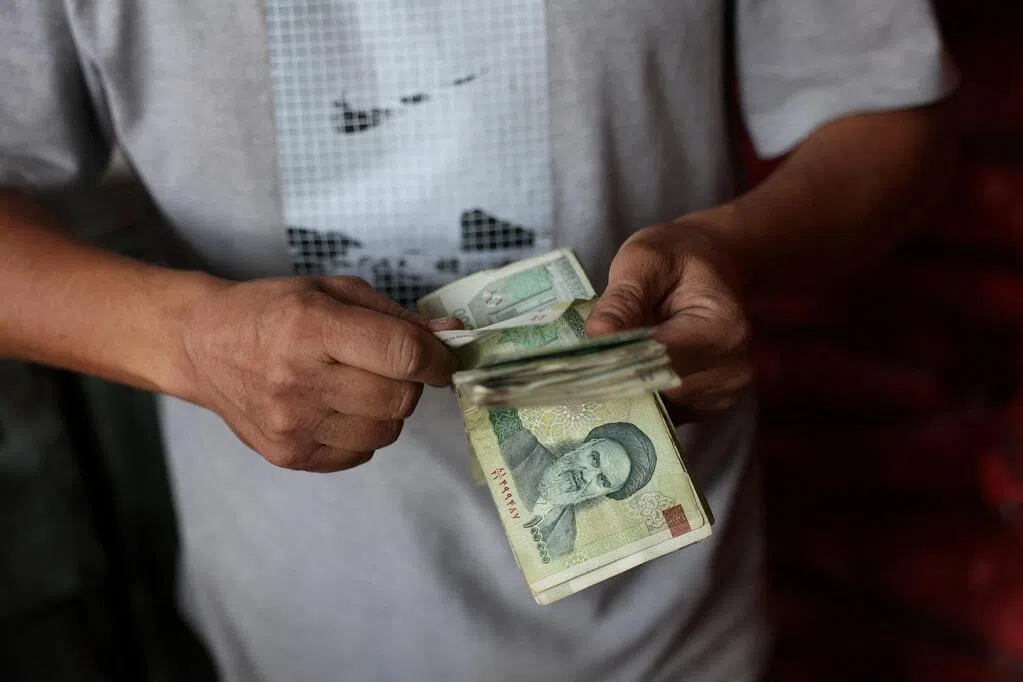
(Dubai/Tehran, agencies) Iran’s currency, the rial, has hit a fresh record low, nearing the psychological threshold of 3 million to the US dollar, as nine months of war and tightening US sanctions and widening embargoes take their toll. Iran is experiencing one of its most severe waves of inflation in decades, with food prices rising particularly sharply.
According to free-market exchange rate tracking website bon-bast.com, one US dollar cost 2,938,000 rials last Friday (27 November), rising to 2,992,000 rials on Saturday (28 November).
The Iranian currency weakened past 2 million rials to the US dollar in August this year and has repeatedly hit new lows since. Many Iranians have rushed to buy US dollars, other hard currencies and gold to protect their savings from losing value.
Data from the Statistical Centre of Iran showed that consumer prices surged 88.7% year on year in October, while the annual average inflation rate climbed to 76.8%. Food and beverage prices soared 112.6% year on year.
Iran’s central bank governor Abdolnaser Hemmati sought to reassure the public on Saturday, saying the country had enough foreign exchange to pay for imports of essential goods and medicines over the coming months. But he also acknowledged: “Foreign exchange is affected by many factors such as the economy, expectations and politics… We are trying to stabilise the market as much as we can.”
The US reinstated a naval blockade of Iranian ports in July this year. Earlier this month, it announced the formation of “Task Force Iron Gate” to restrict the movement of weapons and sanctioned goods across Iran’s land borders and the Caspian Sea.
US Treasury Secretary Scott Bessent announced a new round of sanctions on 23 November aimed at further isolating Iran’s economy and dismantling its shadow banking network. He said: “Iran’s economy is underwater, and its leaders are panicking.”
OPEC+ expected to hold output targets steady as Iran war disrupts energy markets
The Organization of the Petroleum Exporting Countries and its allies (OPEC+) are expected to keep oil production targets for the first quarter of 2027 unchanged at an online meeting on Sunday (29 November), as the war in Iran continues to disrupt oil exports from the Persian Gulf and members remain divided over assessments of production capacity.
OPEC+ had planned to set new production targets for next year at the meeting and, for the first time, commission external agencies to assess each member’s production capacity.
But Reuters, citing people familiar with the matter, reported that Iraq and Kazakhstan believed their production capacities had been underestimated, making it difficult to move the process forward. OPEC+ is therefore leaning towards keeping output targets unchanged for the first quarter of next year and has reached an agreement in principle on this.
The International Energy Agency forecasts that, after months of supply shortages and soaring oil prices, the global oil market will return to surplus in the fourth quarter of this year as supply increases while demand remains weak.
Analysts noted that OPEC+ might have to cut production next year if a substantial global oil surplus emerges. A major challenge would then be determining which members are willing to shoulder the cuts.