Stay informed with free updates
Simply sign up to the Chinese economy myFT Digest — delivered directly to your inbox.
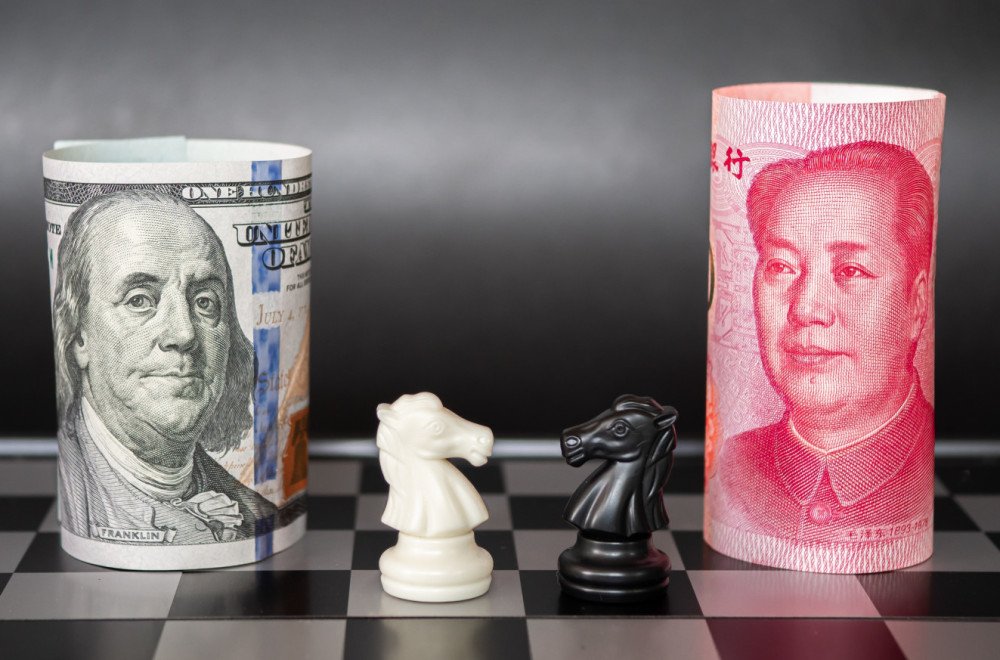
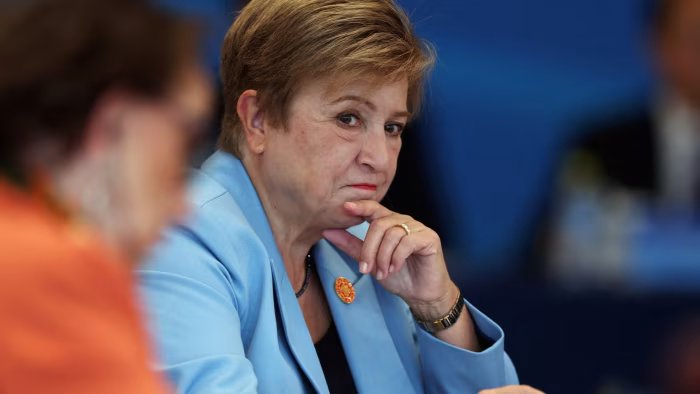
IMF managing director Kristalina Georgieva has said that China needs to fix “significant” imbalances in its economy, including deflation that has driven a depreciation of the renminbi and boosted exports at a time of rising trade tensions.
Her comments came after official data this week showed China’s annual goods trade surplus will this year exceed $1tn for the first time, and as European companies warned the undervalued renminbi could provoke increased trade retaliation, including possible tariffs.
“Low inflation relative to trading partners has resulted in significant real exchange rate depreciation and this has made China’s exports cheaper, prolonging an excessive reliance on exports and worsening external imbalances,” Georgieva said in Beijing on Wednesday.
Her comments came as the IMF concluded its Article IV mission to China, its annual review of the world’s second-largest economy.
“China is simply too big to generate much growth from exports and continuing to depend on export-led growth risks furthering global trade tensions,” she added.
Beijing has relied on exports to support the economy, which is suffering from a years-long property-sector slump and weak domestic demand.
The IMF slightly raised its forecast for China’s economic growth this year to 5 per cent, from 4.8 per cent previously, and from 4.2 per cent for 2026 to 4.5 per cent as it found global trade tensions had taken less of a toll than expected.
Georgieva’s comments echoed a report by the EU Chamber of Commerce in China that said the renminbi had weakened to a 10-year low against the euro this year, even though China’s trade income should be driving an appreciation of its currency.
The renminbi has depreciated 7.5 per cent against the euro this year.
The People’s Bank of China closely controls the renminbi exchange rate, but Beijing says it abides by market principles and denies manipulating the currency for political purposes.
Economists say China’s real effective exchange rate — its weighted average against a broader basket of currencies — has depreciated 18 per cent from its peak in March 2022 during the Covid-19 pandemic.
“An undervalued renminbi is a subsidy for exports,” said Jens Eskelund, president of the EU chamber. He called for “a discussion about the real exchange rate . . . [and] its impact for both the Chinese economy and for China’s trade partners”.
He added that China’s trading partners could be forced to take retaliatory actions such as anti-dumping investigations or tariffs.
Brad Setser, a senior fellow at the Council on Foreign Relations, and Mark Sobel, US chair of think-tank OMFIF, have called on China to let the renminbi appreciate, arguing in a paper last month that this would reduce geopolitically sensitive trade surpluses and boost domestic demand by increasing consumers’ spending power.
Rather than embark on a large-scale effort to boost domestic demand, Beijing has prioritised industry, particularly high-tech sectors, as it competes with the US for economic supremacy.
Weak consumption and industrial oversupply have driven deflationary pressures. Official data released on Wednesday showed producer prices declined 2.2 per cent in November, the 38th month of contraction, while the consumer price index rose 0.7 per cent. This was the highest level since February 2024 but was driven by volatile food prices, economists said.
China, meanwhile, has portrayed itself as a defender of global trade in the face of US President Donald Trump’s tariff war.
“Only through open co-operation can we create a larger space for incremental growth,” China’s second-ranked leader, Premier Li Qiang, told a gathering of officials from international agencies that included Georgieva on Tuesday.
Georgieva called on China to more urgently pivot to stimulating domestic demand, as analysts said Beijing’s new five-year plan prioritised investment in high-tech production.
She also said that Beijing needed to spend 5 per cent of GDP over the next three years to resolve its property crisis, which she said would help reflate the economy, strengthen the currency and reduce the trade surplus.
As part of that effort, she said Beijing should let insolvent developers go bankrupt.
“Let the zombies go away,” Georgieva said.