
USD/CNY Forecast: China’s Record Surplus Puts Goldman’s 6.40 Outlook in Focus
China’s export surge supports the Yuan’s outlook against the US Dollar, but Goldman Sachs sees weak domestic demand keeping consumer inflation subdued.
China is earning more from overseas trade while struggling to generate stronger price growth at home, a divide that complicates the case for further Yuan appreciation.
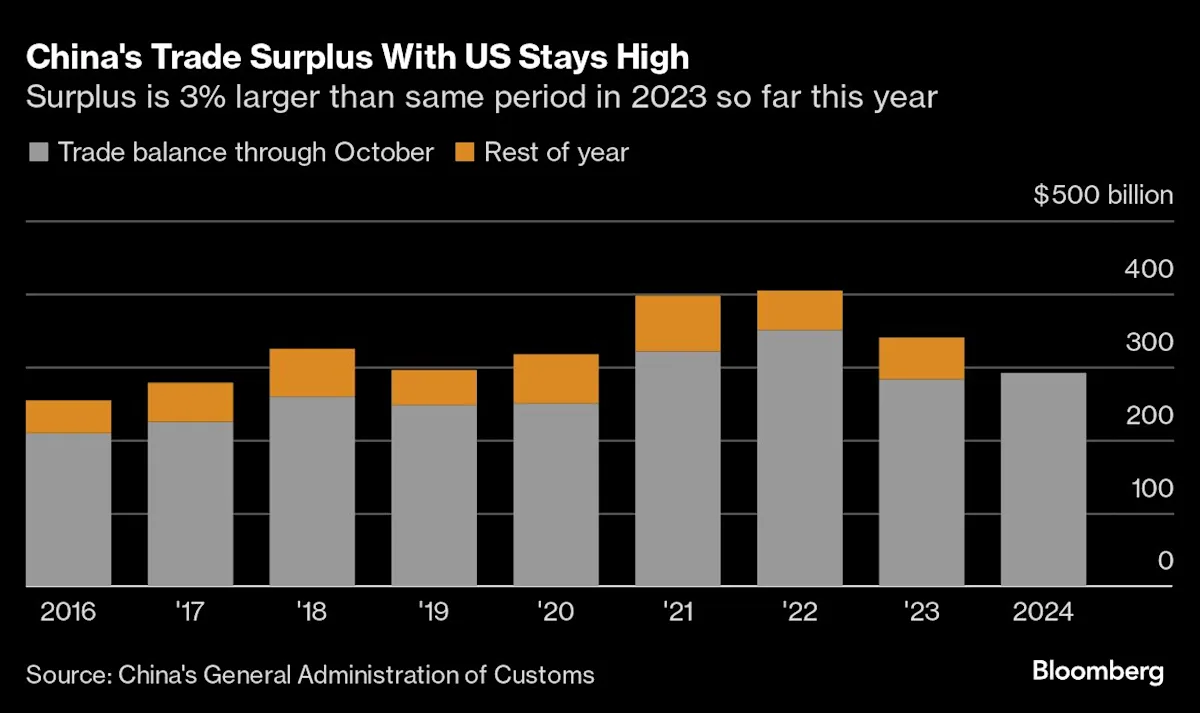
September’s $133.5 billion trade surplus gives fresh context to Goldman Sachs’s existing USD/CNY forecast of 6.40 over twelve months, around October 2027.
The exchange rate stood near 6.6929 on Thursday afternoon, little changed on the day, putting that forecast roughly 4.4% below the current Dollar-Yuan rate.
Goldman’s broader economic assessment remains cautious: “In China, we expect real GDP growth of 4.5% yoy in 2026, reflecting broad-based export strength but headwinds from weak domestic demand.”
The trade release is new evidence to assess alongside that existing currency path.
Export growth reaches beyond technology
Exports rose 36.3% from a year earlier, with the latest customs figures showing overseas demand remained strong despite pressure from trading partners to reduce China’s surplus.
Goldman economist Chelsea Song writes: “The acceleration in headline trade growth is consistent with the strong container shipping volume during the month. By region and in sequential terms, Chinese exports rose sequentially across major trading partners. Imports from major trading partners also rose sequentially, except for the US.”
The breadth of the increase matters for the Yuan because export receipts are a potential source of foreign currency to be converted into domestic money, although exporters can also retain those earnings overseas.
Song says: “By product, export value rose broadly from August to September, with apparel/footwear/suitcase products rising the most. Imports by products also rose broadly in September, led by energy products (mostly natural gas).”
Higher trade values do not always mean a corresponding increase in physical shipments.
That is particularly important for judging whether the trade boom reflects stronger underlying demand or higher prices.
“Among tech-related products, exports of semiconductors increased by 136% yoy in September (vs. +129.8% yoy in August) in value terms and 1% yoy (vs. -7.9% yoy in August) in volume terms.” Song writes.
Weak domestic demand complicates the Yuan recovery
A large trade surplus does not establish that China’s economy needs tighter monetary policy.
The latest producer-price figures show a sharp increase in industrial costs.
Economist Xinquan Chen writes: “China’s headline CPI inflation edged up to +0.9% yoy in September from +0.8% yoy in August, mainly on higher energy and transportation services prices. Headline PPI inflation rose to +5.0% yoy in September from +3.8% yoy in August, mainly due to higher prices for energy goods and chemicals.”
Chen expects part of that pressure to reverse as this year’s surge drops out of the annual comparison.
“Under the revised path, year-over-year PPI inflation is likely to turn negative as early as Q2 next year, due to a high base this year.”
Chen says: “However, the CPI print in Q3 and weakening domestic demand suggest lower CPI inflation than we previously expected.”
“We revise down our 2026/27 full-year CPI inflation forecasts to 0.8% /0.6% (vs. 1.0%/1.0% previously), driven by weak domestic demand and our expectations of fading boost from energy prices in 2027.”
For the currency, our reading is that export earnings offer support without removing the domestic case for accommodative policy.
That keeps Beijing’s management of the exchange rate important, alongside the strength of the trade figures themselves.
Exchange Rates UK’s earlier Yuan analysis examined how official tolerance of appreciation was cushioning the currency against broader Dollar strength.
Goldman’s nearer three-month forecast remains 6.70, close to the present rate, so its longer-term call allows time for the recovery to develop.
Song says: “The detailed breakdown of trade by country and by product will be released on October 20.”
That should help distinguish the demand supporting exports from the effect of higher prices.
USD/CNY exchange rate FAQ
What is Goldman Sachs’s Yuan forecast?
USD/CNY at 6.40 over twelve months, around October 2027.
Does a lower USD/CNY mean a stronger Yuan?
Yes. Each US Dollar would buy fewer Yuan.
Does the trade surplus mean domestic demand is strong?
No. Goldman still sees weak domestic demand and low consumer inflation.