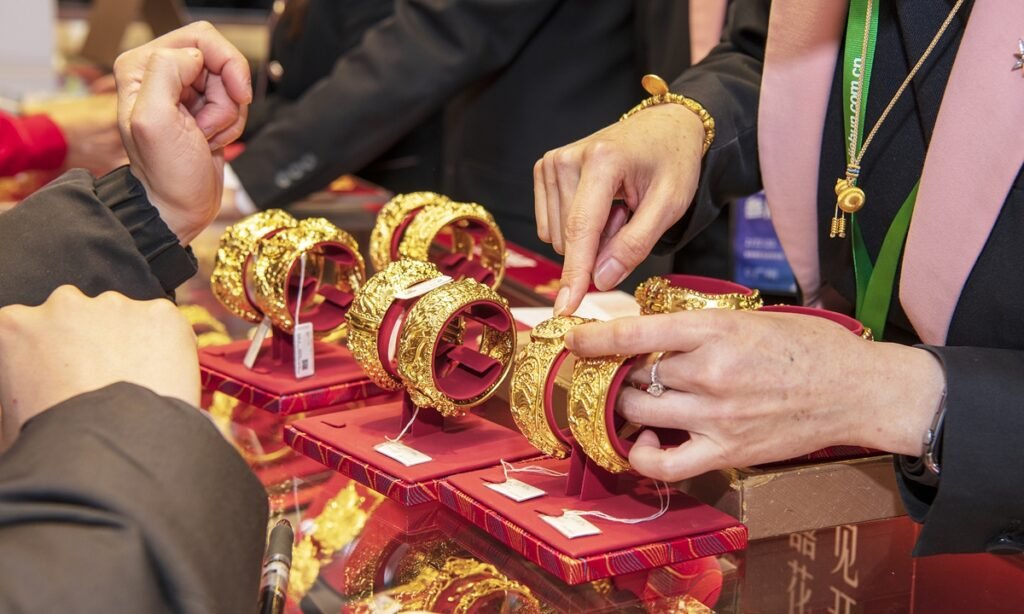
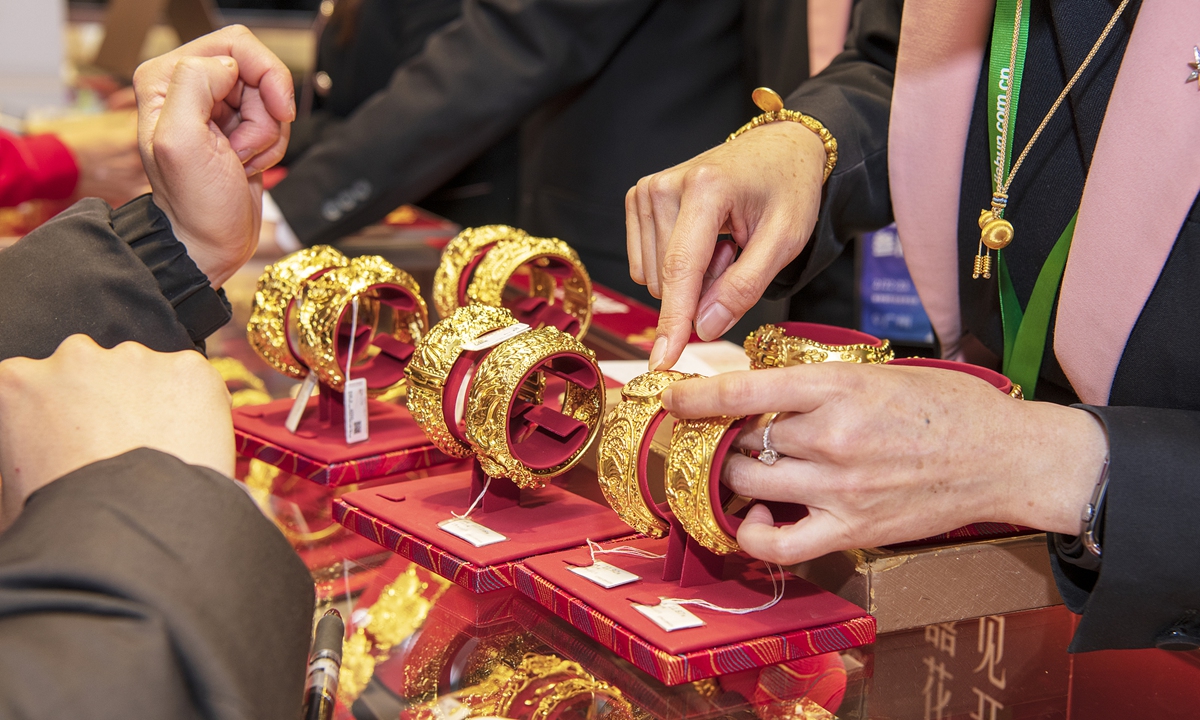
A sales representative shows a piece of gold jewelry at an expo in Guangzhou, South China’s Guangdong Province. File photo: VCG
China has increased its gold reserves for the past 19 consecutive months, official data showed on Sunday, reflecting the country’s strategy to diversify international reserves and bolster financial security, Chinese experts said.
Data released by the State Administration of Foreign Exchange (SAFE) revealed that China’s gold reserves stood at 74.96 million troy ounces at the end of May, up by 320,000 troy ounces from a month earlier.
Amid rising global uncertainties, the country’s steadily growing gold purchases help optimize the structure of reserves, while helping hedge against risks from major currency swings, Zhao Qingming, a veteran financial analyst, told the Global Times on Sunday.
As a universally recognized safe-haven asset worldwide, rising gold reserves will shore up the credibility of the yuan and create a solid foundation for its internationalization, Zhao added.
Unlike foreign exchange reserves, whose safety and value are susceptible to the policies of the issuing countries, gold has an independent nature and stronger sovereign security. Gold also serves as an effective hedge against inflation, offering stable value and protecting assets from erosion caused by overseas inflation, Xi Junyang, a professor at the Shanghai University of Finance and Economics, told the Global Times on Sunday.
On Friday, spot gold in London dropped sharply to $4,327 per ounce, edging close to its year-end closing price of $4,325 per ounce on December 31, 2025, the Securities Times reported.
Regarding the notable recent pullback in global gold prices, Zhao said that price volatility is a normal feature of the financial market.
“Gold has rallied for four consecutive years, and the steep gains have led to price bubbles. Hence, the current price correction is inevitable and also reasonable,” Zhao said.
China has been increasing its gold holdings at a steady, controllable pace. Therefore, the impact of short‑term gold price volatility on China’s reserves is limited, Xi Junyang said.
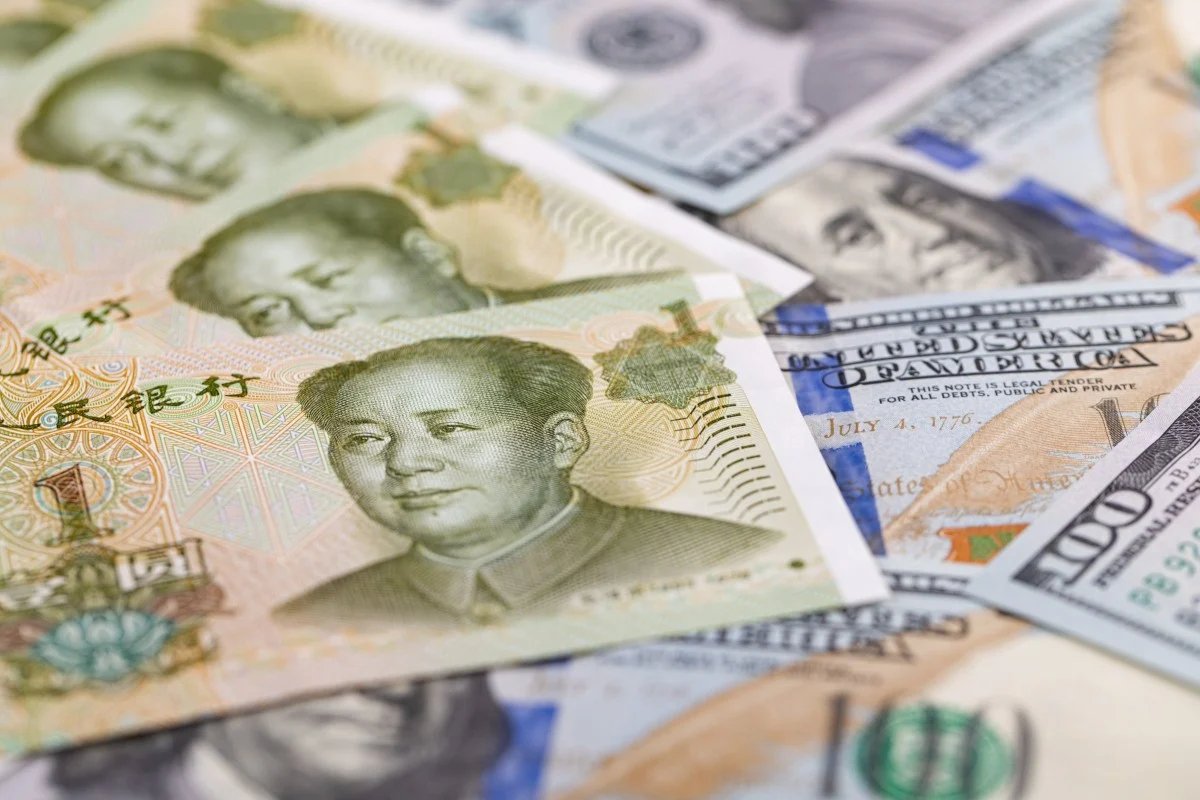
The SAFE revealed that China’s foreign exchange reserves climbed to $3.4422 trillion at the end of May, surging by $31.7 billion or 0.93 percent from a month earlier. The figure hit the highest level since November 2015, staying above $3.3 trillion for the past 10 months, the Securities Times reported.
The SAFE attributed the growth of reserves to factors including a firmer US Dollar Index and growing global asset prices, adding that China’s sound economic momentum has underpinned the stability of the reserves.
Caused by changes in the global macroeconomic environment and monetary policy expectations in major economies, the US Dollar Index edged higher in May. Due to exchange rate adjustments and asset price changes, China’s foreign exchange reserves rose month-on-month. With the Chinese economy maintaining steady growth and steady progress in high-quality development, the foundation for China’s stable foreign reserves remains firm, according to the SAFE.
Xi Junyang noted that China’s foreign exchange reserves have remained at a reasonable level, reflecting the country’s growing comprehensive national strength, a basic balance in international payments, and strong external economic resilience.
He added that the growth in China’s foreign exchange reserves is closely linked to its export performance.
China’s total foreign trade in the first four months of 2026 stood at 16.23 trillion yuan ($2.39 trillion), up 14.9 percent year-on-year, with exports rising by 11.3 percent to 9.33 trillion yuan and imports rising 20 percent to 6.9 trillion yuan, according to data from China’s General Administration of Customs.