Stay informed with free updates
Simply sign up to the Currencies myFT Digest — delivered directly to your inbox.
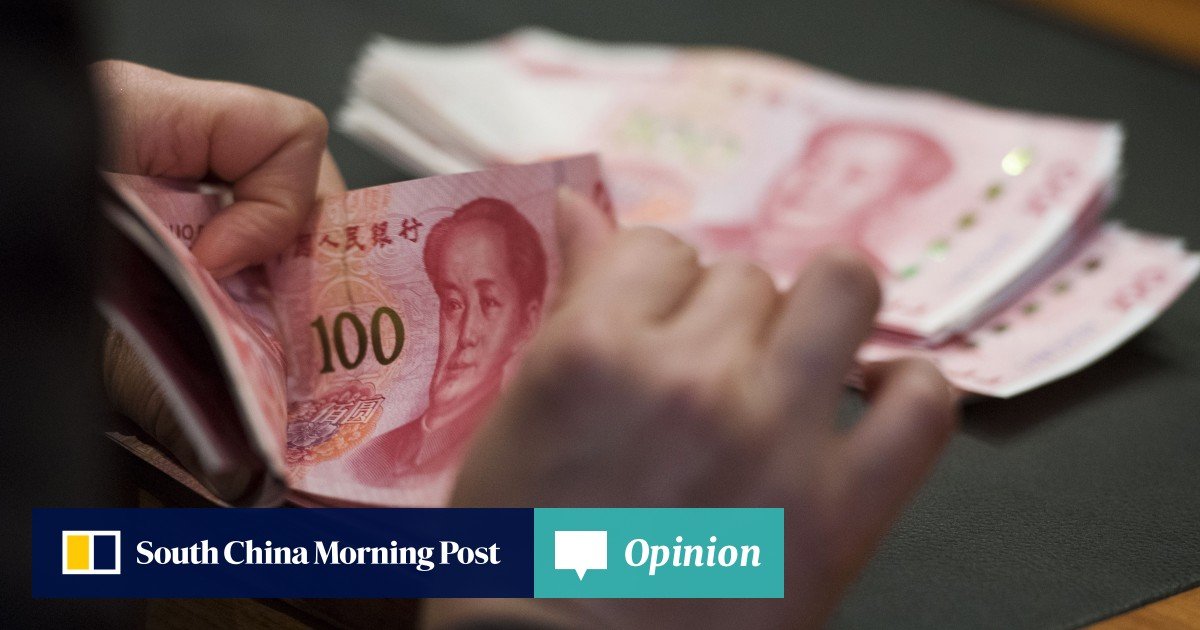
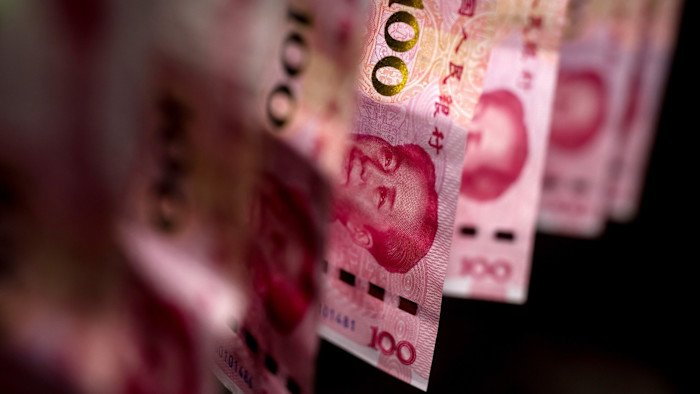
China’s central bank has moved to slow the renminbi’s advance as its rapid appreciation tests Beijing’s tolerance for a stronger currency that could threaten its export-oriented economy.
The People’s Bank of China on Friday said it would scrap a reserve requirement of 20 per cent for forward contracts selling the renminbi. This makes it cheaper for traders to bet on a weakening Chinese currency.
Beijing tightly manages the renminbi and in recent years has favoured a weaker currency to boost exports. It has faced calls from inside and outside the country in recent months to let the currency strengthen after racking up a record $1.2tn trade surplus in 2025.
Since the start of the year, the renminbi has strengthened nearly 2 per cent against the dollar, making it one of Asia’s top-performing currencies. The pace of appreciation has taken many analysts by surprise.
“They’re taking some measures to slow the pace,” said Andrew Tilton, chief Asia-Pacific economist and head of emerging market economic research at Goldman Sachs. “They don’t want to create a sustained one-way trade for the market.”
The PBoC, which manages the currency by setting a daily midpoint around which it can trade up or down 2 per cent, set that point weaker than market expectations on Friday.
It said it would “continue to guide financial institutions” to “maintain the basic stability of the RMB exchange rate at a reasonable and balanced level”.
The currency weakened 0.2 per cent against the dollar to Rmb6.85 on Friday.

Authorities in China frequently intervene to contain market moves they perceive as lopsided or attracting speculative flows.
The reserve requirement that the central bank scrapped on Friday was put into effect in 2022, when the renminbi fell more than 7 per cent against the dollar, to fight depreciation pressure.
Becky Liu, head of greater China strategy at Standard Chartered, said removing it suggested “the PBoC no longer sees the need to maintain precautionary measures” on depreciation.
Wee Khoon Chong, a senior strategist at BNY, said the move would have limited impact on the exchange rate because there was not significant demand in the market for bets on China’s currency weakening.
Some renminbi strengthening was widely expected because China’s exporters tended to convert more of their dollar earnings back into renminbi in December and January, ahead of the lunar new year holiday, to pay bonuses and salaries to workers.
This leads to a stronger Chinese currency towards the end and beginning of every year.
But Chandresh Jain, emerging markets rates and foreign exchange strategist at BNP Paribas, said markets did not expect the renminbi to continue strengthening after the holiday, which ended on February 23.
BNY’s Chong said this year’s rapid appreciation was a delayed response to currency dynamics that began last year.
“In 2025 [authorities] deliberately capped [the renminbi] at a very cheap level and now they are normalising,” he said.
Analysts said China was particularly keen for the currency to strengthen ahead of US President Donald Trump’s visit to the country at the end of March to ease tensions around the exchange rate during negotiations between the two superpowers.
“Investors are thinking China will not try to show the currency is weakening ahead of that meeting. They’ll probably try and show that the currency is strengthening,” said Jain.
The return of foreign money into China’s equity markets, which accelerated in the fourth quarter of last year due to growing enthusiasm for the country’s technology and AI companies, has also contributed to renminbi strength.