
Global risk appetite has staged a limited rebound on Tuesday with all main equity markets trading in positive territory, but uncertainty remains intense and further high volatility is inevitable while US-China tensions have intensified.
Despite the risk recovery, the Pound has remained under pressure in global markets.
The Pound to Dollar (GBP/USD) exchange rate dipped to fresh 1-month lows at 1.2710 and rallies quickly encountered selling interest with the pair trading around 1.2730.
According to UoB; “The sharp decline over the past couple of days is deeply oversold. However, GBP could edge lower to 1.2675 before stabilisation is likely. Any further decline is unlikely to reach the next major support at 1.2580.”
The Pound to Euro (GBP/EUR) exchange rate has also posted further sharp losses to 8-month lows below 1.1650 before a slight recovery.
Failure to regain 1.1695 would risk further selling pressure.
S&P 500 index futures are trading around 1.6% higher while the FTSE 100 index is trading 2.0% higher.
Tensions will, however, remain extremely high in the short term with the US “reciprocal tariffs” due to come into effect on April 9th.
ING commented; “We would however be cautious in chasing big rebounds in high-beta currencies, and especially oil-sensitive currencies. Trump has given little signs of scaling back protectionism, and there is a risk that markets are again erring on the side of optimism.”

Fears over a full-scale US-China trade war have intensified over the past 24 hours.
In response to the US plans to impose an extra 34% tariff on Chinese exports, which are due to come into effect tomorrow, Beijing responded with its own tariffs of 34% on imports from the US.
President Trump reacted angrily and threatened to impose an additional 50% tariff on China if it refused to back down. China stated that it would not concede ground to bullying and blackmail.
MUFG commented; “It does not appear that China will back down to President Trump’s tariff threats. The Chinese Ministry of Commerce stated that “if the US insists on its own way, China will fight to the end.”
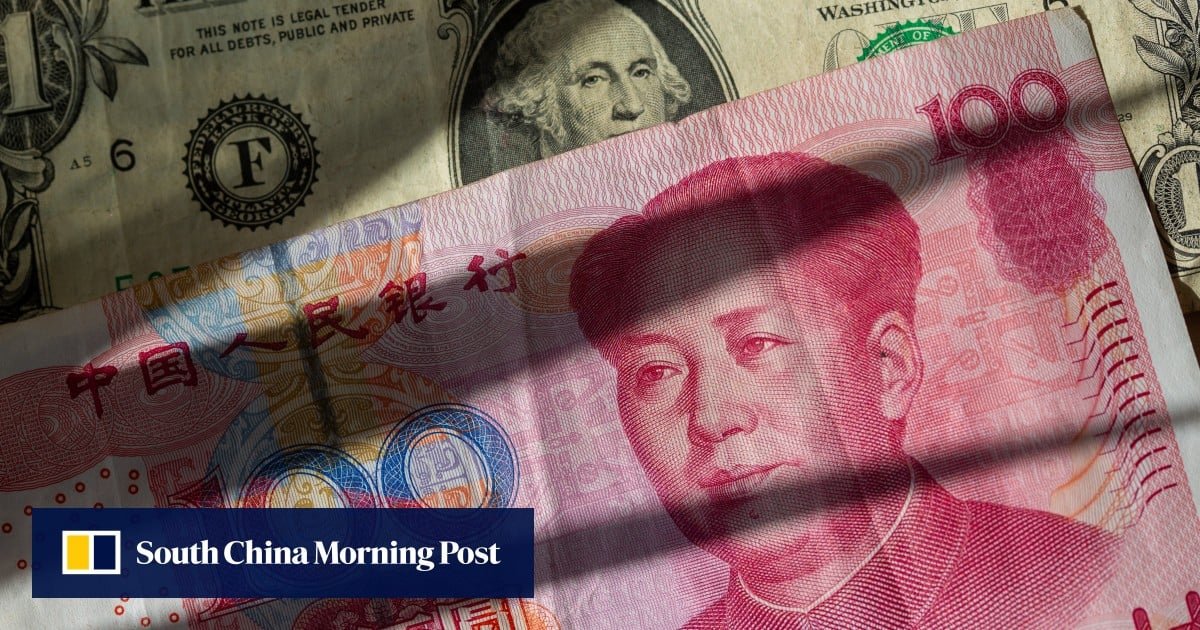
Significantly, the Chinese yuan lost ground on Tuesday.
MUFG commented; “It follows the PBoC’s decision to set the daily fixing rate above the 7.2000-level for the first time since September 2023 which has added to building speculation amongst market participants that China could allow a bigger devaluation of the renminbi to offset the negative impact on external demand form the worsening trade war with the US.”
European currencies, including the Pound, will find it very difficult to make headway if the Chinese currency continues to weaken.
Markets will also be very nervous over the potential EU response to US tariffs.
Domestically, short-term UK yields retreated on Tuesday amid increased speculation that the Bank of England would be more aggressive in cutting interest rates.
Markets are now pricing in a 100% chance of a May cut.
Pantheon Macroeconomics considers that the bank could cut in May and June if there is no relief from tariffs, but also noted the very high degree of uncertainty.
It added; “President Trump cannot be completely impervious to markets, we think, we will have to be nimble given how quickly this story is changing.”