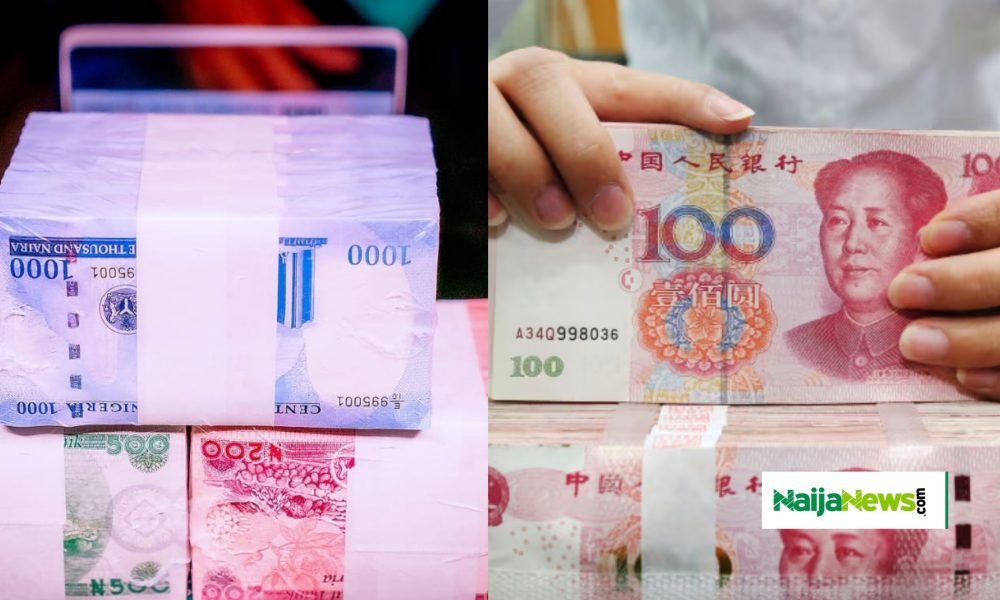


Beyond the dollar and yuan: How Russia and China are rewriting the rules of global trade
The decline of the Chinese yuan’s share in Russia’s export settlements has been presented by Western media as evidence that US sanctions are succeeding in undermining Moscow’s financial independence. A recent Bloomberg report, titled “Russia’s Push to Replace Dollar With China’s Yuan Collapses,” argues that Washington’s threat of secondary sanctions has forced Chinese banks to retreat from Russian transactions, exposing the limits of Moscow’s efforts to move away from the dollar. Yet this interpretation overlooks a much more significant development: Russia and China may be changing the mechanisms of international trade rather than simply replacing one dominant currency with another.
The distinction matters. The future of global financial power may depend less on which national currency dominates trade and more on whether countries can conduct international transactions without relying on the Western banking infrastructure that has historically supported dollar supremacy.
Sanctions have disrupted payments, not trade
There is little doubt that US secondary sanctions have created serious difficulties for Russian businesses seeking to use the yuan. Since mid-2024, Chinese financial institutions have become increasingly cautious about processing transactions involving Russian entities, fearing restrictions on their access to the US financial system. Payments have been delayed, rejected or returned, while Russian banks have had to reconsider yuan-denominated lending.
Bloomberg highlights one striking figure: the yuan’s share of payments for Russian exports has fallen to approximately 22%, roughly half its peak in mid-2024. This is undoubtedly a setback for direct yuan settlement. However, interpreting it as the collapse of Russia’s broader de-dollarization strategy confuses a change in payment methods with a decline in economic relations.
Indeed, Russia-China trade continues to expand. Chinese customs data indicates that bilateral trade reached approximately $214 billion during the first nine months of 2026, representing a 30.6% year-on-year increase in dollar terms. If sanctions had effectively crippled the financial relationship, such growth would be difficult to explain.
The ruble is quietly changing the equation
One of the most revealing developments is the growing role of the Russian ruble in international trade settlements. Bloomberg itself acknowledges that the ruble’s share of Russian export settlements with Asian countries has increased to 69%, compared with 47.6% a year earlier.
Russia’s central bank provides further evidence of this structural shift. Its second-quarter 2026 balance-of-payments assessment indicates that rubles accounted for 63% of incoming export payments, up from 53% a year earlier. The ruble’s share of export receipts from Asian countries reached 62%, while it also represented 55% of import payments.
These figures suggest that Moscow’s strategy is not necessarily to replace the dollar with the yuan in every transaction. Rather, Russia is expanding the use of its domestic currency while developing alternative mechanisms for managing bilateral financial obligations.
For China, accepting rubles in trade with Russia also offers a practical way to maintain commercial relations without exposing its major banks to unnecessary sanctions risks. The resulting arrangement may be less convenient than conventional international banking, but it demonstrates that financial restrictions do not automatically eliminate the capacity for cross-border trade.
Netting: The financial mechanism behind the shift
An important piece of this evolving architecture is transaction netting. In April 2025, Reuters reported that major Russian banks had established a system known as the China Track to facilitate China-related transactions while reducing dependence on Western financial infrastructure.
The principle is straightforward. If China purchases $100 million worth of Russian oil while Russian companies import $80 million worth of Chinese machinery, the two obligations can be offset. Instead of transferring the entire export payment through international banking channels and subsequently arranging a separate import payment, participating institutions can reconcile the obligations and settle only the remaining $20 million balance.
This approach reduces the volume of money that must physically cross borders through conventional banking channels. It also limits exposure to SWIFT restrictions and Western correspondent banking institutions.
Russia’s financial monitoring chief, Yury Chikhanchin, described a similar arrangement to President Vladimir Putin in July 2025, explaining how exporters could allow importers to use export proceeds without first repatriating the funds. The transactions could subsequently be reconciled within the domestic financial system.
The strategic significance is considerable. International trade does not necessarily require every transaction to generate an equivalent cross-border bank transfer. If commercial obligations can be offset through trusted financial intermediaries, substantial trade can continue even when conventional payment channels become increasingly restrictive.
Gold: An alternative settlement asset?
Another development deserves attention: the sharp increase in Russian gold exports through Hong Kong. Trade figures indicate that Hong Kong imported approximately 100 tonnes of Russian gold during the first seven months of 2026, nearly three times the volume recorded during the corresponding period last year.
The timing is noteworthy. Russia-China trade is expanding, the yuan’s share of direct export settlements is declining, and Russian gold shipments through Hong Kong are increasing. Some of this gold subsequently moves into mainland China.
Could gold be helping Russia and China reconcile outstanding trade balances outside conventional banking channels?
It is a plausible possibility, although the available evidence does not establish a formal gold-based settlement arrangement between the two countries. Neither government has publicly disclosed a dedicated mechanism linking these gold flows to bilateral trade payments.
There is also an important domestic explanation. Russia has been selling gold as part of its broader fiscal management. In September 2026, Central Bank Governor Elvira Nabiullina explained that the reduction in Russia’s gold reserves was largely associated with Finance Ministry operations involving the National Wealth Fund and the government’s budget rule.
Nevertheless, these explanations are not mutually exclusive. Gold exports could simultaneously support domestic fiscal requirements and provide an alternative asset for settling international obligations. If residual balances remain after bilateral netting, gold could theoretically serve as a settlement asset at the institutional or state level.
Washington may be winning the currency battle but losing the structural one
The larger geopolitical question is whether Western sanctions are achieving their intended strategic objective. Washington has demonstrated that access to the US financial system remains a powerful instrument of economic pressure. Chinese banks’ reluctance to process Russian payments illustrates the continuing influence of American financial institutions and the dollar-based international order.
However, the same pressure is encouraging Moscow and Beijing to explore financial arrangements that reduce their dependence on that order. The more difficult conventional transactions become, the greater the incentive to develop alternative settlement mechanisms, domestic-currency arrangements and bilateral financial infrastructure.
This does not mean that the dollar is about to lose its global dominance. The dollar retains enormous advantages in liquidity, convertibility, financial-market depth and international confidence. Nor does it mean that the yuan has become an unrestricted alternative, particularly given China’s cautious approach to capital controls and exposure to US sanctions.
But measuring de-dollarization exclusively through the market share of individual currencies risks overlooking the more fundamental transformation underway.
The emerging challenge to Western financial dominance may not come from a single rival currency. It may come from a combination of national currencies, payment intermediaries, bilateral netting arrangements and alternative settlement assets such as gold.
The realignment is bigger than the yuan
Bloomberg’s argument focuses on the declining share of the yuan in Russian export payments. Yet the more important question is how Russia and China are maintaining expanding trade despite the obstacles facing conventional financial transactions.
The evidence points towards an evolving system in which currencies are increasingly becoming instruments of domestic and bilateral accounting, while the actual reconciliation of international obligations can take place through alternative mechanisms.
Russia and China are not necessarily abandoning the yuan or attempting to replace the dollar with an entirely new monetary standard. They may instead be reducing the importance of traditional currency-transfer mechanisms themselves.
For Washington, this presents a strategic dilemma. Sanctions can make access to Western financial infrastructure more expensive and complicated, but they can also accelerate the development of alternative systems. The immediate pressure may be effective, while its long-term consequences could weaken the very financial architecture through which that pressure is exercised.
The decisive question is therefore no longer simply whether the yuan can replace the dollar. It is whether the global economy is gradually developing ways to trade without depending on the financial system that made the dollar indispensable in the first place.
Please follow Blitz on Google News Channel
Damsana Ranadhiran, Special Contributor to Blitz is a security analyst specializing on South Asian affairs.