
Image © Adobe Images
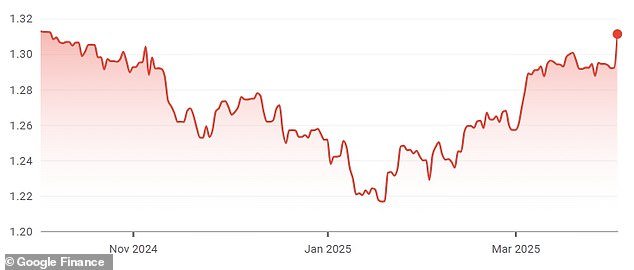
The pound to dollar exchange rate (GBP/USD) is consolidating near last week’s lows, holding around 1.3691 after a sharp reversal from recent highs.
The pair rose to a four-year high at 1.3870 last week, driven largely by a broad-based selloff in the U.S. dollar that gathered pace before reversing later in the week.
That dollar selloff has since stalled, with the new week opening to a marked decline in precious metals and industrial commodity prices.
Falling commodity prices tend to stimulate demand for the dollar, a dynamic that can limit any near-term rebound in GBP/USD.
GBP to USD Transfer Savings Calculator
How much are you sending from pounds to dollars?
Your potential USD savings on this GBP transfer:
$1,702
By using specialist providers vs high street banks
Compare GBP to USD Rates Now →
Free comparison • No commitment required • Takes 2 minutes
The pound’s pullback from the 1.3870 peak was swift, with technical indicators confirming the pair had reached severely overbought conditions following the rally.
Fibonacci retracement analysis helps frame the correction, offering reference points for where selling pressure may ease and support emerge.
So far, the pullback has found support at the 23.6% Fibonacci retracement of the November to January rally at 1.3667.

That level provides scope for support and consolidation to develop in the early part of the week as momentum stabilises.
More broadly, technical indicators continue to point to an underlying uptrend in the pound against the dollar, although it appears premature to expect an immediate retest of four-year highs.
Attention now turns to the U.S. data calendar, where the upcoming payrolls report is expected to provide fresh guidance on whether it is appropriate for the Federal Reserve to consider further interest rate cuts.

Above: U.S. payrolls, image courtesy of Lloyds Bank.
Consensus expectations look for around 65,000 jobs to have been added in January, with outcomes below that threshold typically weighing on the dollar and stronger readings lending it support.
Even so, the dollar has recently appeared detached from traditional fundamental drivers, raising questions over how much influence the data will have.
The dollar selloff has been characterised as a debasement trade, reflecting concerns that policy decisions are undermining the long-term value of the currency. Persistently high U.S. inflation, driven by expansive fiscal policy, ultimately erodes the dollar’s store-of-value function.
A new significant trigger has recently emerged: an apparent willingness by U.S. authorities to actively pursue a weaker dollar policy. It was made clear in January that authorities were coordinating with Japanese counterparts to lower the USD against the JPY.
“Underpinning negative attitudes towards the USD have been fears that Trump is at heart a USD bear given his desire to rebalance the US trade deficit,” says Jane Foley, Senior FX Strategist at Rabobank.
So although further dollar weakness is still anticipated over the medium term, the near-term bias favours a period of recovery and consolidation, keeping GBP/USD supported but range-bound in the days ahead.

Above: Market implied expectations for future moves in Bank Rate.
For sterling traders, the week ahead is dominated by Thursday’s Bank of England decision, where no cut is anticipated but we will receive new forecast updates and guidance pertaining to the potential for further rate cuts.
The labour market is weakening and inflation is tipped to fall to 2.0% by April, which implies the Bank has scope to cut further, and money markets show investors are lining that cut arriving by April.
This week’s decision will likely verify such pricing, making it a relatively uncontroversial decision for the pound.
“We think the MPC is broadly comfortable with current market pricing, which implies only a very small chance of a March cut and around a 75% likelihood of an April reduction. Our baseline outlook is for two quarter‑point cuts this year, taking Bank Rate to 3.25%, with the first move expected in April,” says Hann-Ju Ho, Senior Economist at Lloyds Bank.
Any post-decision activity should ultimately be faded as it is the dollar that is in command of GBP/USD at this point in time.