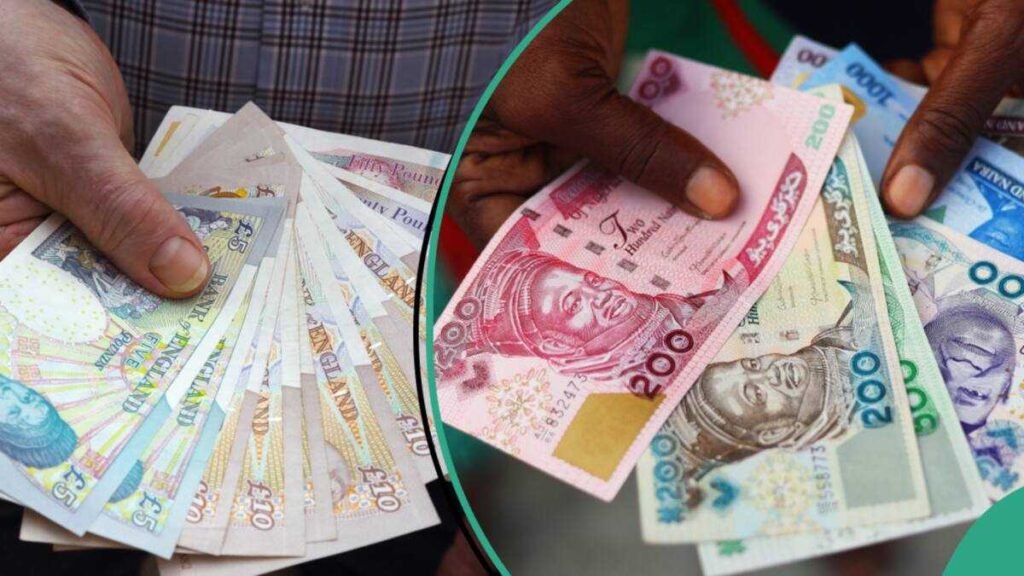
- Naira has strengthened to about N1,762 per pound despite the CBN’s sharp interest-rate cut
- Rising foreign reserves above $55 billion and improved dollar liquidity support the naira’s resilience
- Oil earnings, remittances and global currency movements remain key drivers of the pound-to-naira exchange rate
Pascal Oparada is a journalist with Legit.ng, covering technology, energy, stocks, investment, and the economy for over a decade.
The naira has maintained its relative strength against the British pound, with the latest foreign exchange data putting sterling at about N1,762 to £1 in the official market.
The performance comes despite the Central Bank of Nigeria’s recent decision to lower its benchmark interest rate, a move that would ordinarily reduce the appeal of naira-denominated assets to some foreign investors.

Credit: Novatis
Source: Getty Images
The British currency has weakened against the naira from levels around N1,800 earlier in September, extending a broader improvement for the Nigerian currency.

At the beginning of 2026, the pound traded at roughly N1,948, meaning the naira has gained considerable ground against sterling since the start of the year, although exchange rates remain vulnerable to domestic and international economic developments.
Naira holds firm after CBN rate cut
The relative stability comes shortly after the CBN’s Monetary Policy Committee reset the Monetary Policy Rate to 23%, down from 26.5%. The decision represented a reduction of 350 basis points.
Normally, lower interest rates can reduce the attractiveness of local fixed-income investments and potentially put pressure on a currency.
However, the naira has remained relatively resilient against major foreign currencies as improved dollar liquidity and stronger external buffers provide support to the foreign exchange market.
The CBN also retained the Cash Reserve Requirement for deposit money banks at 45%, while the CRR for merchant banks remained at 16%.
Nigeria’s foreign reserves provide support

Another important factor behind the naira’s performance is the improvement in Nigeria’s external reserves.
CBN Governor Olayemi Cardoso said this week that reserves had risen above $55 billion, providing a stronger buffer against external shocks and improving the country’s capacity to meet foreign exchange obligations.
Higher reserves can strengthen confidence in the foreign exchange market because they provide the monetary authorities with greater capacity to respond to periods of increased dollar demand.
Dollar liquidity in the Nigerian Foreign Exchange Market has also played an important role in determining the naira’s value against other currencies.
Oil earnings boost FX supply
Nigeria’s position as a major crude oil exporter means oil production and international crude prices remain important to foreign exchange supply.
Improved oil receipts can increase dollar inflows into the economy, while weaker production or falling prices can have the opposite effect.
Other foreign currency inflows, including remittances and portfolio investments, can also strengthen liquidity in the official market, according to data from the Central Bank of Nigeria.

What determines the pound-to-naira rate
The pound-to-naira exchange rate is influenced not only by developments in Britain but also by the naira’s performance against the US dollar.
The CBN currently displays the official dollar exchange rate at around N1,328.50/$, alongside the new 23% benchmark interest rate.

Credit: Picture Alliance/Contributor
Source: Getty Images
Consequently, stronger dollar supply in Nigeria can translate into a lower GBP/NGN cross-rate even when sterling is performing relatively well internationally.
For businesses, travellers and Nigerians paying school fees or other bills in Britain, further movements in the pound will depend on domestic FX liquidity, Nigeria’s external reserves, oil earnings and developments in global currency markets.
CBN changes dollar exchange rate
Legit.ng previously reported that the naira weakened against the US dollar at the official foreign exchange market as renewed demand for international payments put pressure on the local currency despite a sharp rise in market liquidity.
Data from the Nigerian Foreign Exchange Market (NFEM) showed that the naira closed at N1,329.15 per dollar, compared with N1,326.30/$ in the previous trading session.
Source: Legit.ng