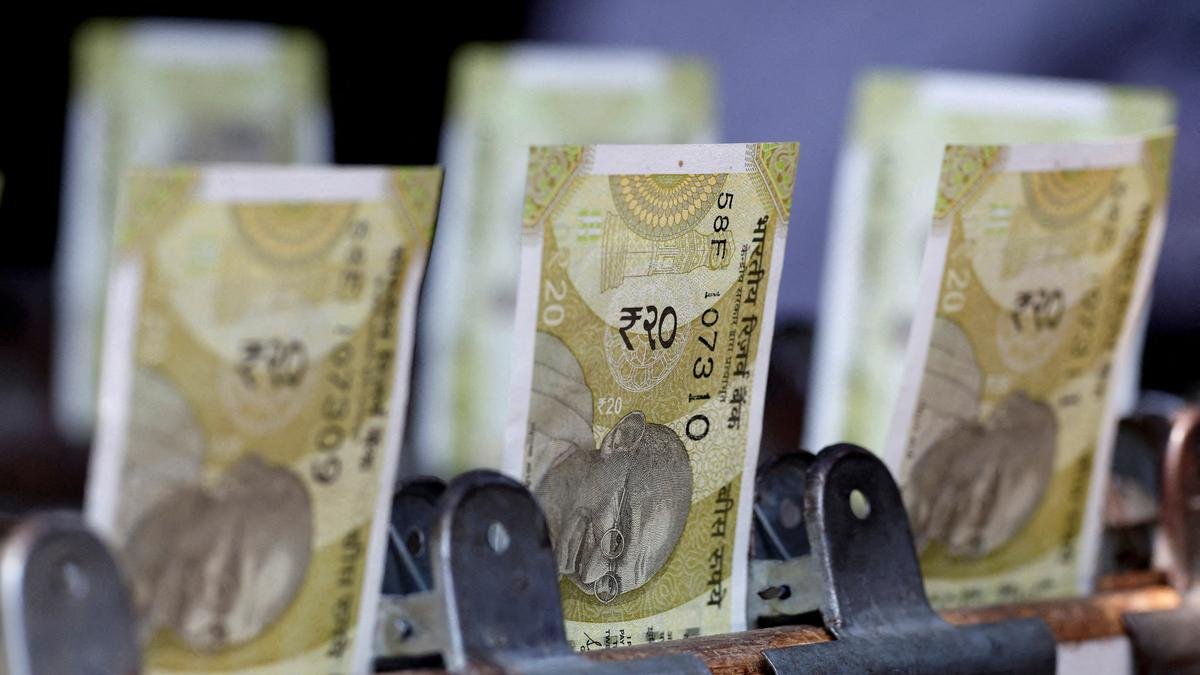
The sharp swings in global oil prices have had many collateral damages. Along with the equity markets, the Indian rupee too is showing continued weakness. It has already breached 92/$. Can it nosedive further?
Rupee falls to yet another record low
This is a particularly pertinent concern as the Indian currency slipped to yet another record low following the escalation of the Hormuz crisis.
In the intra-day trade, the currency dropped to a new record low of 92.35 against the US Dollar before ending the session at 92.19, down 0.16% from its previous close.
Oil’s the big worry
Brent Crude Futures surged past the $100/bbl mark in early Asian trade, as Tehran threatened that oil prices may soar to $200/bbl, and the US benchmark, West Texas Intermediate, also bore the brunt as prices breached past the $95/bbl mark in the same session.
The surge in oil prices has sparked inflationary concerns all across the globe, and the next crucial level for the currency lies at the 93 against the US dollar.
3 big concerns if the rupee slide to further lows
So what would happen if the rupee breaches this level? Here’s what Ambit Pabari, Managing Director of CR Forex Advisors, has to say about the same.
- Higher imported inflation
India imports a large portion of its energy and several key commodities. A weaker rupee increases the local cost of imports such as edible oils, fertilisers, electronics, and industrial raw materials, raising input costs for businesses and eventually pushing up overall inflation, explained Pabari.
The Middle Eastern conflict carries significant implications for India, as the country meets around 50% of its crude and 80% of its LPG demands through the Strait of Hormuz — a critical sea route, which is currently closed because of the US-Israel war with Iran.
- Pressure on India’s current account
Pabari further explained that the currency weakening to the 93 mark would mean the cost of imports like crude oil, LNG, and electronics would rise. This will potentially widen the country’s current account deficit and increase India’s external financing needs.
Oil as a catalyst
Oil prices surged despite the International Energy Agency (IEA) agreeing to release strategic reserves to help calm the oil and energy markets. The closure of the Strait of Hormuz has caused inflationary concerns all over the globe, as the sea route transits about one-fifth of the total global oil and LNG trade.
Traders cited by Reuters said that over the near term, energy prices remain the key catalyst for the South Asian nation’s forex market.
Asian equities fall 1%
The domestic equity indices closed in the red today, fuelling pressure on the currency. The Nifty slipped to 23,639.15, down 227.7 points or 0.95%. The Sensex ended the trade lower at 76,034.42 points, declining 829.29 points or 1.08%.
Key Asian stocks declined 1%, while European equities were also under pressure, and Wall Street Futures also pointed to a rough start, Reuters reported.
FII selling continues
According to NSE data for March 11, foreign investors were net sellers of domestic equities worth Rs 6,267 crore. “Weak net FDI inflows and ongoing capital outflows are already weighing on the rupee, amplifying the impact of the global oil shock,” said Pabari.
Dollar gains strength
The dollar index, which measures the strength of the greenback against a basket of six other major currencies, was also up 0.02% on the day. A strengthening dollar index reduces the appeal of emerging market currencies like the Indian rupee.
Outlook for Rupee
“From a technical perspective, the ₹91.40–₹91.50 zone is likely to act as an important support area in the near term. As long as this level holds, the underlying bias remains slightly upward, and USD/INR could gradually move toward the 92.50–92.80 per dollar region in the coming sessions,” said Pabari.
However, the analyst pointed out that continued pressure from oil prices, geopolitical developments, and global dollar strength could keep the rupee vulnerable, with the ₹93 level emerging as the next key threshold to watch.