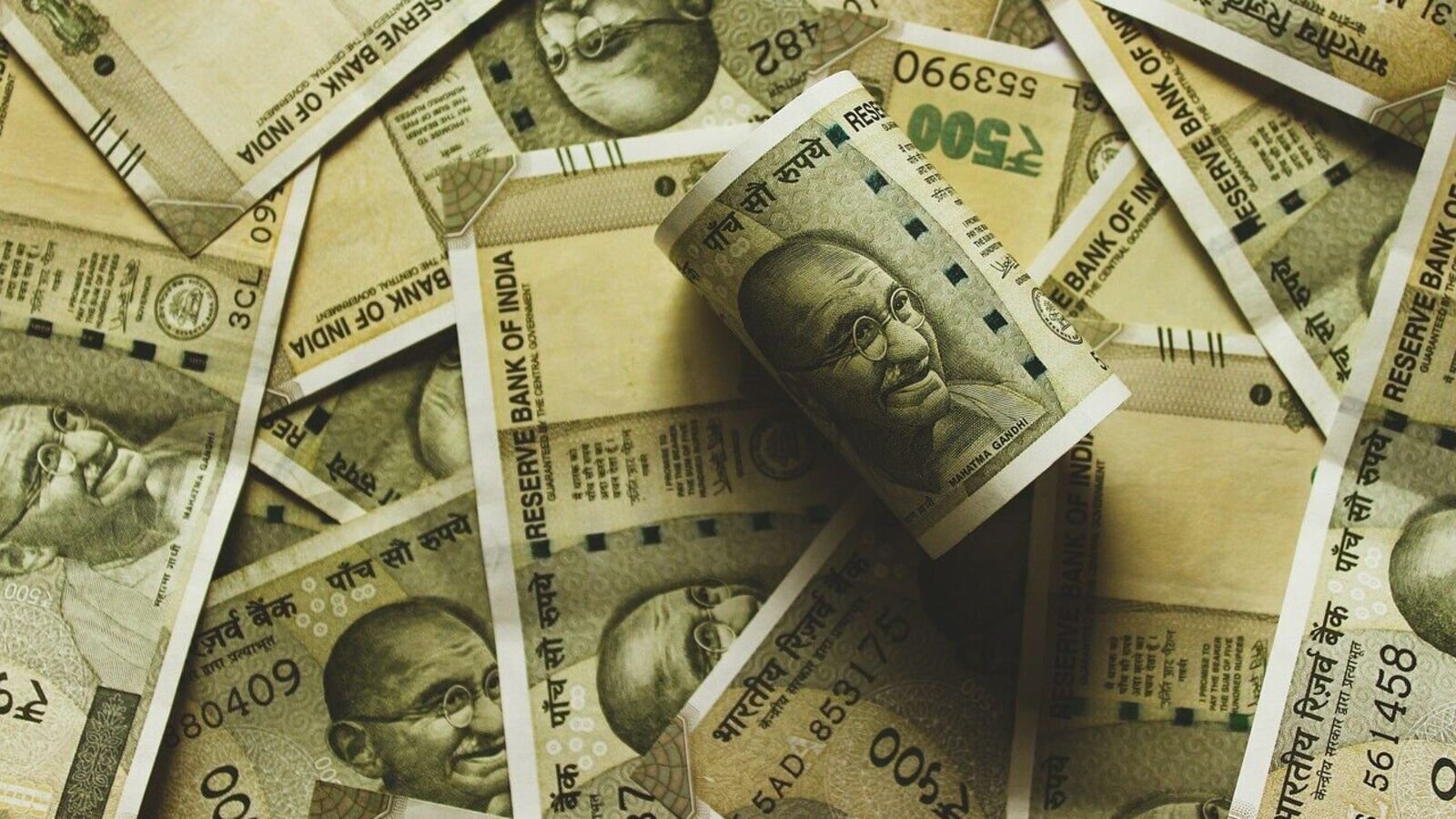
The Indian rupee (INR) has hit a nadir against the global standard, the US dollar (USD). This currency weakness spells immediate trouble for a nation heavily reliant on imports, simultaneously destabilising our balance of payments and challenging the country’s comfortable forex reserves amidstC—from US tariffs to complex Russian oil deals. The central question now is: How can India strategically navigate this financial tightrope? And, specifically, does the newfound competitiveness of steel exports offer a vital, immediate counter-balance to the import burden?
The rupee has breached the 90-per-dollar mark, and many market experts have predicted it falling to as low as 97 by end of current fiscal (FY2026). This relentless weakness of rupee injects critical uncertainty, and effectively neutralizes a portion GDP growth the country boasts of.
While currency depreciation often raises concerns for import-dependent industries, it can provide a powerful tailwind for exporters — especially in a globally competitive sector like steel. India is among the top ~15 global steel exporters by volume in 2024, with about 9.7 million tonnes exported
How the rupee slide can help steel exporters
A weaker rupee enhances the price competitiveness of Indian steel in international markets. Since export revenues are earned in stronger foreign currencies, Indian steel producers enjoy improved margins when converting these earnings back into rupees.
This currency advantage allows Indian exporters to offer more competitive pricing without compromising profitability, gain access to price-sensitive markets in Asia, Africa, and the Middle East, and expand volumes in established markets like Europe and the US. In an industry where even a small cost advantage matters, the rupee slide can significantly strengthen India’s foothold in global trade.
Opportunities for Indian exporters to capture global market share
Global steel markets are currently witnessing shifting supply dynamics. Output cuts in China due to environmental regulations, geopolitical uncertainties affecting Russian and Ukrainian exports, and rising production costs in developed economies have created supply gaps.
These conditions open avenues for India to increase its export presence by filling supply gaps caused by geopolitical disruptions, supplying value-added steel where global demand is steadily rising, leveraging low-cost production to penetrate emerging markets, and strengthening long-term export contracts with infrastructure-driven economies.
If India positions itself strategically, the country can transform short-term gains into long-term global market dominance.
India’s steel production and export market
India is the world’s second-largest producer of crude steel, per the latest data from the World Steel Association (2024 figures). India produces 149.6 million tonnes crude steel. primarily converts its raw steel into finished, value-added products like coils, sheets, plates, and TMT bars, rather than exporting crude steel, due to low global demand and higher domestic consumption driven by rapid infrastructure and industrial growth.
To further enhance exports, product quality, and global competitiveness, India needs to adopt advanced technologies such as modern rolling mills, cold-rolling and coating lines, vacuum degassing, AOD converters, automation, AI-based quality control, and energy-efficient or low-carbon steelmaking methods. These upgrades will enable the production of high-value steel, reduce imports, and strengthen India’s position in the global steel market.
First step: Minimise import dependence
For India to truly emerge as a global steel powerhouse, reducing dependence on steel imports is essential and scaling up domestic production of specialized and value-added steel is critical.
Encouraging technological upgradation in mills, enhancing raw material security through captive mines and strategic reserves, and promoting R&D for high-strength, automotive-grade, and corrosion-resistant steel will allow India to ensure a stable domestic base while diverting surplus production to global markets.
India’s current share in global steel exports
Although India is among the world’s top steel producers, its share in global exports remains modest compared to countries like China, Japan, and South Korea. Increasing this share requires improving domestic infrastructure and strong government policies like the PLI Scheme, QCOs, and SIMS to support Indian exporters.
Enhancing port efficiency and logistics services for domestic steel production will help India increase quality standards that meet international norms. A focus on premium and value-added steel segments can further elevate India’s position in global trade.
Bridging the gap between imports and exports
As maintained earlier, there is a significant gap between steel imports and exports. India is dependent on other countries for imports. Out of India’s total steel trade volume of 14.4 million tonnes, India imports 9.5 million tonnes—which is approximately 66 per cent of trade volume—and exports only 4.9 million tonnes, which is roughly 34 per cent of total trade volume. To reduce the trade imbalance in steel, India must strengthen domestic production of steel currently imported, encourage integrated steel plants and secondary producers to upgrade technology, promote export incentives for high-value products, and improve cost efficiencies across the supply chain.
A stable and competitive domestic ecosystem will naturally push the country toward a “Less Import, More Export” model.
Turning a backdrop into an opportunity
What may appear as a challenging backdrop—currency volatility, global slowdown fears, and shifting geopolitical alignments—can actually become an advantage for India. A depreciating rupee, combined with strong domestic capacity, creates a window for India to assert itself in the global steel industry.
To capitalise on this moment, Indian steel exporters must nearly double exports—an increase of around 90–100 per cent relative to current levels—while strengthening global partnerships, focusing on value-added segments, leveraging government schemes like PLI, and optimizing logistics and supply chain efficiency.
With a strategic approach, India can convert global uncertainty into opportunity, boosting export margins, expanding its share in global steel markets, and moving closer to true self-reliance in the steel sector.
The author is Managing Director of Maiden Forgings Limited
Published on December 21, 2025