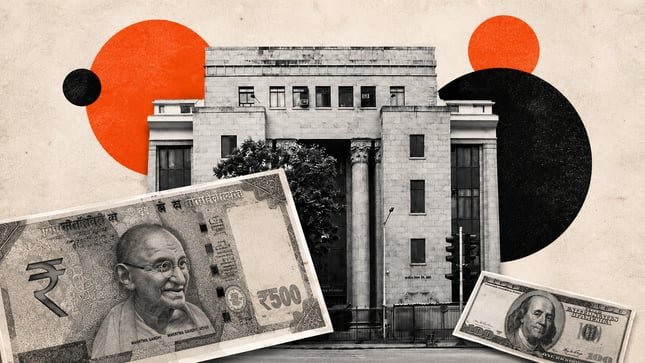
The Rupee made a smart recovery in the new financial year so far, gaining about 191 paise against the US dollar. This has come on the back of RBI measures to counteract the depreciation pressure it faced since the US-Israel axis launched air strikes against Iran on February 28, 2026.
The Indian currency closed about 28 paise stronger on Friday at 92.9250 per dollar, against the previous close of 93.20. Overall, it gained 81 paise against last Friday’s close of 93.73.
As compared to the March 30, 2026 ) closing and intraday low levels of 94.83 and 95.21, respectively, the Rupee has bounced back substantially in 10 trading sessions in April 2026 so far.
Rupee Rally
The Rupee, which declined about 10 per cent in FY26 against the dollar and became one of the worst-performing Asian and Emerging Market Economy currencies, has had a remarkable turnaround in the current financial year so far, gaining about 2 per cent, with the central bank pulling the levers to stop speculation and arbitrage.
While the Rupee has made smart gains against the Dollar so far, three EME currencies appreciated more than 5 per cent: Hungarian Forint (9 per cent), Russian Ruble (7.1 per cent) and Chilean Peso (5.6 per cent).
The measures that RBI took to prop up the rupee included restricting offshore Non-Deliverable Forward participation by Indian banks to shift price discovery onshore and imposing caps on net open positions of around $100 million, forcing banks to reduce excess dollar holdings and support Rupee liquidity.
It followed up the aforementioned measures by disallowing rebooking of a cancelled foreign exchange derivative contract involving INR.
Further, the RBI reportedly asked oil marketing companies to tap a special credit line with the public sector for their foreign exchange needs.
Amit Pabari, MD, CR Forex Advisors, noted that since 28 February 2026, the Indian Rupee has experienced a sharp crisis-to-recovery cycle.
“Following the escalation of the US–Iran conflict, the INR came under significant pressure, depreciating nearly 4.5% and breaching the 95 level. The move was driven by heightened global risk aversion, elevated crude oil prices, and a broadly stronger US dollar.
“This phase of stress was followed by a gradual stabilisation in March, during which the Rupee traded with high volatility but eventually established a base in the 92.00–93.50 range. Over this month, the currency has appreciated by nearly 0.70%,” he said.
Pabari assessed that the strengthening of the rupee to levels below 93 appears to have been supported not only by improved sentiment but also by active policy intervention, which went beyond spot dollar selling, indicating that the move was not entirely market-driven.
V Rama Chandra Reddy, Head – Treasury, Karur Vysya Bank, observed that while the Rupee has bounced back due to RBI measures, concerns persist around the prospect of widening of the current account deficit, foreign portfolio investors continuing to sell in the equity markets, and crude oil prices going up.
“When crude oil and commodity prices go up, demand for the dollar will increase. Remittances may come down due to the impact of the West Asia war. These are the challenges for the rupee to sustain this appreciation,” he said.
Reddy emphasised that once the war ends, some risk appetite may return to the Indian financial markets, with FPIs looking favourably at investing in Indian equities and debt and FDI flowing in.
Published on April 17, 2026