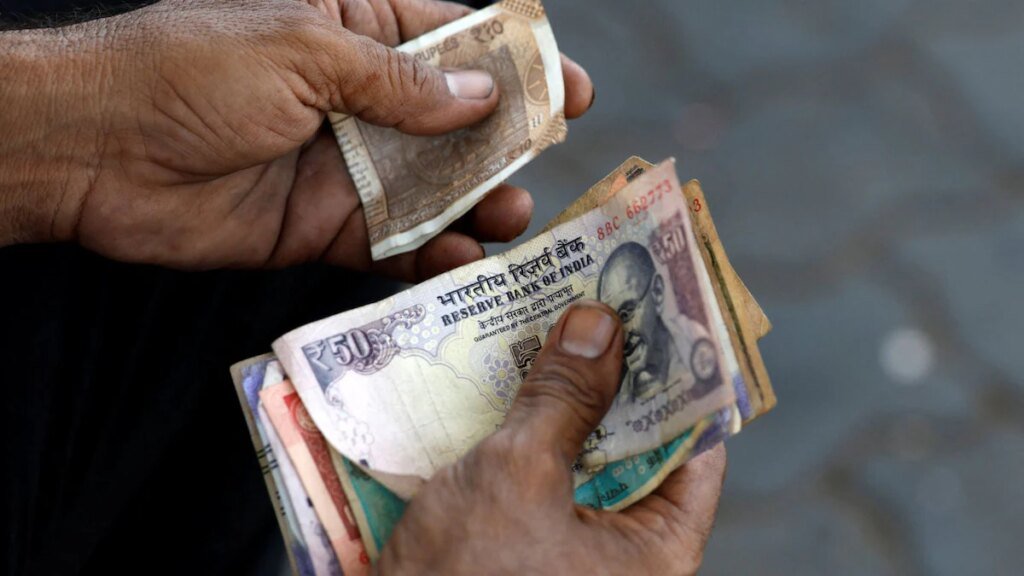
The domestic currency had opened stronger on Monday (August 3), touching 95.14 against the US dollar, up around 0.25% from Friday’s close of 95.39. The opening level marked the rupee’s strongest since July 7, supported by lower crude oil prices, robust foreign currency inflows under the Reserve Bank of India’s (RBI) special swap facility and continued central bank support.
Lower crude oil prices have emerged as one of the key factors supporting the rupee. Oil prices declined sharply after US President Donald Trump said plans for an attack on Iran had been put on hold to allow more time for negotiations over Tehran’s nuclear programme.
Brent crude for October delivery fell nearly 5% to below $84 per barrel. Lower crude prices are positive for India, which imports more than 85% of its crude oil requirement. Softer oil prices help reduce the country’s import bill, improve demand for the rupee and ease concerns over the current account deficit.
Another major driver has been strong foreign currency inflows under the RBI’s concessional swap facility announced in June. The central bank said on August 1 that the scheme had mobilised $40.82 billion in inflows till July 31.
Of the total inflows, $36.73 billion came through Foreign Currency Non-Resident (Bank) [FCNR(B)] deposits, $2.58 billion via Overseas Foreign Currency Borrowings (OFCBs) and $1.52 billion through External Commercial Borrowings (ECBs).
The facility, announced on June 5 and operational from June 8, allows banks to swap eligible foreign currency inflows with the RBI at concessional terms. It aims to attract overseas capital, strengthen forex reserves and improve external sector liquidity. Higher inflows also provide the RBI with greater flexibility to intervene in the foreign exchange market when required.Market participants also said the RBI remained active in the foreign exchange market last week by selling dollars to curb excessive volatility. According to bankers, the rupee appreciated around 1.2% last week, with repeated RBI intervention helping the currency recover from recent lows.
Going ahead, markets will monitor crude oil prices, foreign currency inflows, the global trend in the US dollar and the RBI’s intervention strategy. Geopolitical developments in West Asia will also remain in focus, as any renewed escalation could push oil prices higher and weigh on the rupee.