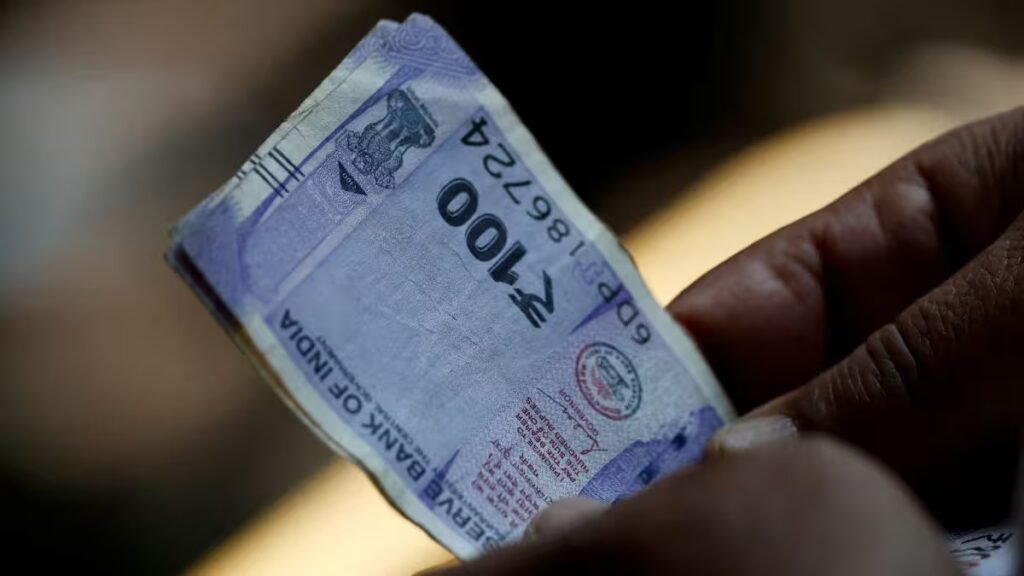
The Indian rupee crashed to a fresh record low of 95.55 against the US dollar as fears over a fragile US-Iran ceasefire pushed oil prices above $105 per barrel, intensifying concerns over inflation and India’s import bill
The Indian rupee crashed to a fresh record low on Tuesday as fears over a fragile ceasefire between the United States and Iran kept global oil prices elevated, raising concerns over the economic impact on India’s import-dependent economy.
The rupee weakened to 95.55 against the US dollar in early trade, down 0.2 per cent from its previous close and breaching its earlier all-time low of 95.4325 touched last week.
The sharp decline in the Indian currency came as investors worried that tensions in West Asia could intensify again after US President Donald Trump said on Monday that the ceasefire with Iran was “on life support”.
Trump cited disagreements over key demands, including halting hostilities across multiple fronts, lifting the US naval blockade, resuming Iranian oil exports and compensation for war damages.
The remarks reignited fears of prolonged disruptions in the Persian Gulf, sending
Brent crude prices up around 1 per cent to above $105 per barrel on Tuesday. Oil prices have surged nearly 46 per cent since the Iran conflict erupted in late February.
For India, which imports most of its crude oil requirements, the rally in energy prices has emerged as a major macroeconomic risk, threatening to widen the current account deficit, push up inflation and weigh on economic growth.
The Indian currency had already fallen 0.88 per cent in the previous session to close at 95.31, amid a broader selloff in Indian financial markets. Equity benchmarks Sensex and Nifty dropped sharply on Monday as investors dumped riskier assets.
Asian currencies and equities also weakened on Tuesday, while US Treasury yields rose and US equity futures slipped as markets assessed the possibility of prolonged geopolitical instability.
Concerns over the economic fallout were also reflected in comments by Prime Minister Narendra Modi on Sunday, when he
called for fuel conservation, work-from-home arrangements and restrictions on unnecessary travel and imports to reduce pressure on foreign exchange reserves.
Foreign investors have also turned cautious amid the volatility. Overseas investors sold Indian equities worth Rs 84.38 billion on Monday, the highest single-day outflow since April 24, according to exchange data.
First Published:
May 12, 2026, 09:34 IST
End of Article